 comparison
Plantation Shutters vs Cheap Blinds: Which Wins?
Table of Contents
- Plantation Shutters vs Cheap Blinds: A Quick Comparison
- Material Quality and Durability: What You Actually Get
- Plantation Shutters for Bay Windows and Awkward Shapes
- Energy Efficiency of Window Coverings: Shutters vs Blinds
- Bespoke Window Shutters Cost vs the Price of Cheap Blinds
- Where Each Option Wins: Choosing the Right Window Covering
- Frequently Asked Questions
Last Updated: August 31, 2026
Deciding between plantation shutters vs cheap blinds is one of the most common dilemmas facing homeowners who want better light control, privacy, and a cleaner interior. At Shutters West London, we've spent 30 years fitting bespoke shutters across period properties and modern homes alike, and the question comes up at almost every consultation. The honest answer is that these two options aren't really competing for the same job. Below, we'll break down exactly where each wins, where each falls short, and what the decision actually costs you over time.
Plantation Shutters vs Cheap Blinds: A Quick Comparison
Plantation shutters are solid, custom-built panels fitted directly to your window frame, with adjustable louvres that let you control light and privacy without removing the covering entirely. Cheap blinds are mass-produced window coverings, typically made from fabric, PVC, or thin aluminium, sold at low price points and designed for quick installation.
The gap between them isn't just aesthetic. It's structural, functional, and financial.
| Feature | Plantation Shutters | Cheap Blinds |
|---|---|---|
| Material | Solid hardwood or moisture-resistant composite | Fabric, PVC, or thin aluminium |
| Fit | 100% made-to-measure per window | Standard sizes with some trim-to-fit options |
| Lifespan | 20+ years with minimal maintenance | 3-7 years typically |
| Light control | Precise, room-darkening to full blackout | Basic, limited by fabric or slat type |
| Bay/arch windows | Custom-built for any shape | Rarely suitable without compromise |
| Cleaning | Wipe down, low maintenance | Regular washing or replacement needed |
| Property value | Generally adds value | Neutral to negligible impact |
| Upfront cost | Higher | Low to moderate |
The table above gives you the headline picture. The detail is where the real differences emerge.
Material Quality and Durability: What You Actually Get
Most homeowners focus on price per unit when comparing window coverings. That's the wrong metric. The more useful question is cost per year of service, and on that measure the gap between the two options narrows considerably.
How Cheap Blinds Are Made
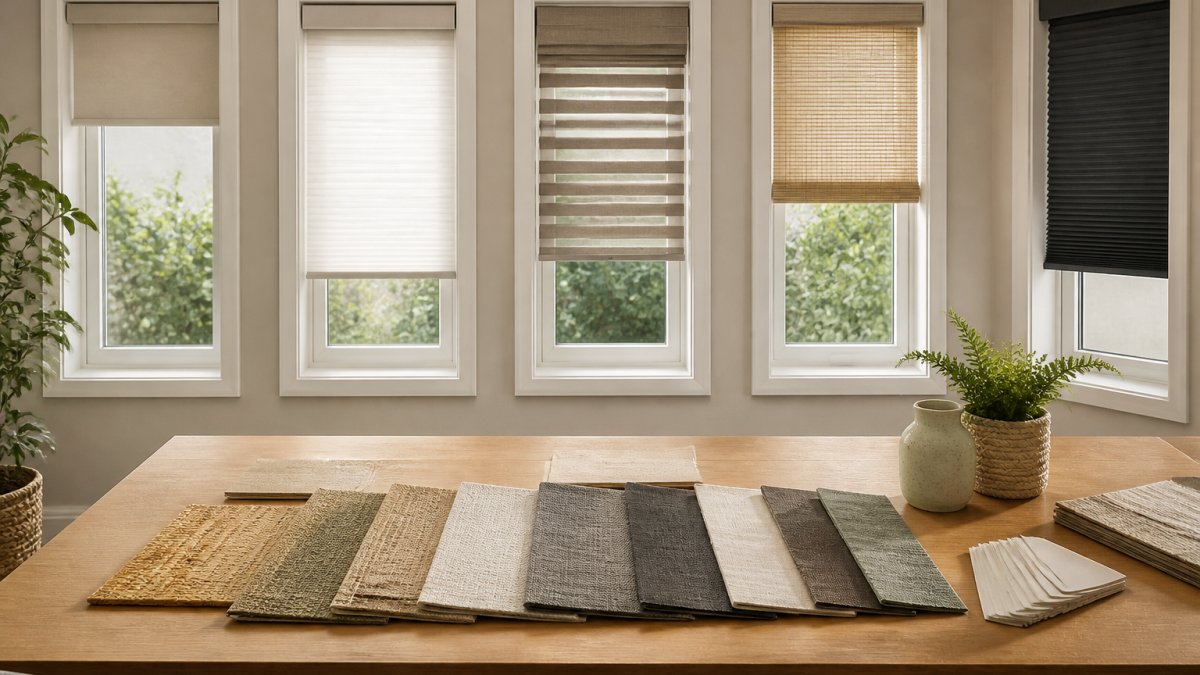
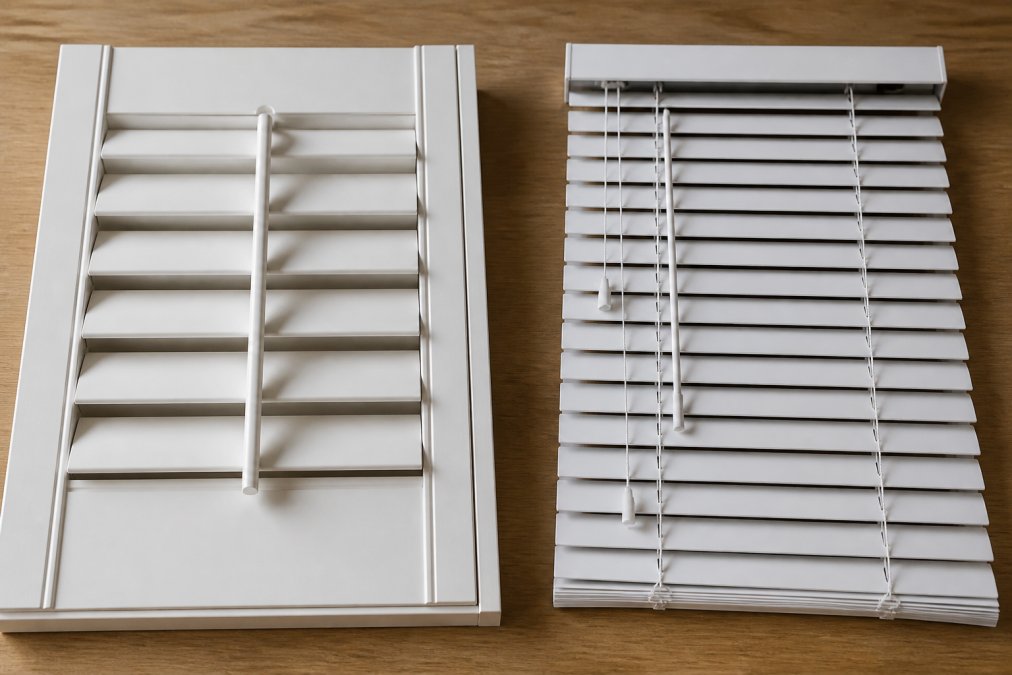
Budget blinds are manufactured at volume. Roller blinds at the lower end use polyester or non-woven fabric stretched over a spring mechanism. Venetian blinds use thin aluminium slats, often 25mm wide, suspended on nylon cords that fray with regular use. Vertical blinds use weighted fabric vanes that warp in sunlight and crack in cold rooms.
The mechanisms are the first thing to fail. Cords snap, spring rollers jam, and plastic brackets crack. Many homeowners find they're replacing cheap blinds every three to five years, sometimes sooner in high-traffic rooms or kitchens where moisture and grease accelerate wear.
According to Which? consumer guides on home products, product longevity is one of the most underweighted factors when consumers compare home improvement purchases. The upfront saving often disappears when replacement cycles are factored in.
How Plantation Shutters Are Constructed
A quality plantation shutter is built from either solid hardwood or a moisture-resistant composite material, depending on the room. Each panel is mortise-and-tenon jointed, with louvres that rotate on a central tilt rod or a concealed mechanism. The frame is rebated directly into the window reveal, creating a precise, gapless fit.
The result is a structure that doesn't flex, warp, or jam under normal use. Shutters fitted by experienced craftspeople should operate smoothly for decades. The common complaint about shutters "sticking and grinding" after a couple of years almost always traces back to poor initial measurement, cheap materials, or templated manufacturing rather than the product category itself.
This is where bespoke construction makes a tangible difference. Every set made from scratch, measured to the specific window rather than adapted from a template, sits correctly from day one and continues to do so.
Plantation Shutters for Bay Windows and Awkward Shapes
Bay windows are where cheap blinds genuinely struggle, and where plantation shutters demonstrate their clearest advantage.
A standard bay window in a Victorian or Edwardian terrace typically has three to five angled facets, each at a slightly different width and height. Off-the-shelf blinds don't accommodate those angles. You end up with gaps at the corners, mismatched drops, or blinds that can't be opened without catching on the adjacent panel.
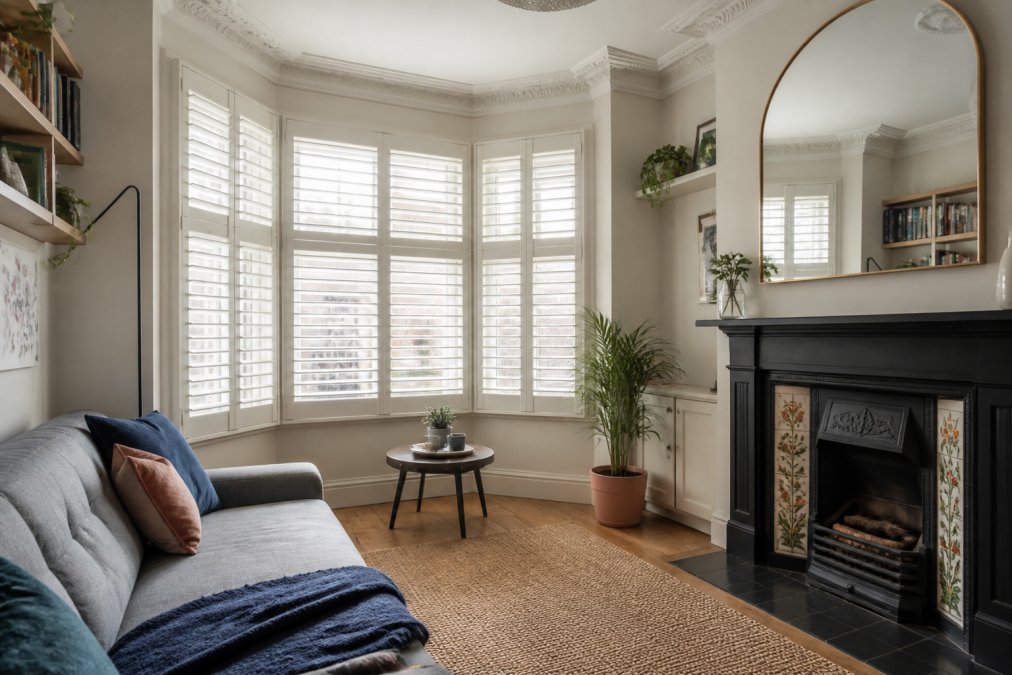
Plantation shutters for bay windows are built as a single coordinated installation. Each panel is measured and made for its specific facet, with frame sections mitre-cut to meet cleanly at the corners. The result is a continuous run of shutters that looks intentional rather than cobbled together.
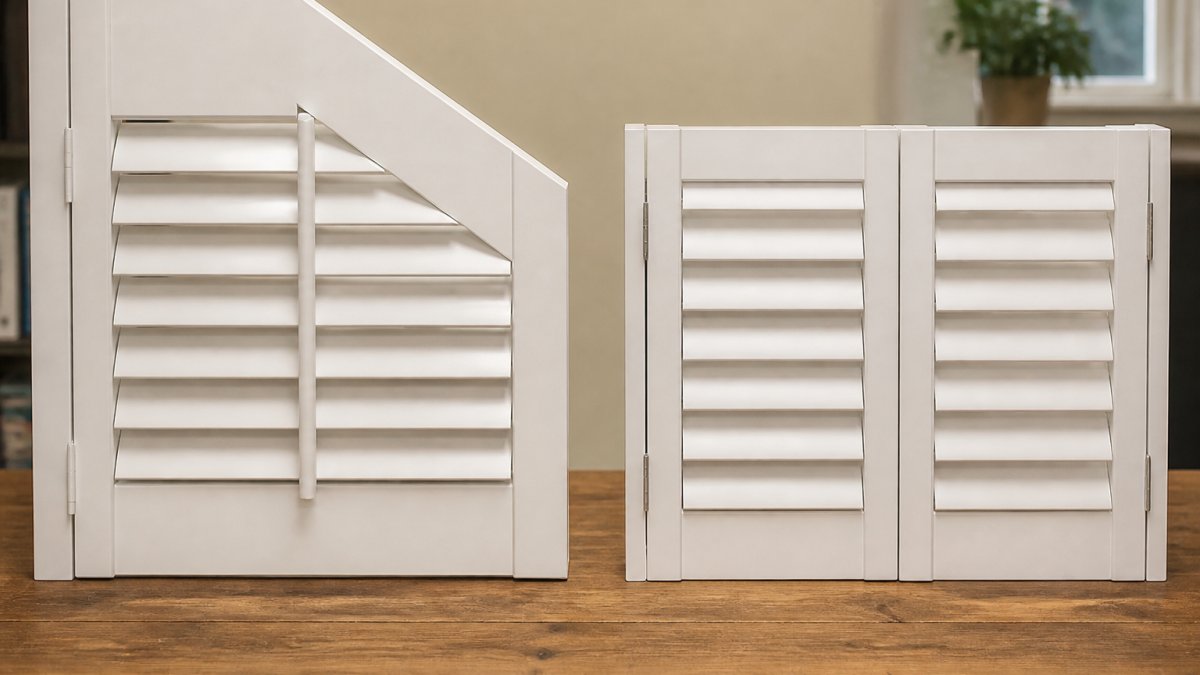
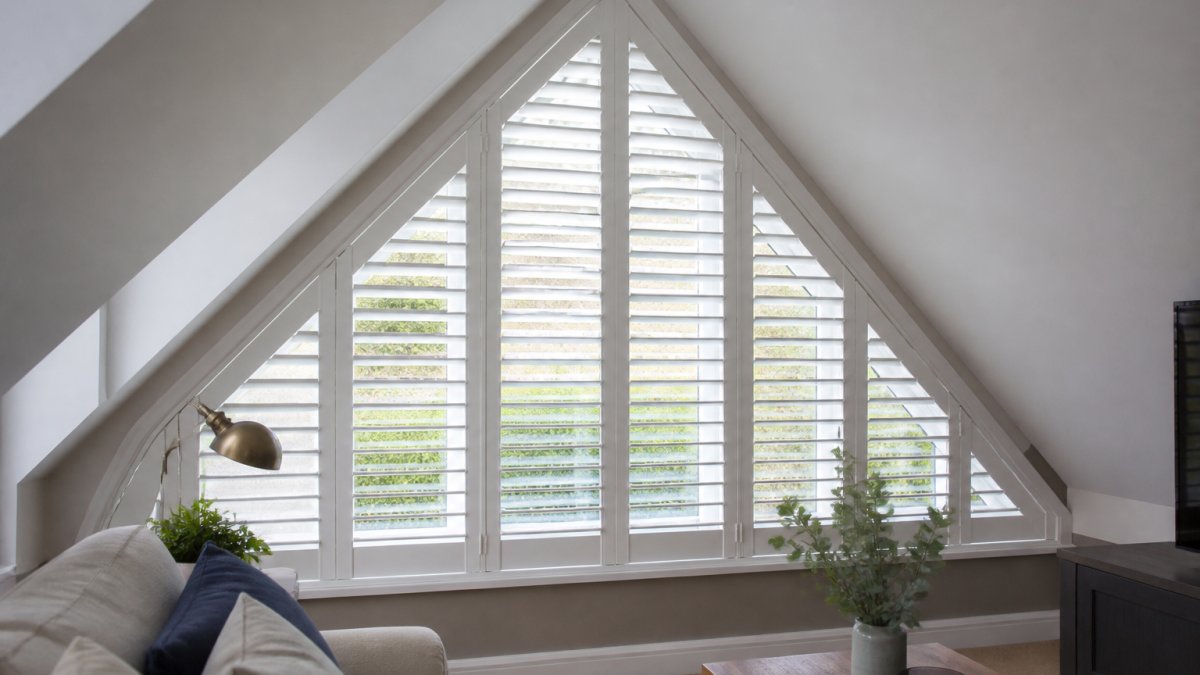
The same principle applies to arched windows, circular windows, and any opening that deviates from a standard rectangle. Bespoke manufacturing means the shutter follows the shape of the window, not the other way around.
This is one of the most frequent questions we hear at Shutters West London: "Will your shutters actually work with my awkward Victorian bay, or is it going to be a nightmare?" The honest answer is that the complexity is in the measuring and manufacturing, not the fitting. Done properly, a bay window installation is no more disruptive than a standard window.
For homeowners with period properties, plantation shutters are often the only window covering that doesn't look like a compromise.
Energy Efficiency of Window Coverings: Shutters vs Blinds
The energy efficiency of window coverings is a practical consideration that rarely gets enough attention in comparison guides.
Cheap blinds provide minimal thermal insulation. A single layer of fabric or a set of thin aluminium slats does little to reduce heat loss through a single-glazed or older double-glazed window. Some thermal roller blinds include a reflective backing that improves performance modestly, but the effect depends heavily on how well the blind seals against the frame at the sides and bottom.
Plantation shutters perform better for a structural reason: the solid frame is rebated into the window reveal, creating a close-fitting barrier around the entire perimeter. The louvres, when closed, form an overlapping series of solid slats that trap a layer of still air between the glass and the room. Still air is an effective insulator.
As noted in Energy Saving Trust guidance on draught-proofing and window treatments, reducing draughts and improving window insulation can make a measurable difference to heating costs in older properties, particularly those with sash windows or single glazing.
The benefit is most pronounced in period properties with large, poorly sealed windows. For a Victorian terrace with original sash windows, well-fitted plantation shutters can noticeably reduce the cold draught effect that makes rooms uncomfortable in winter.
Cheap blinds also offer limited acoustic insulation. Plantation shutters, particularly solid panel styles, provide a meaningful reduction in street noise, which matters considerably in urban settings where traffic and neighbour noise are persistent.
Bespoke Window Shutters Cost vs the Price of Cheap Blinds
The most common objection to plantation shutters is upfront cost, and it's a fair one. Cheap blinds are genuinely cheap. A roller blind from an online retailer can cost a few pounds for a small window. A full set of bespoke plantation shutters for the same window costs considerably more.
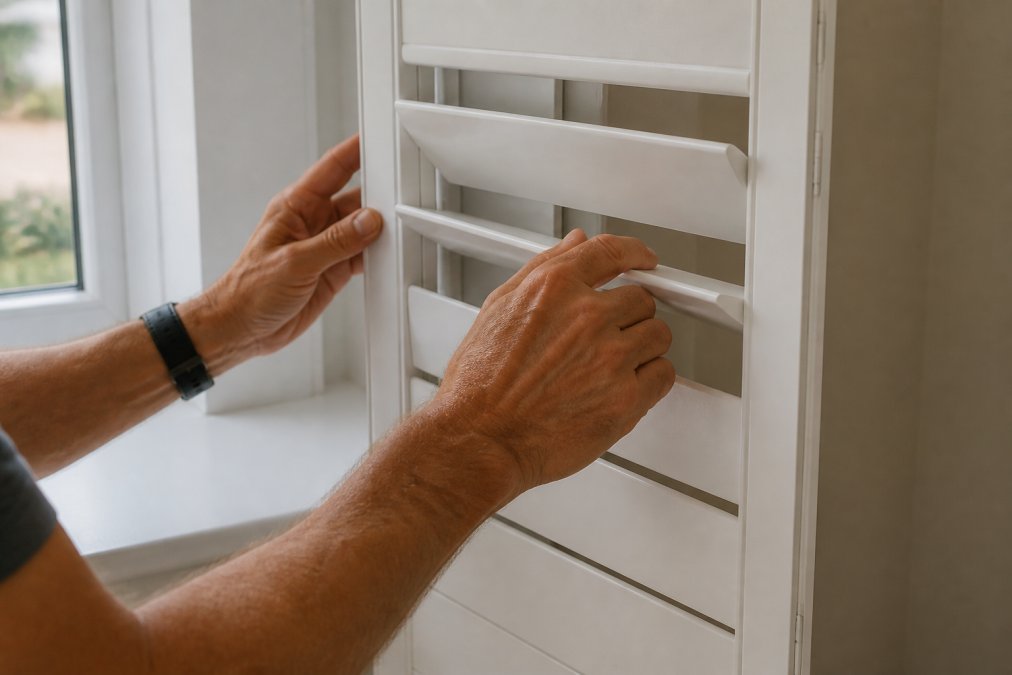
The honest framing is this: bespoke window shutters cost more upfront because they are a permanent architectural feature, not a consumable product. A cheap blind is replaced. A well-made shutter is inherited.
When you factor in replacement cycles for budget blinds, the total cost of ownership over ten to fifteen years often comes closer than the initial price comparison suggests. Add the effect on property presentation and the fact that shutters are generally viewed positively by buyers and letting agents, and the financial case strengthens further.
According to Checkatrade's home improvement value guide, premium window treatments are among the home improvements that prospective buyers and tenants notice and value.
For bespoke window shutters cost, the variables include material choice, louvre size, panel configuration, and the complexity of the window shape. Shutters West London offers a free home consultation and measurement service, with no-pressure quotes so you can understand the full cost before committing to anything.
What you won't find is a templated price list, because no two windows are the same. Every set is made from scratch, which means the price reflects the actual specification of your windows rather than an approximation.
Where Each Option Wins: Choosing the Right Window Covering
The choice between plantation shutters and cheap blinds isn't always obvious. Both have legitimate use cases, and the right answer depends on what you're actually optimising for.
When Cheap Blinds Make Sense
Cheap blinds are the right choice in specific circumstances:
- Rental properties where you need a functional covering quickly and the landlord or tenant isn't committing to a long-term installation
- Rooms that will be reconfigured or redecorated soon, where you want a temporary solution that won't be wasted
- Secondary rooms or outbuildings where light control is needed but aesthetics aren't a priority
- Very tight budgets where any covering is better than none, with the understanding that replacement will be needed within a few years
The key word is temporary. Cheap blinds are a short-term solution. They work, they're accessible, and they're easy to replace when they wear out.
When Plantation Shutters Are the Better Investment
Plantation shutters are the better choice when:
- You own the property and want a window covering that adds to its presentation and value
- Your windows are non-standard shapes, particularly bay windows, arched frames, or unusually wide or narrow openings
- Light control and privacy matter significantly, such as in bedrooms, ground-floor front rooms, or home offices
- You're letting a property and want a durable, low-maintenance covering that won't need replacing between tenancies
- The room's interior design is a priority and you want a window treatment that enhances rather than interrupts it
The real difference between cheap blinds and plantation shutters comes down to permanence. Blinds are window coverings. Shutters are part of the room.
| Scenario | Best Option | Reason |
|---|---|---|
| Victorian bay window, owner-occupied | Plantation shutters | Custom fit, long-term value |
| Rental flat, short-term let | Cheap blinds | Low cost, easily replaced |
| Ground-floor bedroom, privacy critical | Plantation shutters | Full blackout, precise control |
| Garage or utility room | Cheap blinds | Functional, no aesthetic need |
| Period property, listed or conservation area | Plantation shutters | Sympathetic to architecture |
| Student accommodation | Cheap blinds | Durability less critical |
For homeowners with period properties, complex window shapes, or a genuine interest in the long-term quality of their interior, plantation shutters vs cheap blinds isn't really a close contest. The question is timing and budget, not which option is better.
The National Federation of Roofing Contractors and home improvement guidance from the Federation of Master Builders consistently highlights the value of investing in quality craftsmanship for permanent home improvements rather than repeated low-cost replacements.
Choosing the right window covering for a period property with complex windows is a decision worth making carefully. Cheap blinds solve an immediate problem; plantation shutters solve it permanently. Shutters West London specialises in bespoke internal plantation shutters, made entirely from scratch for every window, with free home consultations and measurements included. With a 10/10 Checkatrade rating and 30 years of family-run craftsmanship, we bring genuine expertise to bay windows, arched frames, and any shape that other providers find difficult. Get your free quote from Shutters West London and see exactly what a properly fitted, custom-built shutter would look like in your home.
Frequently Asked Questions
Are plantation shutters worth the extra cost compared to cheap blinds?
For most homeowners treating window coverings as a long-term investment, plantation shutters justify the higher upfront cost. They last significantly longer than cheap blinds, require less frequent replacement, and add perceived value to a property. Cheap blinds cost less initially but often need replacing within a few years due to warping, broken slats, or fading. If you plan to stay in your home or let it out long-term, shutters typically work out more cost-effective over time.
Do plantation shutters add more value to a home than blinds?
Plantation shutters are widely regarded by estate agents as a desirable feature that enhances a property's presentation and kerb appeal. Unlike cheap blinds, which buyers typically replace, shutters are seen as a permanent, quality fixture. This is particularly true for period properties with bay or sash windows, where well-fitted shutters complement the architecture. Cheap blinds rarely influence a buyer's perception of a home's value.
How do plantation shutters compare to blinds for light control and privacy?
Plantation shutters offer more precise light control than most blinds. You can tilt the louvres to any angle, letting in diffused light while maintaining full privacy, or fold the panels back entirely for an unobstructed view. Cheap roller or Venetian blinds typically offer only open or closed positions with limited mid-range adjustment. For rooms where you want both natural light and privacy simultaneously, such as a front-facing living room, shutters perform noticeably better.
Which is easier to clean: plantation shutters or cheap blinds?
Plantation shutters are generally easier to maintain. A quick wipe with a damp cloth across the louvres takes a few minutes and keeps them looking fresh for months. Cheap Venetian blinds trap dust between narrow slats and are fiddly to clean thoroughly. Fabric roller or Roman blinds can absorb odours and stains and often cannot be wiped down at all. For households with pets, children, or allergy concerns, the low-maintenance nature of shutters is a practical advantage.
Do plantation shutters provide better insulation than standard blinds?
Yes, plantation shutters provide meaningfully better insulation than most standard blinds. Their solid construction creates a physical barrier between the glass and the room, reducing heat loss in winter and blocking solar gain in summer. This can help reduce heating costs, particularly in older properties with single-glazed or draughty sash windows. Cheap roller or Venetian blinds sit close to the glass but leave gaps at the sides and bottom, limiting their thermal performance considerably.
This article was written using GrandRanker