 comparison
7 Alternatives to Plantation Shutters for Small Windows
Last Updated: October 25, 2026
Quick Summary
The best alternatives to plantation shutters for small windows are small window blinds, such as Venetian, pleated honeycomb, roller, Roman and privacy blinds, because they mount inside the reveal and take up almost no depth. Bespoke shutters still win on arched, splayed or bay frames that standard blinds cannot handle cleanly.
- Venetian blinds let you tilt the slats for privacy while keeping daylight coming through.
- Pleated honeycomb blinds trap a pocket of air in their cells to help slow heat loss.
- Roller blinds need very little depth but are either up or down, so you lose tilt control.
- Top-down-bottom-up privacy blinds drop to eye level so daylight still enters.
- Bespoke shutters suit bay, arched and irregular windows that off-the-shelf blinds cannot fit.
Table of Contents
- Why Plantation Shutters Can Fall Short on Small Windows
- The Alternatives at a Glance: Comparison Table
- Small Window Blinds: The Core Options Explained
- Roller Blinds for Small Windows: Simple and Light-Blocking
- Roman Blinds for Small Windows: Softer Fabric Coverings
- Privacy Blinds for Small Windows Without Losing Daylight
- When Bespoke Shutters Still Win on Awkward Windows
- Book a Free Home Consultation and Measurement
- Frequently Asked Questions
Why Plantation Shutters Can Fall Short on Small Windows
Plantation shutters are a beautiful choice for many homes, but they are not always the best fit for a small window. The frame depth, the size of the panels, and the way the louvres fold back all eat into the usable opening. On a narrow sash or a compact casement, a full-height shutter can leave you with less clear glass than you started with.
At Shutters West London, we fit bespoke shutters every week, and we will say it plainly: on some small windows, a shutter is the wrong tool. The panel split alone can block a third of the glass when open. Add a deep frame and the reveal disappears.
That is why we have written this guide to the alternatives to plantation shutters for small windows. Some of these options cost less, some suit period properties better, and one or two genuinely beat shutters on awkward frames. Below, we break down each one by how it handles light, privacy, depth and fit, so you can choose with your eyes open rather than guessing from a showroom sample.
The Alternatives at a Glance: Comparison Table
The quickest way to choose is to match the covering to what the window actually needs. The table below sums up how each option performs on a small frame.
| Option | Best For | Light Control | Depth Needed | Suits Small Windows? |
|---|---|---|---|---|
| Venetian blinds | Adjustable slats | Good, tilt control | Shallow | Yes |
| Pleated honeycomb blinds | Insulation | Good, top-down options | Shallow | Yes |
| Roller blinds | Simple light blocking | Strong when closed | Very shallow | Yes |
| Roman blinds | Soft fabric look | Moderate | Shallow | Yes |
| Privacy blinds | Daylight plus privacy | Partial | Shallow | Yes |
| Bespoke shutters | Awkward or arched frames | Excellent | Deeper | Yes, if made to measure |
If you want the full picture of how blinds, curtains and shutters compare side by side, our guide to interior window coverings walks through every option in more detail.
Small Window Blinds: The Core Options Explained
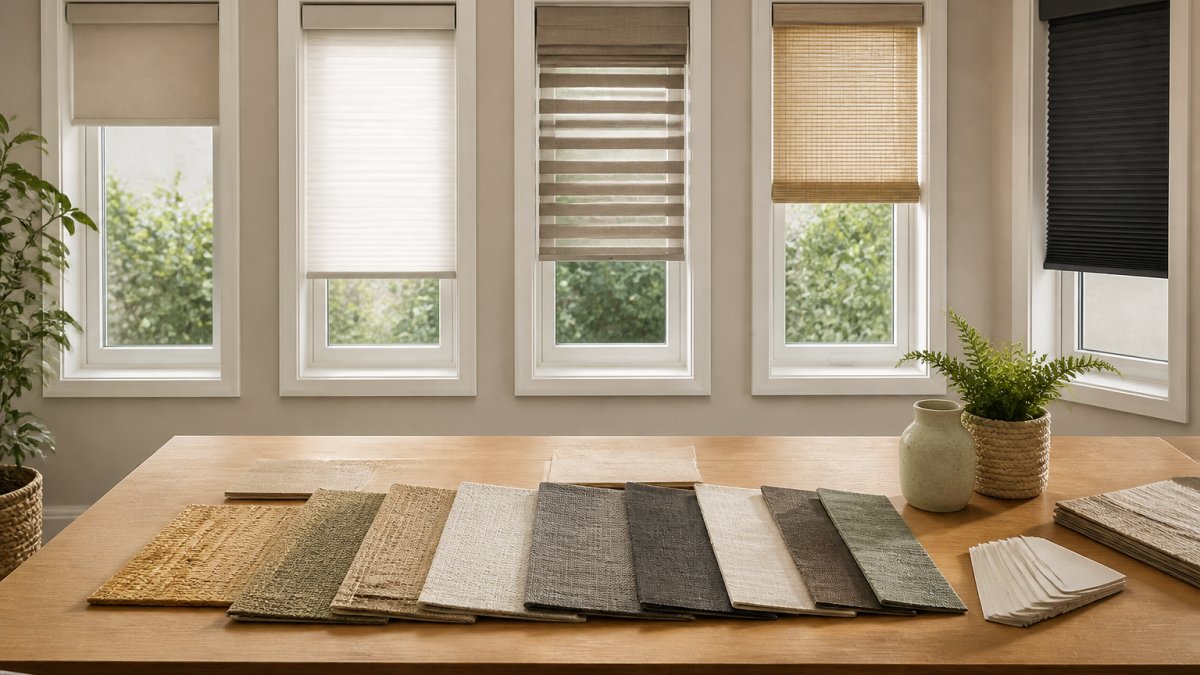
Small window blinds are the most practical family of alternatives because they mount inside the reveal and take up almost no depth. That matters on a compact frame, where a chunky shutter box would crowd the glass.
The trade-off is that blinds sit closer to the pane, so condensation and cleaning need a little more care. Choose a wipe-clean fabric or an aluminium slat and this stops being an issue. The two options below cover most small-window briefs we see.
Venetian Blinds for Compact Frames
Venetian blinds use horizontal slats you tilt to control light. On a small window, that tilt action is the real advantage: you can angle the slats for privacy while keeping daylight coming through, without covering the whole pane.
- Pros: fine light control, shallow mount, easy to shorten
- Cons: slats collect dust, cords need tidy management on narrow frames
- Best for: kitchens and bathrooms where quick tilt control matters
Pleated Honeycomb Blinds for Insulation
Pleated honeycomb blinds trap a pocket of air in their cells, which helps slow heat loss at the glass. On a small, single-glazed sash, that pocket can make a noticeable difference to draughts and condensation.
- Pros: insulating cells, neat pleated finish, top-down options for privacy
- Cons: fabric can be harder to clean, cells flatten over time
- Best for: period homes with original glazing
If thermal performance is your main reason for choosing honeycomb, it is worth reading our direct comparison of energy efficient blinds versus shutters before you commit.
Roller Blinds for Small Windows: Simple and Light-Blocking
Roller blinds for small windows are the simplest answer when you want a clean line and strong light blocking. A single roller needs very little depth, rolls away almost invisibly, and suits a narrow frame where anything bulkier would look heavy.
The catch is flexibility. A roller is either up or down, so you lose the mid-position tilt that shutters and Venetians give you. For a bedroom or a street-facing window, that is often fine. For a room where you want daylight without being overlooked, a sheer or dual roller works better.
- Pros: minimal depth, strong blackout options, easy to operate
- Cons: limited light adjustment, fabric can crease when rolled
- Best for: bedrooms and any window needing full blackout
Roman Blinds for Small Windows: Softer Fabric Coverings
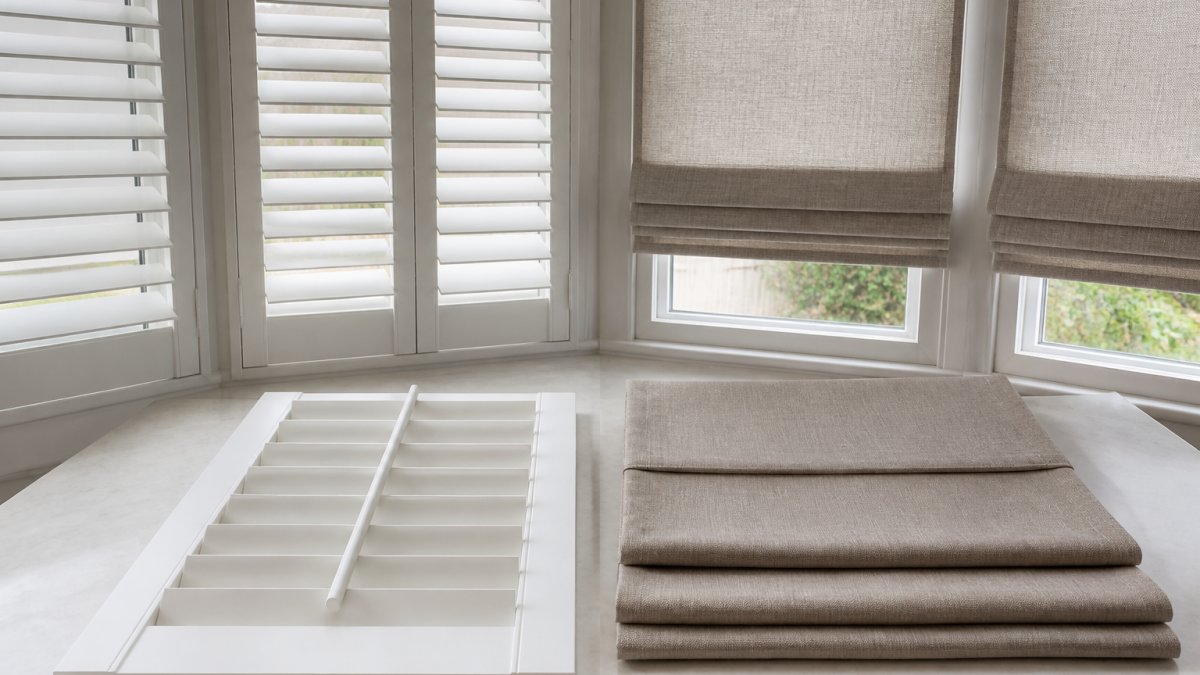
Roman blinds for small windows bring fabric and warmth where a shutter would feel hard and clinical. They fold up in neat horizontal pleats when raised, so a narrow window keeps a soft, layered look without a bulky frame.
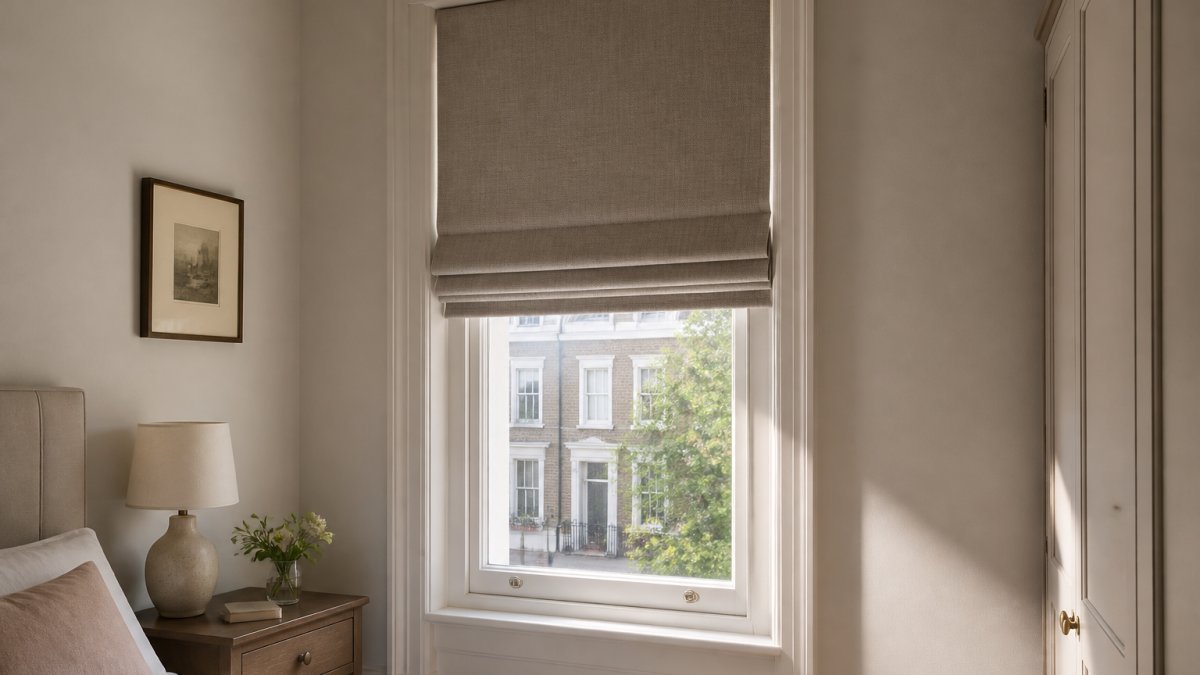
What most guides miss is the stack. A Roman blind gathers fabric at the top when raised, so on a very short window the folded pleats can cover a chunk of the glass. Measure the drop carefully, and pick a lightweight fabric so the folds sit tight.
- Pros: soft finish, wide fabric choice, good for period interiors
- Cons: stack reduces clear glass when raised, less precise light control
- Best for: living rooms and bedrooms in older properties
If you are weighing Roman blinds against a fitted shutter for a bay, our comparison of plantation shutters versus Roman blinds for bays sets out the fit and cost trade-offs.
Privacy Blinds for Small Windows Without Losing Daylight
Privacy blinds for small windows solve a specific problem: keeping a ground-floor or street-facing window private without turning the room into a cave. The best options let light in while blocking the view in.
Top-down-bottom-up blinds are the standout here. You can drop the top of the blind to eye level and leave the lower half clear, so daylight still enters while passers-by cannot see in. Frosted film and sheer fabrics do a similar job for less money.
- Pros: daylight plus privacy, adjustable positioning, good for rentals
- Cons: sheer fabrics offer less blackout, film can bubble if applied poorly
- Best for: ground-floor and street-facing windows
For a deeper look at keeping a small window private without blocking light, see our guide on increasing street level window privacy.
When Bespoke Shutters Still Win on Awkward Windows
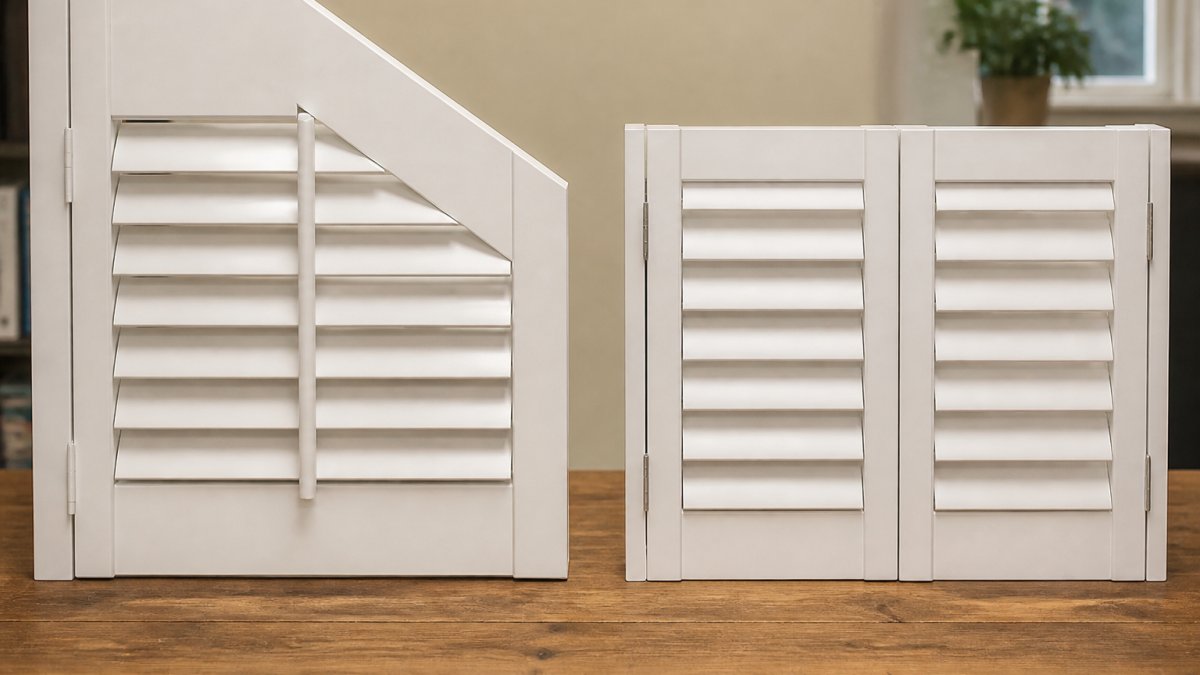
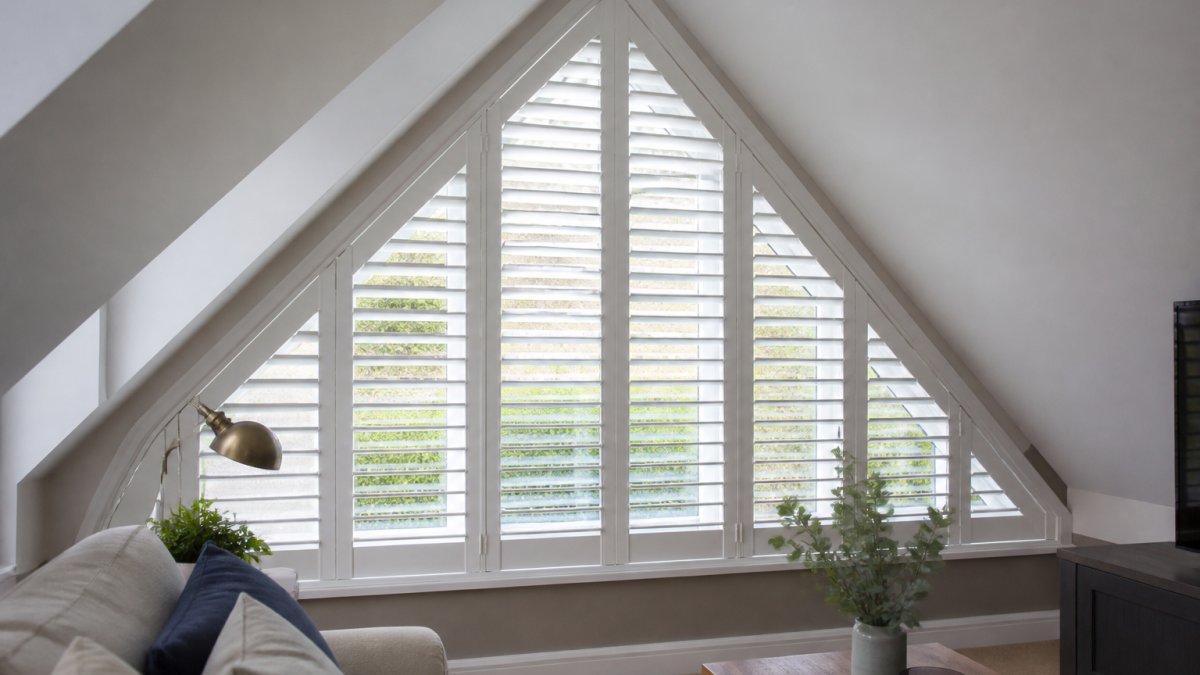
Bespoke shutters still win when the window itself is the problem. An arched frame, a splayed reveal, or a bay with uneven angles will defeat most off-the-shelf blinds. A made-to-measure shutter is built to the millimetre, so it follows the shape rather than fighting it.
This is where Shutters West London earns its place. Every set is made from scratch, never templated, with 30 years of family-run craftsmanship behind it and a 10/10 Checkatrade rating across all reviews. We specialise in bay, arched and awkward shapes that standard blinds cannot handle cleanly.
- Pros: exact fit on complex frames, full light control, durable
- Cons: higher outlay than off-the-shelf blinds, longer lead time
- Best for: bay, arched and irregular windows
If you are deciding whether the extra outlay is worth it, our guide to bespoke shutters versus off the shelf explains where a custom fit genuinely pays off.
Book a Free Home Consultation and Measurement
Choosing between these alternatives comes down to your window, not a catalogue. A narrow sash in a period terrace behaves differently from a compact casement, and the right answer depends on the reveal depth, the drop and how much light you want to keep.
That is why we offer a free home consultation and measurement. We will look at the actual frame, tell you honestly whether a shutter is the right call or whether a blind suits better, and give you a no-pressure quote. You get complete personalisation of styles, colours and tilt rods, full light control with optional blackout, and a premium finish built to last.
Get started with Shutters West London and book your free home consultation and measurement today.
Frequently Asked Questions
What are the best alternatives to plantation shutters for small windows?
The most practical options for small window blinds are Venetian, pleated honeycomb, roller and Roman blinds. Venetian slats give adjustable light control, honeycomb pleats add a layer of insulation, roller blinds suit very narrow frames, and Roman blinds bring fabric texture. Each works well on compact windows, but the right choice depends on how much light control and privacy you need, and whether the frame is square or awkward.
Are roller blinds for small windows a good fit?
Yes. Roller blinds for small windows are among the simplest coverings to fit because the fabric rolls neatly into a compact cassette or bracket at the top of the frame. They block light effectively when you choose a blackout or dimout fabric, and they take up very little window recess. On awkward or narrow frames, check the supplier's minimum width and whether a side-winder or chain operation suits the space.
How can I get privacy on a small window without blocking all the light?
Privacy blinds for small windows work best when you choose a fabric that filters rather than blocks light. Voile, light-filtering roller fabrics and sheer Roman weaves let daylight through while obscuring the view in. Venetian slats tilted partway give the same effect. For bathrooms or street-facing windows, a top-down bottom-up blind lets you cover the lower half for privacy while keeping the top open for daylight.
Are Roman blinds for small windows suitable, or do they look bulky?
Roman blinds for small windows can look elegant rather than bulky if the fabric is lightweight and the folds are kept shallow. On a narrow frame, a single narrow panel with two or three folds sits neatly without crowding the recess. Heavier fabrics stack deeper, so choose a lighter weave or a lined cotton for compact windows. Measure the drop carefully so the folded blind does not cover too much glass when raised.
Are plantation shutters worth it for small windows?
Plantation shutters can still be worth it on small windows when the frame is irregular, such as a bay, arched or Victorian sash window, because bespoke shutters are made to the exact shape rather than trimmed to fit. On a plain square small window, a simple blind often costs less and does the job. The deciding factor is usually the frame shape and how much you value a fitted, permanent finish over a fabric covering.