 comparison
Bespoke Shutters vs Off the Shelf: Which Fit Wins?
Last Updated: 23 October 2026
Quick Summary
Bespoke shutters are made to measure for your specific window, while off-the-shelf sets come in standard sizes and are adjusted on site. For bays, arches and out-of-square frames, bespoke shutters fit flush and give genuine light control, whereas standard sets leave gaps and stress the hinges.
- Off-the-shelf shutters only suit rectangular windows, so bays and arches need made to measure sets.
- We measure every opening individually during a free home consultation before any manufacturing begins.
- The most common false economy is paying a fitter to pack and trim a cheap set for a bay window.
- Bespoke shutters carry a higher upfront cost and a longer lead time than off-the-shelf sets.
- Choose bespoke shutters if you want a specific finish or plan to stay long enough for durability to matter.
Table of Contents
- Bespoke Shutters vs Off the Shelf: The Core Differences
- Bespoke Shutters vs Off the Shelf: Side-by-Side Comparison
- Why Made to Measure Shutters Fit Windows Others Miss
- Shutters for Bay Windows: Where Off-the-Shelf Options Fall Short
- What Custom Shutters Cost and Where the Money Goes
- Bespoke Shutters Installation Time: What to Expect
- Which Option Is Right for Your Home?
- Conclusion
- Frequently Asked Questions
Bespoke Shutters vs Off the Shelf: The Core Differences
The difference between bespoke shutters and off-the-shelf shutters comes down to one thing: who decides the dimensions. Off-the-shelf sets are manufactured to a set of standard sizes, then adjusted on site. Bespoke shutters are made to measure for your specific window, which matters enormously in period properties where no two openings are square. At Shutters West London, we have spent 30 years making every set from scratch, never from a template, and the gap between the two approaches shows up in fit, finish and longevity.
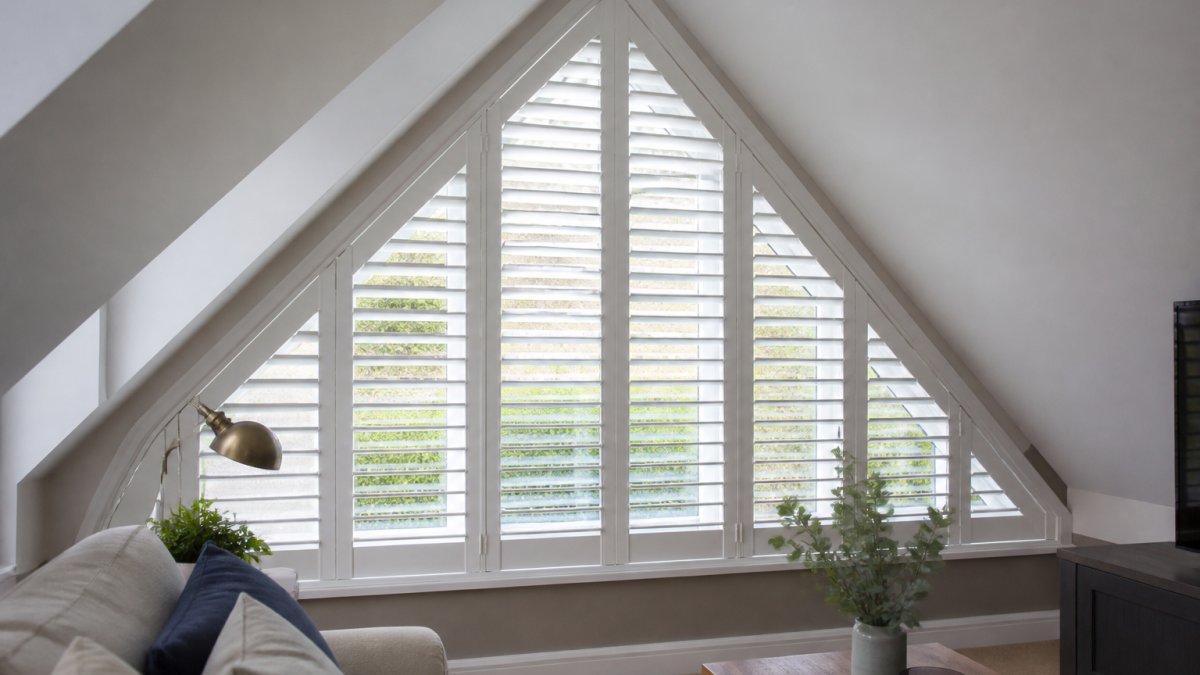
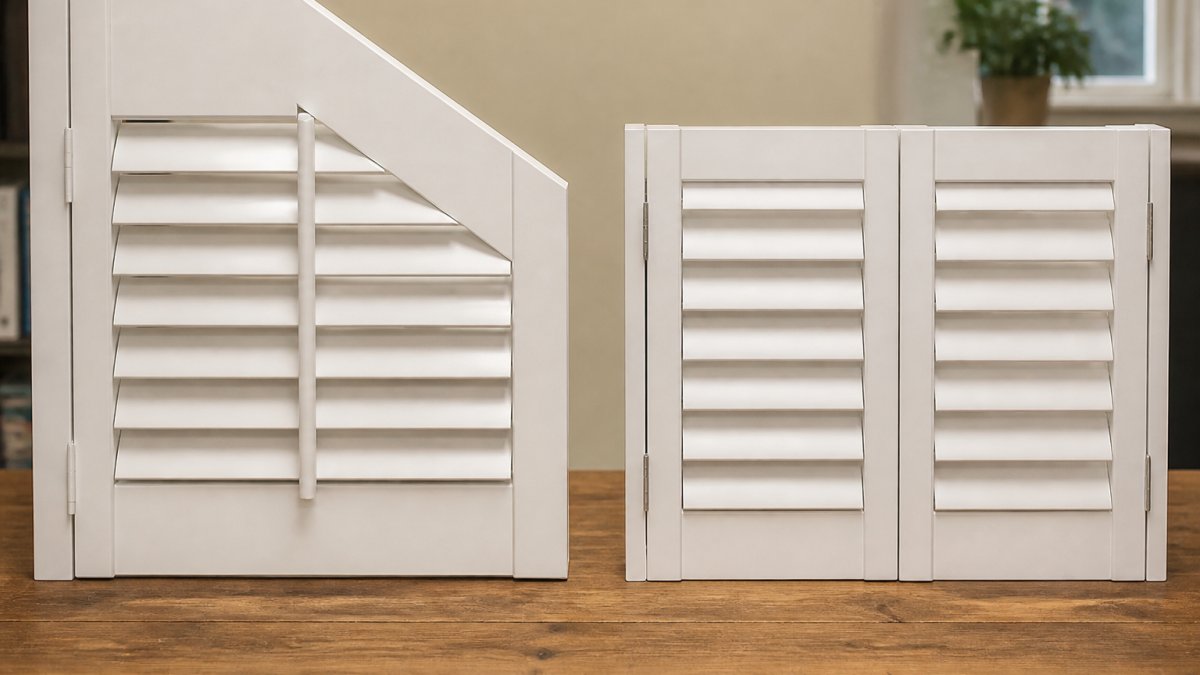
Bespoke shutters are window coverings manufactured to the exact measurements of an individual window, including irregular angles, arched heads and out-of-square frames. Off-the-shelf shutters are pre-manufactured in standard sizes and trimmed or packed to fit at installation.
That distinction drives everything else: cost, lead time, how the panels sit in the frame, and how long the hardware stays smooth. Below, we break down where each option wins and where it quietly fails.
Bespoke Shutters vs Off the Shelf: Side-by-Side Comparison
Here is how the two options compare across the factors that actually affect your home.
| Factor | Bespoke Shutters | Off-the-Shelf Shutters |
|---|---|---|
| Fit | Made to measure, including bays and arches | Standard sizes, adjusted on site |
| Window shapes covered | Any shape, including awkward frames | Rectangular windows only |
| Material and finish choice | Full range of styles, colours, tilt rods | Limited stock finishes |
| Upfront cost | Higher | Lower |
| Lead time | Longer, built to order | Immediate or short |
| Light control | Precise, with optional blackout | Dependent on fit quality |
| Longevity | Built for the specific opening | Prone to sticking and gaps |
The trade-off is straightforward: you pay less upfront for off-the-shelf, and you accept a compromise on fit. For a standard rectangular window in a modern flat, that compromise may be acceptable. For a Victorian bay, it rarely is.
Why Made to Measure Shutters Fit Windows Others Miss
Made to measure shutters solve a problem standard sizes cannot: real windows are rarely square. Frames settle, walls bow, and period openings are frequently a few millimetres out on each side. A standard panel forced into that gap leaves light bleeding at the edges and stress on the hinges.
Our approach is to measure every opening individually and build each set to those numbers. That means angled side panels on a bay, shaped frames around an arch, and tilt rods cut to the correct drop so they sit at a comfortable height. The shutters then close flush, which is what gives you genuine light control rather than an approximation of it.
Shutters for Bay Windows: Where Off-the-Shelf Options Fall Short
Bay windows are where the off-the-shelf approach breaks down most visibly. A bay has three or more panels meeting at angles, and each angle needs its own frame. Standard sets assume right angles and flat walls, so the panels either leave gaps at the joints or sit proud of the frame.
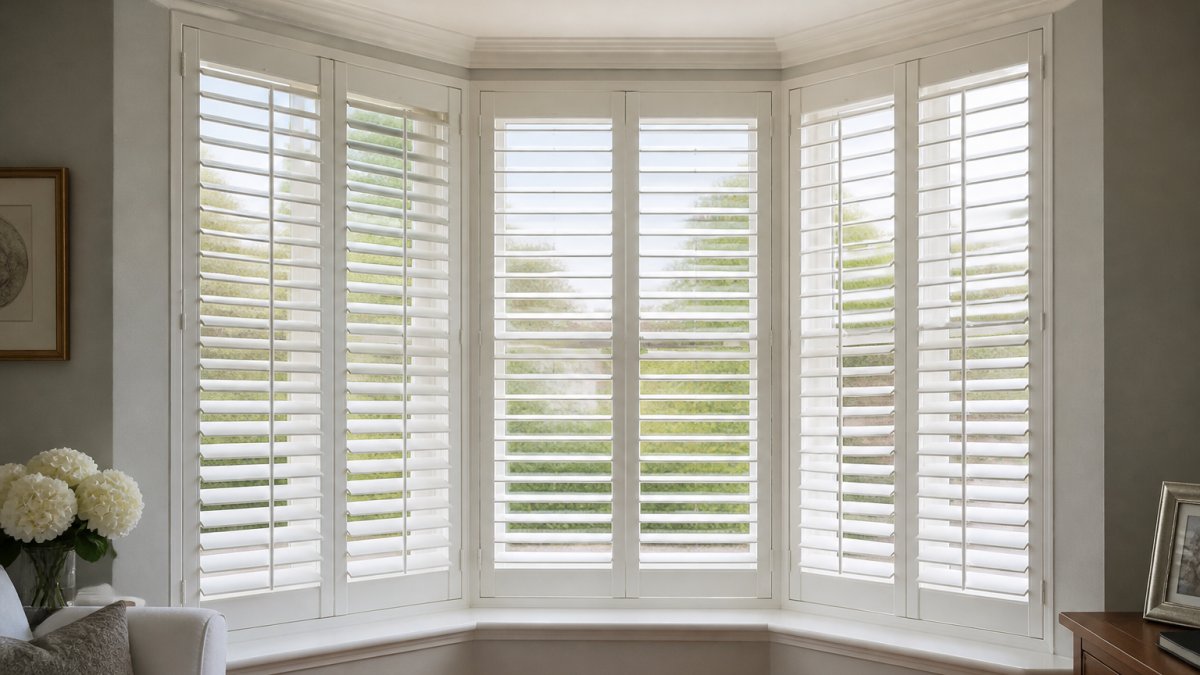
Shutters for bay windows need each section measured and built as a matched set, with the side panels angled to follow the reveal. Get it right and the shutters look like part of the architecture. Get it wrong and you get daylight at every corner and hinges that carry uneven load. Our bespoke shutters for bay windows fitting guide walks through how the angled panels are measured and set out.
What Custom Shutters Cost and Where the Money Goes
Custom shutters cost more than off-the-shelf sets, and the difference is not arbitrary. You are paying for individual measurement, a one-off manufacturing run, and the labour of fitting a set that has to match an irregular opening. Off-the-shelf sets spread their tooling costs across thousands of identical units; a bespoke set carries its own.
Pricing depends on window count, size, material and finish, so we quote per project rather than publish a figure that would not hold. What we will say is that the money goes into the parts that fail first on cheap sets: the frame joints, the hinge alignment and the tilt mechanism. If you are weighing whether the outlay is justified, our honest review of whether shaped shutters are worth the investment sets out the case both ways.
Bespoke Shutters Installation Time: What to Expect
Bespoke shutters installation time runs longer than an off-the-shelf job because the shutters do not exist until they are ordered. The process typically moves through consultation and measurement, a manufacturing period, then a fitting visit. Off-the-shelf sets can go in the same week; a made-to-measure set is a project you plan around.
We measure during a free home consultation, so the timeline starts from accurate numbers rather than estimates. From there, manufacturing and fitting follow in sequence. If you need to plan around work, decorating or a tenancy change, our full bespoke shutter installation timeline breaks down each stage so you know what happens when.
Which Option Is Right for Your Home?
Choose off-the-shelf shutters if every window is a standard rectangle, the budget is tight, and you accept that the fit will be close rather than exact. Choose bespoke shutters if any window is a bay, an arch or out of square, if you want a specific finish, or if you intend to stay in the property long enough for durability to matter.
For most period homes, the decision is made for you by the windows. A standard set cannot follow an angled bay reveal or a shaped head, and no amount of on-site adjustment fixes that. If you are still deciding, our complete buyer's guide to interior shutters covers the styles and options, and our comparison of plantation shutters against cheap blinds shows where the cheaper alternatives give ground.
Conclusion
The harder question is not which option is cheaper today, but which one you will still be happy with in ten years. Off-the-shelf sets suit simple rectangular windows on a tight budget. For anything more complex, the fit is the whole point, and that requires making the shutters for your windows rather than adjusting them afterwards.
At Shutters West London, every set is 100% made to measure and built from scratch, backed by 30 years of family-run craftsmanship and a free home consultation with measurements. We specialise in the bay, arched and awkward shapes that standard sets cannot handle, and we quote honestly with no pressure. Get a free quote from Shutters West London and get shutters built for your windows, not adjusted to them.
Frequently Asked Questions
What is the difference between bespoke and off-the-shelf shutters?
Bespoke shutters are made from scratch to the exact measurements of your window, including the frame depth, reveal and any angles. Off-the-shelf shutters come in standard sizes and are fitted into or onto the frame as closely as possible. The practical difference shows in the edges, the light gaps and how the panels sit in a recess. On a square modern window the gap is small. On a bay, arched or out-of-square frame, standard sizes leave visible gaps and often need packing or trimming to fit.
Are bespoke shutters worth the extra cost?
It depends on the window. For a standard square opening, off-the-shelf can be a reasonable budget choice. For bay windows, arched frames or anything out of square, made to measure shutters usually work out better value over time because the fit is correct from day one. Poorly fitting panels let in light, rattle and put strain on hinges, which shortens their life. A free home consultation and measurement will tell you which category your windows fall into before you commit.
Do off-the-shelf shutters fit bay windows?
Rarely well. Bay windows involve multiple panels meeting at angles, and each section usually has slightly different dimensions. Standard-sized shutters cannot follow those angles without gaps at the joints or panels that sit proud of the frame. Shutters for bay windows need each panel measured and cut individually so the corners meet cleanly. This is the single most common reason homeowners with period bay windows end up replacing ready-made shutters with bespoke ones.
How long do bespoke shutters take to make and install?
Bespoke shutters installation time runs from the initial consultation and survey through to fitting day. Because every set is made from scratch rather than pulled from stock, expect a lead time measured in weeks rather than days, with the exact figure depending on the specification, the number of windows and the time of year. The fitting itself is usually completed in a single visit for a typical home. Ask for a written timeline with your quote so you can plan around it.
Can ready-made shutters be cut to fit?
They can be trimmed, but only within limits. Cutting a standard panel shortens it without reshaping the frame or the tilt mechanism, so the proportions change and the edges may not sit flush. Trimming also removes any factory finish from the cut edge, which needs sealing. On angled bay sections, cutting cannot create the mitred joints a proper fit needs. If your window is more than slightly out of square, made to measure shutters are the more reliable route.