 comparison
Plantation Shutters vs Curtains for Privacy: 2026 Guide
Table of Contents
- Plantation Shutters vs Curtains for Privacy: The Core Differences
- Privacy Window Treatments for Ground Floor Rooms
- Plantation Shutters vs Roman Shades for Bays
- Pros and Cons of Shutters and Curtains for Privacy
- Light Control, Insulation and Long-Term Durability
- Common Mistakes When Choosing Privacy Window Dressings
- Frequently Asked Questions
Last Updated: September 16, 2026
Plantation Shutters vs Curtains for Privacy: The Core Differences
Choosing between plantation shutters and curtains for privacy comes down to one structural fact: shutters block sightlines with rigid, adjustable louvres, while curtains block them with fabric that hangs in fixed folds. This guide from Shutters West London breaks down how each option performs, where each falls short, and which suits ground-floor rooms, bays, and period properties.
The distinction matters more than most buying guides admit. A curtain either covers a window or it doesn't. A shutter lets you angle a louvre to cut a passer-by's eyeline while still letting daylight rake across the ceiling.
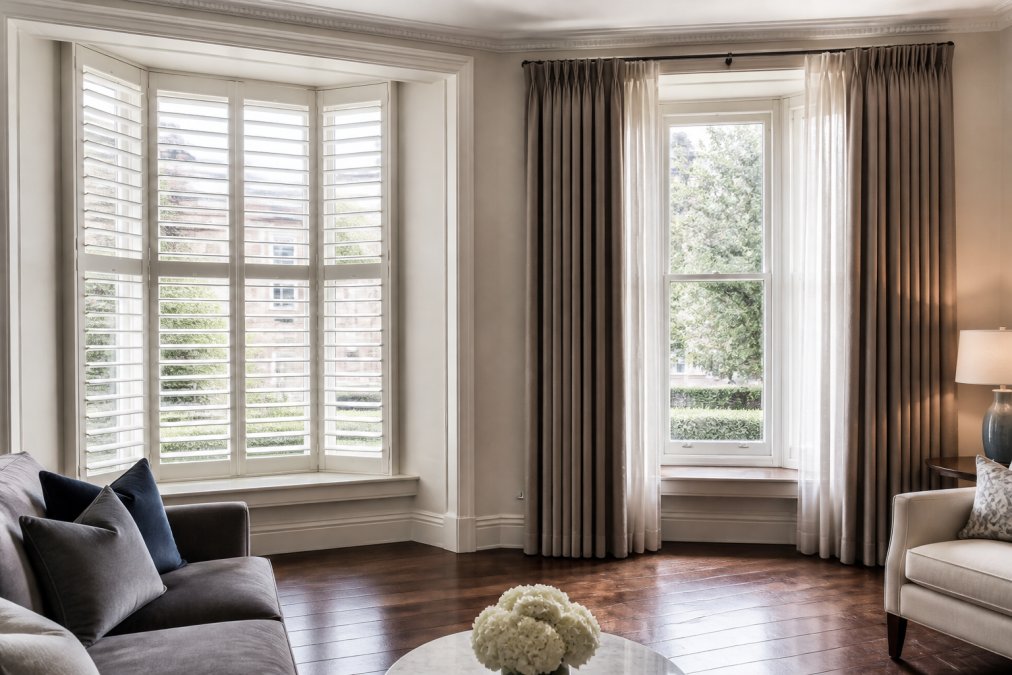
Plantation shutters are rigid internal window coverings built from timber or composite, with horizontal louvres set inside a made-to-measure frame that fixes directly to the window reveal. That fixed frame is what separates them from curtains: there are no gaps at the sides for a sightline to slip through.
How Louvres and Fabric Control Sightlines Differently
Louvres control sightlines by angle. Tilt them partway and you block the horizontal view from the street while keeping the vertical light. Fabric controls sightlines by coverage. A curtain only blocks what it physically covers, and it covers that area completely or not at all.
That single difference drives most privacy decisions. In practice, it means a shutter can stay partially open all day and still do its job. A curtain has to be drawn to work, which is why so many ground-floor front rooms end up dark by mid-afternoon.
Night-Time Privacy: Where Each Option Falls Short
Night-time privacy is where the comparison gets honest. Once interior lights are on, the physics reverses: a lit room behind glass is far easier to see into than a dark one, so both options have to work harder after dusk.
Curtains fail here in a specific way. Standard unlined fabric becomes semi-translucent under interior lighting, and the silhouette of anyone moving behind it reads clearly from the pavement. Blackout linings or interlined fabrics fix this, but they add cost and bulk, and they still leave the side gaps that curtains are prone to.
Shutters hold up better because the louvres close to a near-seamless surface with no fabric to glow through. The one area to watch is the perimeter: a shutter fitted into the reveal seals the edges, while a shutter hung on the face of the wall can leave a slim light line around the frame. That is a fitting decision, not a product flaw.
Privacy Window Treatments for Ground Floor Rooms
Ground-floor rooms are the hardest case for any window dressing, because street-level sightlines come in at a shallow angle rather than straight on. That angle is why a treatment that looks fully private from inside the room can still leave you visible from the pavement outside.
Privacy window treatments for ground floor rooms need to solve three problems at once: the direct view from the street, the angled view from a passer-by close to the glass, and the loss of daylight that comes with over-covering a window.
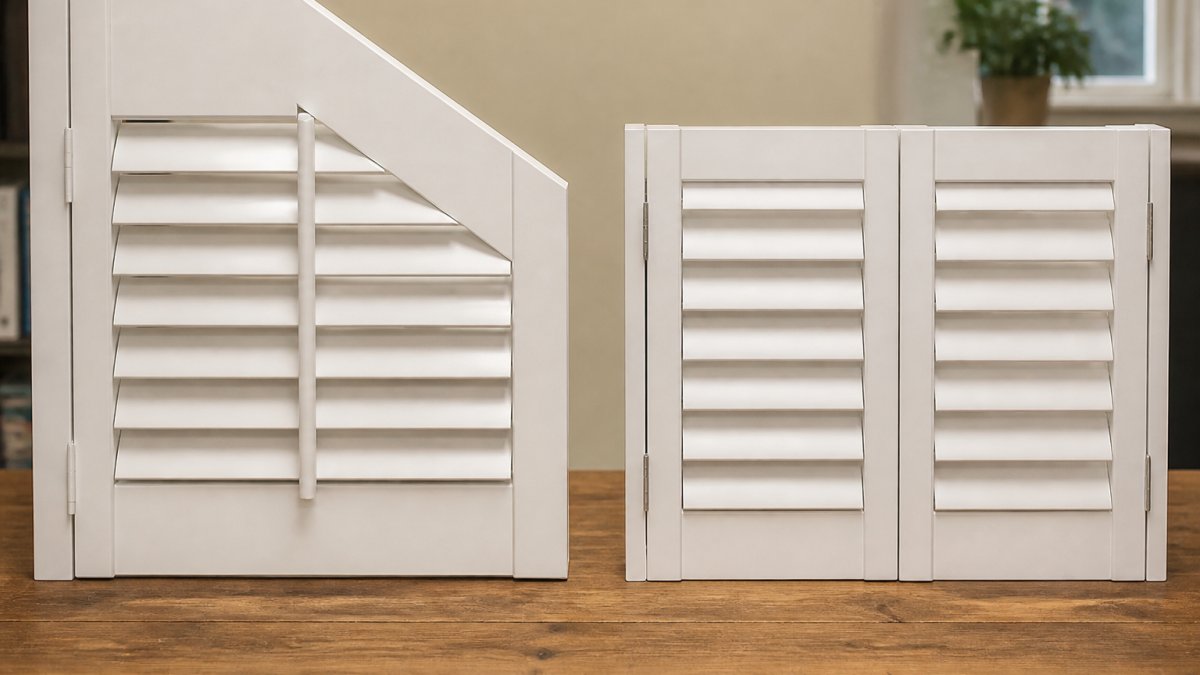
Shutters handle the angled view better than most alternatives because the louvres can be set to block downward and outward sightlines while staying open enough to admit light from above. Café-style shutters, which cover only the lower half of a window, are a common choice for ground-floor front rooms and kitchens for exactly this reason: they protect the eye-level band where passers-by actually look, and leave the top half of the glass clear.
Curtains can work on a ground floor, but they usually need help. A sheer layer for daytime plus a heavy lined layer for evening is the standard approach, and it works, at the cost of two tracks and a room that reads darker than it needs to.
Plantation Shutters vs Roman Shades for Bays
Bay windows change the calculation, because a bay has three or more faces and often a curved or angled junction where they meet. Plantation shutters vs Roman shades for bays is really a question about how each option handles those awkward corners.
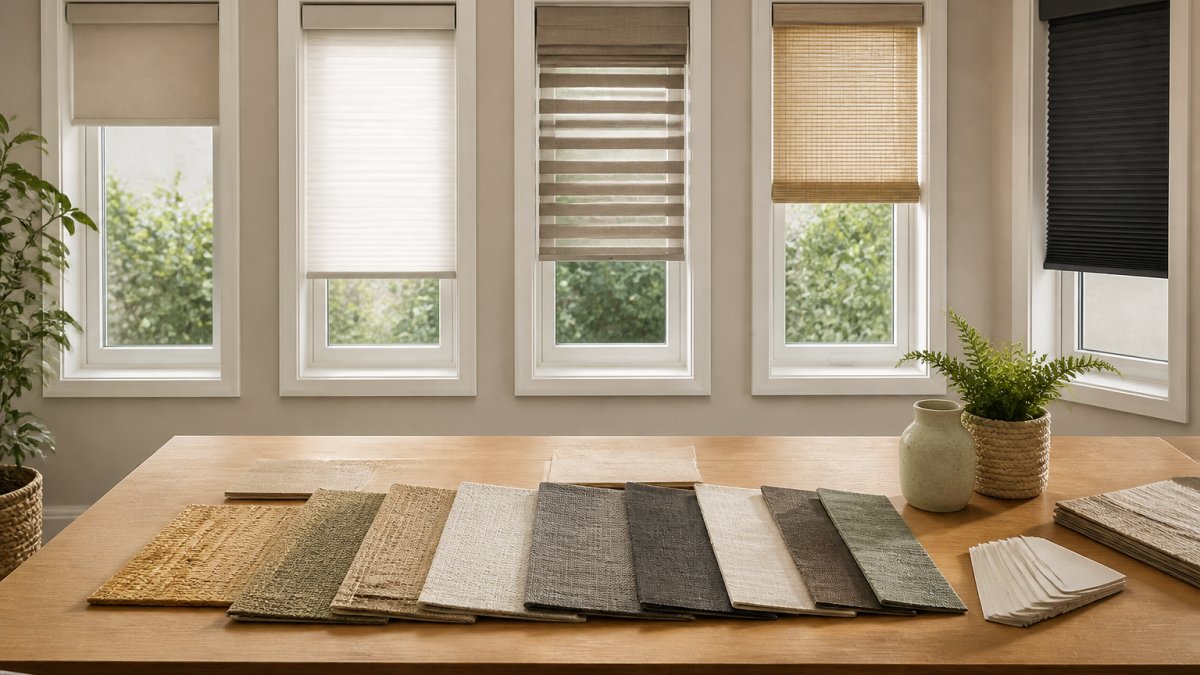
Roman shades are fabric panels that fold upward in soft horizontal pleats. On a flat window they look excellent. On a bay, each face needs its own shade, and the point where two shades meet at an angle is where privacy tends to leak: fabric does not bend around a corner cleanly, so you either accept a gap or overlap the panels and lose light.
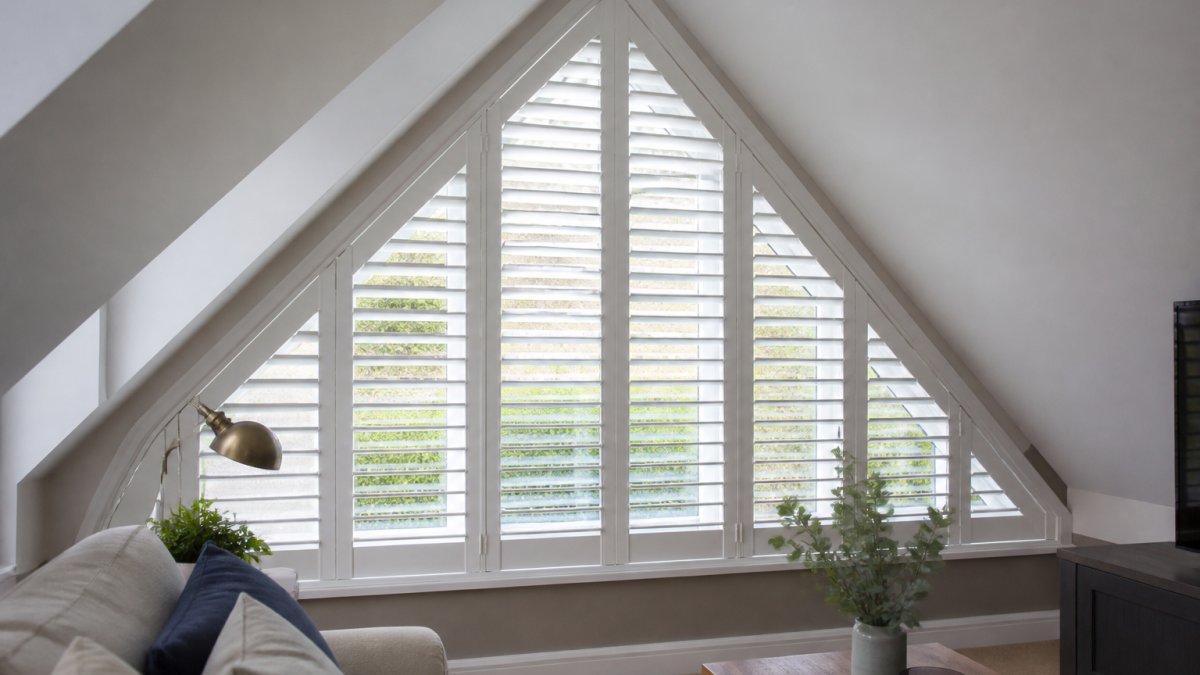
Shutters solve the corner by being built for it. Each face of the bay gets its own made-to-measure panel, and the frame is cut to follow the exact angle where the faces meet. That is the part that cannot be templated, and it is where a made-to-measure approach earns its keep on period properties with Victorian or Edwardian bays.
British Standards Institution guidance on window safety and installation
The trade-off is honest: shutters cost more upfront than Roman shades, and the fitting is more involved.
Pros and Cons of Shutters and Curtains for Privacy
Weighing shutters vs curtains for privacy means separating the two jobs people usually conflate: blocking the view in, and controlling how much light comes through. Each option is genuinely better at one of those jobs.
| Factor | Plantation Shutters | Curtains |
|---|---|---|
| Sightline control | Adjustable louvres, angle-based | Full cover or nothing |
| Side gaps | None when fitted into reveal | Common unless overlapped |
| Night-time performance | Strong; louvres close tight | Depends on lining |
| Daylight while private | High, louvres tilted | Low, must be drawn |
| Cleaning | Wipe down | Regular laundering |
| Durability | Long-lived, hard-wearing | Fabric fades and soils |
| Best for | Ground floor, bays, street-facing | Bedrooms, soft interiors |
Where Shutters Win on Privacy
Shutters win on privacy wherever the sightline is the problem. The louvres give you control that fabric simply cannot match, and the fixed frame removes the side gaps that undermine so many curtain installations.
Where Curtains Win on Privacy
Curtains win in bedrooms, and it is not close. A heavy interlined or blackout curtain delivers total darkness in a way that louvred shutters generally do not, unless you specify a blackout option. For anyone who needs a room genuinely dark to sleep, fabric is the simpler route.
Light Control, Insulation and Long-Term Durability
Durability is where the two options diverge most sharply over time, and it is the factor buyers underweight. Curtains are a consumable: linings perish, fabrics fade in direct sun, and most need replacing or re-lining well before a decade is out. Shutters are closer to a fixture. A well-built hardwood or composite set, correctly fitted, is designed to outlast several rounds of soft furnishings.
Common Mistakes When Choosing Privacy Window Dressings
The biggest mistake is judging privacy from inside the room in daylight. Sightlines change completely at night with the lights on, and a treatment that feels private at noon can be wide open at nine in the evening.
Frequently Asked Questions
Do plantation shutters provide more privacy than curtains?
For most windows, yes. Shutters sit inside the reveal and tilt to block sightlines at any angle, so you can keep daylight coming in while stopping passers-by seeing in. Curtains rely on fabric opacity and need to be drawn fully across the glass to match that level of control. A lined curtain will block more light at night, but shutters give you more precise, adjustable privacy during the day without darkening the room.
Can people see through plantation shutters at night?
If the louvres are closed and the frames are properly fitted, no. The risk comes from gaps: poorly measured panels, wide hinge gaps or light bleeding around the edges. Made-to-measure shutters installed inside the window reveal remove those gaps, which is why accurate measuring matters more than the louvre width. If a room faces a street or footpath, ask about a blackout option or a solid panel section for the lower half.
Are plantation shutters better for privacy in bay windows?
They suit bay windows well because each panel is built to the individual angle of the frame, so there is no bunching or gap where the window turns. Curtains on a bay often leave a sliver of exposed glass at the corners unless you use a specialist track. That said, a bay with deep reveals and awkward angles needs a fitter who has worked with period frames before, since off-the-shelf panels rarely sit flush.
Do curtains offer better insulation than shutters?
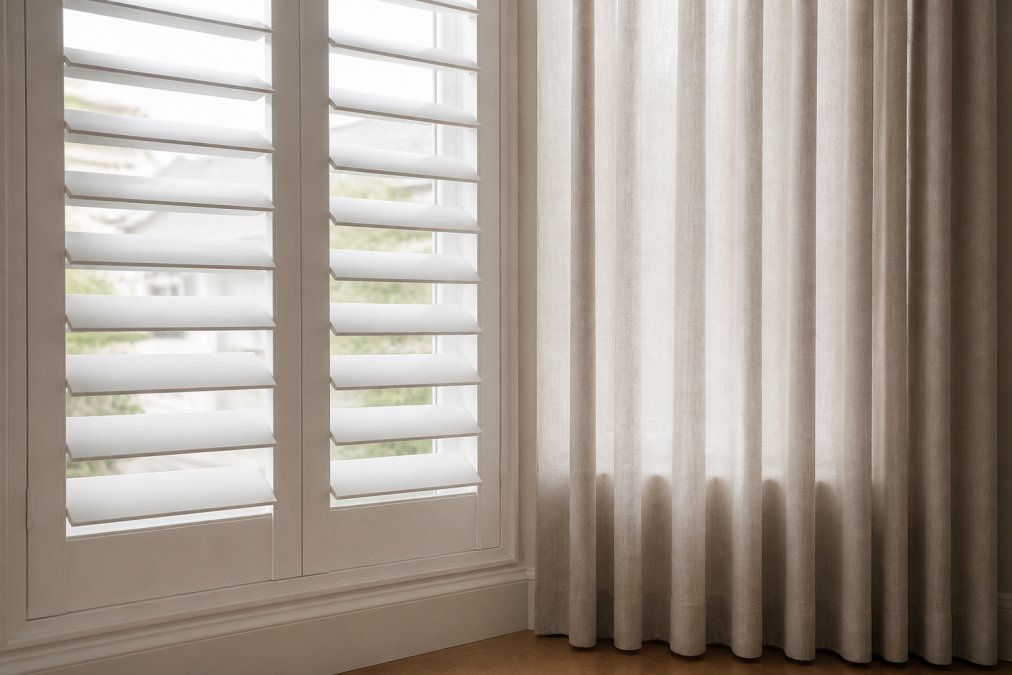
Heavy, lined curtains reduce heat loss noticeably when drawn, especially floor-length ones that overlap the wall. Shutters trap a layer of still air between the louvres and the glass, which helps too, but the effect is smaller than a thick interlined curtain. Many homeowners combine the two: shutters for daytime privacy and light control, curtains for evening warmth and blackout in bedrooms.
How do tier-on-tier shutters improve privacy?
Tier-on-tier shutters split the window into independent top and bottom sections. You can close the lower tier to block street-level sightlines while leaving the upper tier open for daylight, which suits ground-floor living rooms and bay windows facing a pavement. It is a practical middle ground between full shutters and café-style curtains, and it avoids the need to draw a full curtain every time you want privacy.