 how-to
How to Clean Interior Shutters: A Step-by-Step Guide
Table of Contents
- Why Regular Cleaning Matters for Interior Shutters
- Best Tools for Cleaning Shutters
- How to Remove Dust from Shutter Louvres
- Cleaning Wooden vs MDF Shutters
- Step-by-Step Cleaning Process for Interior Shutters
- Common Mistakes to Avoid When Cleaning Interior Shutters
- Maintaining Your Shutters Between Deep Cleans
- Frequently Asked Questions
Last Updated: September 21, 2026
Why Regular Cleaning Matters for Interior Shutters
How to clean interior shutters properly starts with understanding why it matters. Dust and debris build up on louvres over time, making shutters look dull and reducing their ability to control light. Regular cleaning keeps your shutters looking fresh and functioning smoothly.
Interior shutters collect dust faster than other window treatments. This happens because louvres trap particles between their slats. When you clean regularly, you prevent buildup that becomes harder to remove later.
Beyond appearance, clean shutters last longer. Dust can scratch surfaces when you operate the tilt rod. Regular maintenance protects your investment and keeps everything moving freely.
Best Tools for Cleaning Shutters
The right tools make cleaning easier and faster. You don't need expensive equipment, most items you already have at home work well.
Essential tools include:
- Microfibre cloths (trap dust without scratching)
- Soft-bristled brushes (reach between louvres)
- Spray bottles for water or cleaning solution
- Soft sponges (safe for delicate finishes)
- Old toothbrushes (perfect for corners and joints)
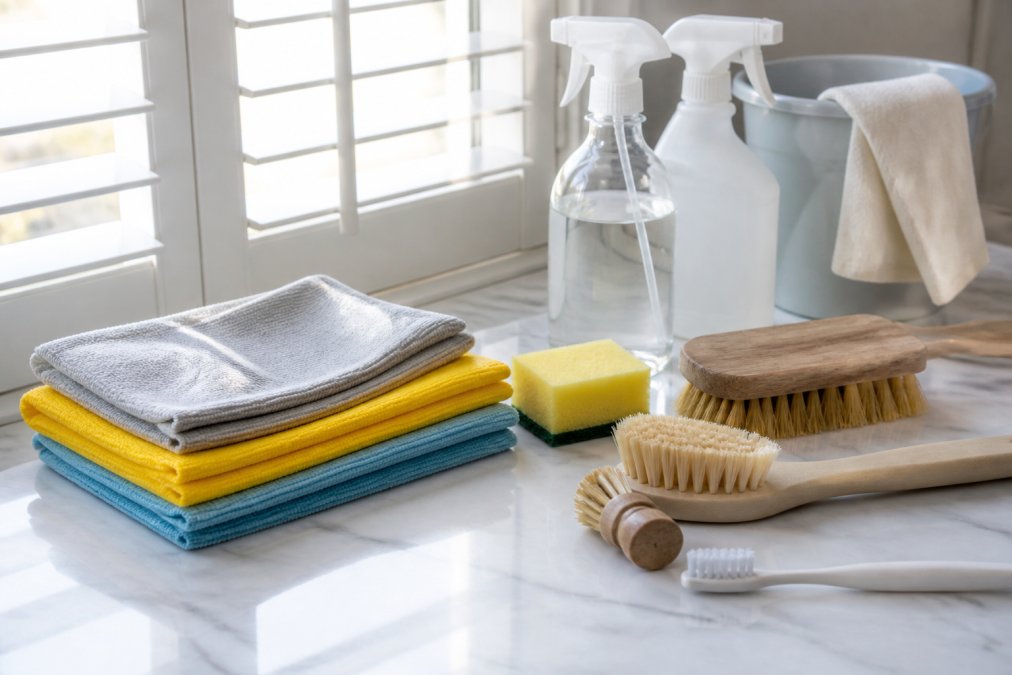
Avoid harsh tools that scratch or damage surfaces. Never use steel wool, abrasive scouring pads, or stiff wire brushes. These damage both wooden and MDF shutters.
For stubborn marks, a small amount of white vinegar mixed with water works well. This natural solution cuts through grime without harsh chemicals. Test any solution on a hidden area first to check for reactions.
How to Remove Dust from Shutter Louvres
Dust removal is the foundation of cleaning interior shutters. Most of the mess sits between the louvres, where it's easy to miss.
Start with a dry microfibre cloth. Pinch the cloth around each louvre and slide it along the length. This captures dust without pushing it deeper into the gaps.
For tight spaces between louvres, use a soft-bristled brush. Hold the brush flat and run it between each pair of slats. Work slowly to avoid scattering dust around the room.
The tilt rod (the rod that opens and closes the louvres) also traps dust. Wipe it thoroughly with a dry cloth. Pay special attention to where it connects to the louvres.
Work from top to bottom. This way, dust falls to areas you haven't cleaned yet, not onto clean sections below. You'll catch it all in one pass.
| Cleaning Stage | Method | Time |
|---|---|---|
| Initial dust removal | Dry microfibre cloth | 5-10 minutes |
| Louvre gaps | Soft brush between slats | 5-10 minutes |
| Tilt rod | Cloth along entire length | 2-3 minutes |
| Final check | Visual inspection | 1-2 minutes |
Cleaning Wooden vs MDF Shutters
Different materials need slightly different approaches. Wooden shutters and MDF shutters look similar but behave differently when wet.
Wooden shutters are more durable but need moisture control. Wood can swell if it gets too wet. Use a damp cloth, not a soaking wet one. Wring out excess water before applying to the surface.
Wooden shutters benefit from occasional conditioning. A furniture polish designed for wood protects the finish and restores shine. Apply it sparingly and buff with a soft cloth.
MDF shutters are engineered wood and more sensitive to moisture. Never soak MDF or let water pool on the surface. MDF swells when wet and doesn't dry well in tight spaces.
For MDF, use a barely damp cloth for wet cleaning. Dry the surface immediately with a separate cloth. This prevents water damage and keeps the finish intact.
Both materials benefit from regular dusting. This is the safest cleaning method for either type. When you do use liquid cleaners, use them sparingly.
Step-by-Step Cleaning Process for Interior Shutters
A systematic approach ensures you don't miss spots and finish efficiently. Follow these steps in order for best results.
Step 1: Prepare Your Workspace and Gather Supplies
Clear the area around your shutters. Move furniture, plants, or decorations that might get in the way. This gives you room to work and prevents accidents.
Gather all your cleaning supplies before you start:
- Microfibre cloths (at least two)
- Soft-bristled brush
- Spray bottle with water or cleaning solution
- Sponge or soft cloth for wet cleaning
- Dry towel for final drying
Lay out supplies on a nearby table. This keeps everything within reach and saves time switching between tools.
Check the weather if your shutters are near windows. Avoid cleaning on humid days if you can. Moisture takes longer to dry in high humidity.
Step 2: Dust the Louvres Thoroughly
Start with the dry microfibre cloth. Pinch it around each louvre and slide from one end to the other. The cloth should capture dust without pushing it between the slats.
Work systematically from top to bottom. This prevents dust from falling onto already-cleaned areas. Take your time on each louvre, rushing misses dust.
For louvres that open and close, position them flat first. This gives you a larger surface to work with and easier access between slats. Then rotate them slightly and repeat.
Use the soft brush for gaps the cloth can't reach. Hold the brush flat against the louvre and slide it gently through the space. Avoid pressing hard, which can scatter dust.
Step 3: Clean the Frames and Stiles
The frame (outer edge) and stiles (vertical supports) collect dust and need attention. Use a damp cloth for this step if the shutters are wooden or if they're visibly soiled.
Wipe the frame with a barely damp cloth. Pay attention to corners and joints where dust accumulates. These spots often get overlooked.
For the stiles, wipe vertically from top to bottom. This follows the grain of wooden shutters and looks natural. Use the same damp cloth, wringing it out frequently.
Dry everything immediately with a clean, dry cloth. This prevents water spots and keeps the finish protected.
Step 4: Address Stubborn Marks and Stains
Marks that don't come off with water need a mild cleaning solution. Mix white vinegar and water in equal parts. This tackles most stains without harsh chemicals.
Apply the solution to a cloth, not directly to the shutter. Wring out excess liquid, the cloth should be damp, not wet. Rub the stain gently until it lifts.
For greasy marks (common near kitchens), a tiny drop of mild washing-up liquid in water works well. Again, apply to the cloth first. Rinse with a clean damp cloth afterwards.
Never scrub hard or use abrasive motions. Gentle pressure with the right solution removes most marks. If something won't budge, it's better to leave it than risk damage.
Dry the area thoroughly after cleaning. Water left on the surface can cause rings or discolouration.
Common Mistakes to Avoid When Cleaning Interior Shutters
Understanding what not to do protects your shutters and saves time.
Using too much water is the biggest mistake. Excess moisture damages wood and causes MDF to swell. Your cloth should feel damp, not dripping. Wring it out thoroughly before touching the shutters.
Scrubbing hard damages finishes. Gentle pressure works better than force. If something won't come clean easily, stop and try a different approach.
Cleaning only the visible surfaces leaves dust hidden between louvres. Spend time on the gaps and tight spaces. This is where most dust hides.
Ignoring the tilt rod means you're missing a major dust trap. The rod moves constantly and collects grime. Clean it every time you clean the shutters.
Using harsh chemicals strips finishes and can discolour surfaces. Stick to mild solutions like vinegar and water. Test anything new on a hidden area first.
Letting water dry on its own causes water spots and rings. Always dry immediately with a clean cloth.
Maintaining Your Shutters Between Deep Cleans
Quick maintenance between deep cleans keeps shutters looking fresh longer.
Frequently Asked Questions
What is the best way to clean interior shutters without damaging them?
Use a soft microfibre cloth or soft-bristled brush to dust louvres gently, working from top to bottom. For wooden shutters, avoid excess moisture; use a barely damp cloth. For MDF shutters, a slightly damper cloth works well. Always support the louvre with your other hand to prevent stress on the hinges. Test any cleaning solution on an inconspicuous area first. Never use abrasive materials or high-pressure water, which can damage the finish and cause warping.
How often should I dust my window shutters?
Dust interior shutters weekly with a soft cloth or brush to prevent buildup. Depending on your environment (dust levels, proximity to traffic, pets), you may need to dust more frequently. A light weekly dust keeps them looking fresh and prevents dirt from becoming stubborn. Deep cleaning with appropriate solutions can be done monthly or quarterly, depending on how much grime accumulates. Regular light maintenance is far easier than occasional heavy cleaning.
Can I use a vacuum cleaner on my interior shutters?
Yes, but with caution. Use a vacuum with a soft brush attachment on low suction to gently remove dust from louvres. Keep the nozzle a few centimetres away and never press it directly against the shutters. A handheld vacuum is ideal for this task. Avoid using the hose attachment directly on wooden shutters, as the suction can be too aggressive. For MDF shutters, a soft brush attachment works well. Always support the louvre with your other hand to prevent any movement that could strain the frame.
What cleaning products should I avoid using on interior shutters?
Avoid harsh chemicals, bleach, abrasive scrubbers, and products containing ammonia or alcohol on wooden shutters, as these can strip finishes and cause discolouration. Don't use oil-based products on MDF, as they can cause swelling. Steer clear of high-pressure steam cleaners and excessive water. Skip furniture polish or wax products unless specifically designed for shutters. For most shutters, warm water with a tiny drop of mild washing-up liquid is sufficient. Always check the manufacturer's care instructions for your specific shutter material and finish.