 how-to
How to Style Plantation Shutters with Curtains for a Layered Look
Last Updated: 22 October 2026
Quick Summary
Hang curtains wider and higher than the window recess so the fabric sits clear of the shutter panels, framing them rather than covering them. This creates a layered look where shutters handle light and privacy while curtains add softness and warmth.
- Mount the pole near the ceiling line or at least above the shutter frame.
- Allow a few centimetres of clearance between the shutter panel and curtain back.
- Floor-skimming hems suit most rooms; sill-length suits kitchens and hallways.
- Use a bay pole with corner joints rather than a straight pole across a bay.
- Avoid heavy fabric that hides the shutters entirely.
Table of Contents
- Why Layer Curtains with Plantation Shutters?
- How to Hang Curtains with Shutters
- Curtain Colours for Plantation Shutters
- Curtain Length for Layered Window Treatments
- Curtains for Bay Windows with Shutters
- Mistakes to Avoid When Layering Shutters and Curtains
- Frequently Asked Questions
Why Layer Curtains with Plantation Shutters?
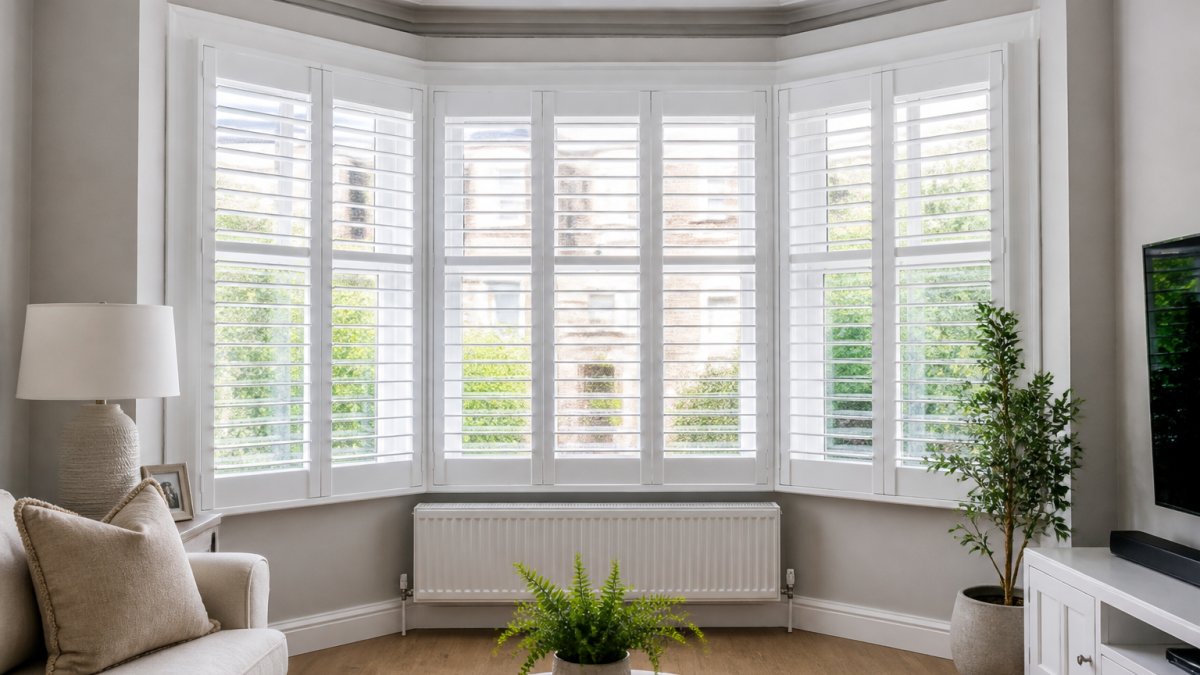
Layering curtains over plantation shutters gives you the best of both worlds: the crisp light control of shutters and the softness of fabric. This layered look is popular because shutters alone can feel a little clinical, especially in period homes with tall bay windows.
The shutters do the practical work. They filter light, block sightlines and keep rooms warm. Curtains add texture, colour and sound dampening. Together they soften a room's edges and make it feel finished.
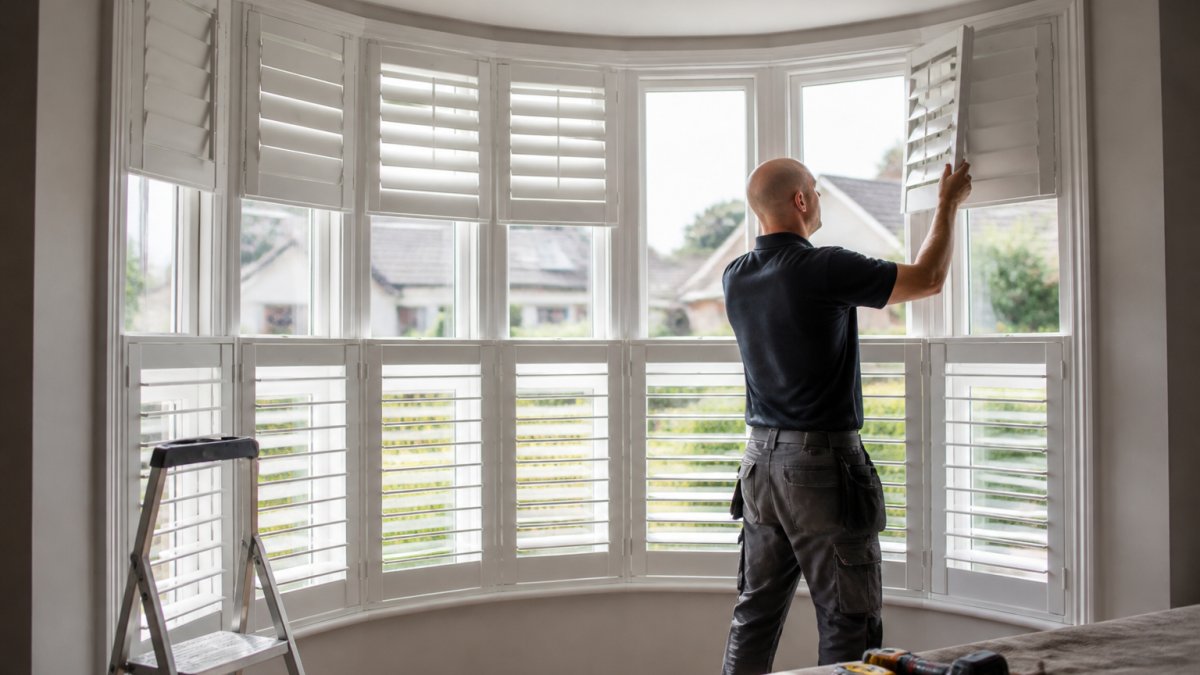
At Shutters West London, we fit made-to-measure plantation shutters into all kinds of window frames, from simple sashes to awkward bays. We see how much difference a well-chosen curtain makes to the final result. This guide shows you how to get it right.
How to Hang Curtains with Shutters
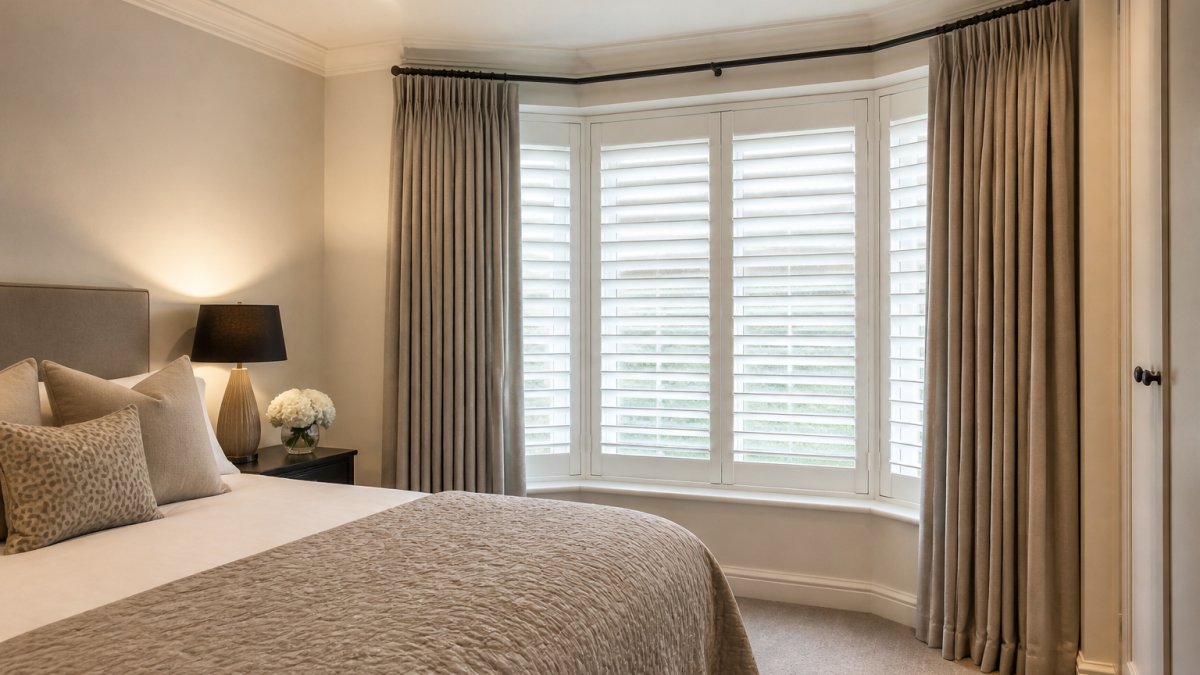
Hang curtains so the fabric sits clear of the shutter panels, not in front of them. The trick is to mount the pole wider and higher than the window recess so the curtains frame the shutters rather than cover them.
Get this wrong and you will fight the fabric every time you open or close the shutters. Get it right and the two work together smoothly.
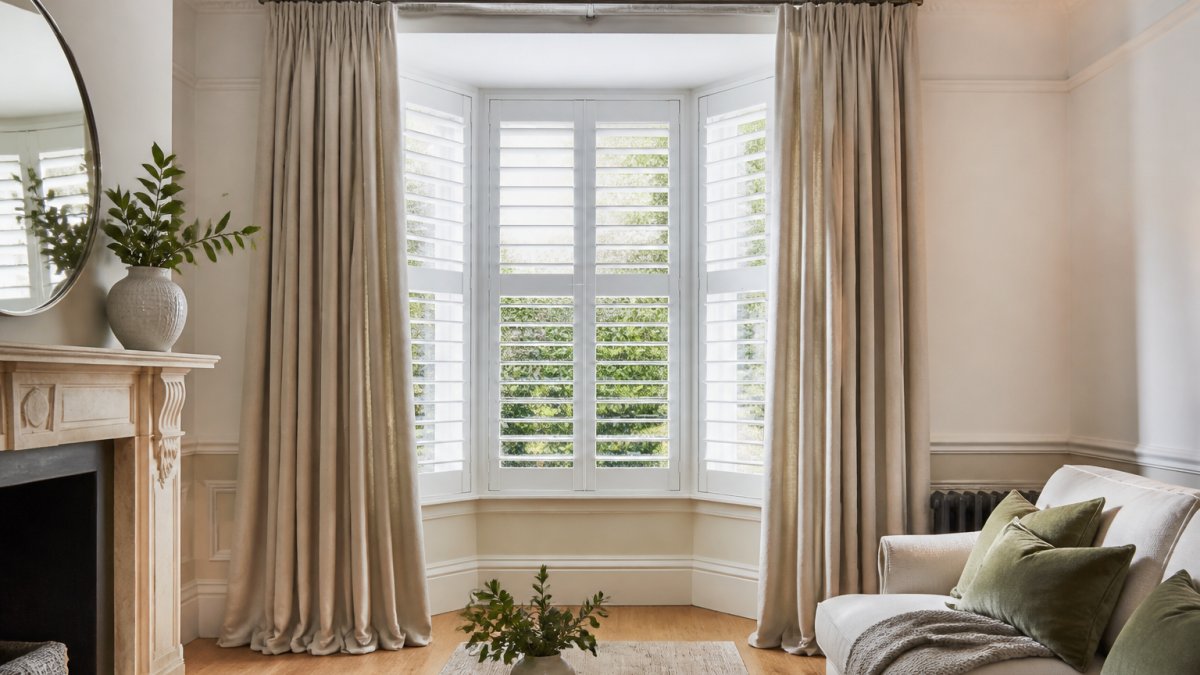
Choosing the Right Curtain Pole and Brackets
Pick a pole that suits the room's age and the shutter's finish. Slim metal poles suit modern rooms. Wooden poles with simple finials suit period properties.
Brackets matter more than most people think. Use brackets that project the pole far enough from the wall so the curtains hang clear of the shutter frame. If the pole sits too close, the fabric will drag across the shutters.
Allow space for both the shutter frame and the folded curtain. Measure the shutter's projection first, then add a few centimetres of clearance.
Positioning Curtains for a Seamless Look
Mount the pole higher and wider than the window. A pole set near the ceiling makes the room feel taller. A pole that extends past the recess lets the curtains stack to the sides when open.
Here is the positioning that works in most rooms:
- Pole height: near the ceiling line or at least above the shutter frame
- Pole width: wider than the recess so curtains stack clear of the glass
- Curtain stack: enough fabric to sit off the window when fully open
- Clearance: a few centimetres between the shutter panel and the curtain back
Keep the curtain hem just touching the floor or hovering slightly above it. That clean line makes the whole window look intentional.
Curtain Colours for Plantation Shutters
Match the curtains to the room's mood, not just the shutters. White shutters pair with almost anything, which is why they are so popular. But the wrong curtain colour can make a room feel flat.
For a calm, airy feel, choose soft neutrals: oatmeal, pale grey, warm cream. These let the shutters stay the star.
For a bit more character, pick a tone that echoes something else in the room, such as a rug or a headboard. Deep greens, muted blues and dusty pinks work well against white shutters.
Dark curtains can be striking, but they make a room feel smaller. Use them in bedrooms where you want a cosy, enclosed feel.
Curtain Length for Layered Window Treatments
Curtain length decides whether a layered window treatment looks tailored or thrown together. The safest choice is floor-length curtains that just skim the floor.
There are three reliable options:
- Floor-skimming: hem sits just above the floor, best for most rooms
- Slight break: hem touches the floor and folds a little, softer and more relaxed
- Sill-length: hem ends at the sill, good for kitchens and busy hallways
Avoid curtains that stop at an awkward mid-wall point. They cut the room in half visually.
For tall bay windows, full-length curtains add height and drama. For smaller windows, keep the hem tidy and avoid heavy fabric that swamps the space.
Curtains for Bay Windows with Shutters
Bay windows are the hardest to dress, and the most rewarding when done well. The angles mean a single straight pole will not work. You need a pole that follows the bay or a set of poles that meet at the corners.
The best approach for a bay is usually a bay pole with corner joints. It follows the shape of the window and lets the curtains hang evenly around the angles.
Keep the shutters fitted tight to each panel of the bay. Then hang the curtains outside the recess so they frame the whole window. This keeps the shutters fully usable while the curtains soften the edges.
Handling Arched and Awkward Windows
Arched and awkward windows need a different plan. A curved pole can follow an arch, but it is often easier to keep the shutters as the main feature and use curtains only at the sides.
For arched windows, fit the shutters to the arch and hang curtains on a straight pole below the arch line. This frames the window without fighting the curve.
Awkward shapes, such as angled or unequal windows, are where made-to-measure shutters earn their keep. We cut every set from scratch to fit the frame, so the shutters sit flush even on tricky shapes. The curtains then only need to frame the opening.
Mistakes to Avoid When Layering Shutters and Curtains
The most common mistake is hanging curtains in front of the shutters instead of beside them. That blocks the shutters and defeats the point of layering.
Other mistakes to watch for:
- A pole mounted too close to the wall, so the fabric drags on the shutters
- Curtains too short, leaving an awkward gap below the window
- Heavy fabric that hides the shutters entirely
- A straight pole on a bay window
- Curtains that clash with the shutter colour instead of complementing it
Measure twice, hang once. A few centimetres of clearance makes the difference between a window that works and one that annoys you daily.
Layering curtains over plantation shutters is one of the simplest ways to make a room feel finished. The shutters handle light and privacy; the curtains add warmth and style. Getting the fit right is the hard part, and that is where we come in.
At Shutters West London, we bring 30 years of family-run craftsmanship to every job. Every set is 100% made-to-measure, never templated, and cut from scratch to fit your window, including bays, arches and awkward shapes. Our free home consultation and measurements take the guesswork out of the process.
Get a free quote from Shutters West London and see how bespoke shutters can transform your windows.
Frequently Asked Questions
Can you put curtains over plantation shutters?
Yes, you can. Curtains over plantation shutters create a layered look that adds softness and extra light control. The shutters handle privacy and glare, while curtains add warmth and colour. Just ensure the curtain pole is mounted far enough forward so the curtains don't catch on the shutter frames. This setup works especially well in period properties with bay windows, where bespoke shutters and made-to-measure curtains can be fitted together.
How do you hang curtains with plantation shutters?
Fit the shutters first, then mount a curtain pole on the wall or ceiling above the window. Leave at least 10-15 cm between the shutter frame and the pole so the curtains hang freely. Use brackets that extend the pole forward. For a clean look, choose a pole that matches your shutter colour or a contrasting metal finish. Always measure with the shutters open to ensure the curtains don't block the window when drawn back.
Should curtains sit in front of or beside plantation shutters?
Curtains should sit beside the shutters, not in front of them, to create a proper layered effect. Hanging them beside means you can close the curtains for extra darkness or insulation without interfering with the shutter operation. If you hang them in front, you lose the layered look and may block light. For bay windows, use a curved pole or track that follows the window shape so curtains sit neatly beside each shutter panel.
What curtain colours work best with plantation shutters?
For a calm, cohesive look, choose curtain colours that echo the shutters: soft whites, creams, or pale greys for white shutters, or deeper tones like navy or forest green for contrast. In period homes, warm neutrals and muted heritage colours often suit the architecture. If you want the shutters to stand out, pick a curtain fabric that contrasts in tone but matches the room's palette. Always test fabric samples in the room's light before committing.