 how-to
How to Clean Wooden Window Shutters: A Simple Guide
Table of Contents
- Why Wooden Shutters Need a Different Cleaning Approach
- How Often to Clean Window Shutters
- How to Remove Dust from Shutter Louvres
- The Best Cleaning Products for Wooden Shutters
- How to Clean Wooden Window Shutters Without Warping the Wood
- Tackling Stubborn Marks and Stains
- Common Mistakes That Damage Wooden Shutters
- Frequently Asked Questions
Last Updated: September 23, 2026
Why Wooden Shutters Need a Different Cleaning Approach
Wooden shutters are a real investment, and they reward careful handling. Unlike uPVC or aluminium, timber is porous. It drinks in moisture, swells, and can warp if you treat it like a plastic blind. That single fact shapes everything about how to clean wooden window shutters.
At Shutters West London, we've fitted made-to-measure shutters in period homes for three decades.
Cleaning a wooden shutter is really two jobs. First, routine dust control. Second, occasional deeper cleaning. Treat them the same and you'll either scratch the surface or soak the wood.
Get the method right and your shutters last for years. Get it wrong and you'll be sanding, repainting, or replacing panels.
How Often to Clean Window Shutters
Dust your wooden shutters once a week, and give them a deeper clean every two to three months. That rhythm keeps louvres moving freely and stops grime baking onto the finish.
How often to clean window shutters depends on your home. A kitchen or bathroom shutter collects grease and steam fast. A bedroom shutter on a quiet street needs far less attention.
If you can see a grey film on the louvres, you've waited too long. Dust holds moisture against the wood and dulls the stain over time.
A Simple Weekly and Monthly Routine
A light, consistent routine beats an occasional deep scrub every time. Here's a schedule that works for most homes:
| Task | Frequency | Time Needed |
|---|---|---|
| Dry dust louvres and frame | Weekly | 5-10 minutes |
| Vacuum with brush attachment | Fortnightly | 5 minutes |
| Check tilt rod and hinges | Monthly | 2 minutes |
| Damp-wipe and spot-clean | Every 2-3 months | 20-30 minutes |
The tilt rod is the part most people ignore. A quick check keeps the mechanism smooth.
How to Remove Dust from Shutter Louvres
The best way to remove dust from shutter louvres is dry first, always. A microfibre cloth or a soft brush lifts dust without pushing it into the grain. Skip this step and you'll just smear grime around when you damp-wipe later.
Work top to bottom, one louvre at a time. Close the slats flat, dust the face, then tilt them the other way and dust the reverse. This gets both sides without removing the panels.
For a full room, a vacuum with a soft brush attachment is faster than a cloth. The brush head reaches between slats and pulls dust out rather than spreading it.
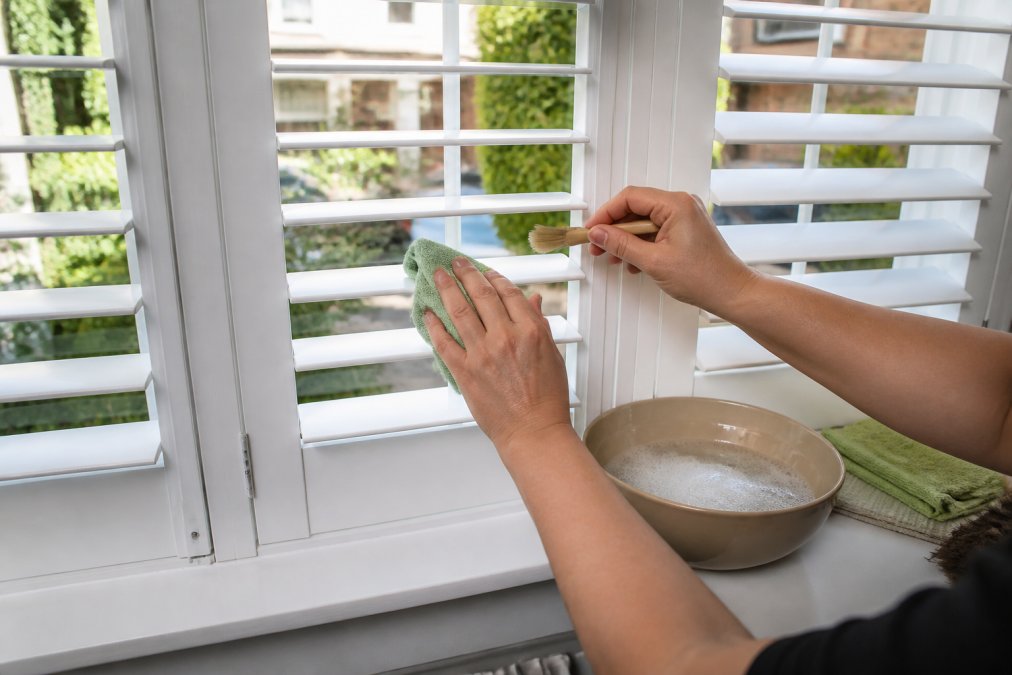
Tools That Reach Between the Slats
You don't need specialist kit, but the right tools make the job quick:
- Microfibre cloths for the frame and flat faces
- A soft brush or paintbrush for the louvre edges
- A vacuum brush attachment for a whole room
- Cotton buds for the corners and hinge recesses
- A dry paintbrush for the tilt rod grooves
A common mistake is using a feather duster. It looks tidy but just flicks dust into the air, and it settles straight back on the slats.
The Best Cleaning Products for Wooden Shutters
The best cleaning products for wooden shutters are mild and water-light. A drop of gentle washing-up liquid in warm water covers almost every job. For routine work, a dry microfibre cloth is all you need.
Avoid anything abrasive, ammonia-based, or alcohol-heavy. These strip the finish and leave the wood looking patchy. That's true whether your shutters are painted or stained.
If you want a dedicated product, look for wood-safe cleaners with a neutral pH. Test any new product on a hidden edge first.
What to Avoid on Painted and Stained Wood
Painted and stained shutters need the same gentle approach, but the risks differ.
- Painted wood: harsh chemicals lift the paint and cause flaking
- Stained wood: solvents fade the colour and dry out the timber
- Both: too much water causes swelling at the joints
- Both: scouring pads scratch the surface permanently
Stick to a soft cloth. If a mark won't budge, dampen the cloth slightly and dab, don't scrub.
How to Clean Wooden Window Shutters Without Warping the Wood
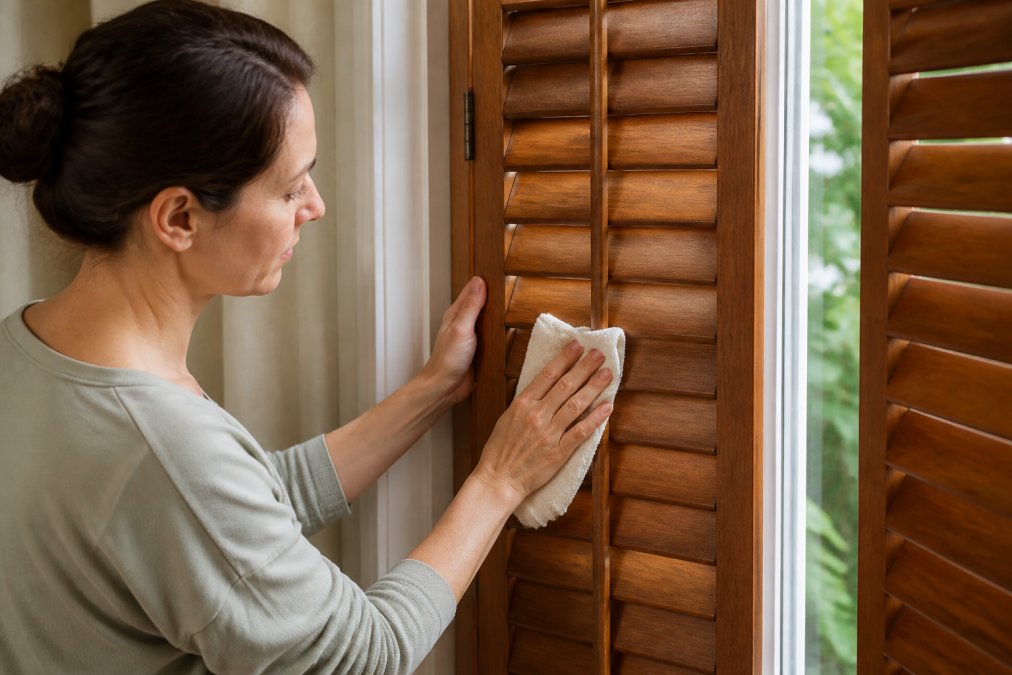
The trick to cleaning wooden shutters without warping is simple: keep water to a minimum. A cloth wrung out until it's barely damp is your limit. Wood warps when it soaks up moisture, not when it's wiped.
Follow this method for a safe deeper clean:
- Dust the whole shutter first and let it settle.
- Mix a few drops of mild soap in warm water.
- Dip a microfibre cloth, then wring it out hard.
- Wipe each louvre, front and back, without soaking.
- Dry immediately with a clean, dry cloth.
- Leave the slats open so air reaches the joints.
The drying step is the one people skip. Wet wood left to air-dry on its own is where warping starts.
For general guidance on keeping timber dry and stable, the Wood Protection Association guidance is a useful reference.
Tackling Stubborn Marks and Stains
Most stubborn marks come off with patience, not force. Grease, fingerprints, and water spots usually lift with a barely-damp cloth and a little mild soap. Scrub harder and you'll damage the finish.
Match the method to the mark:
- Grease (kitchen shutters): a drop of washing-up liquid on a damp cloth
- Water spots: a dry cloth first, then a light damp wipe
- Crayon or ink: a specialist wood-safe cleaner, tested first
- Scuffs: a soft eraser, used gently
For anything that won't shift, stop. Forcing it is how people scratch the paint and end up needing a touch-up.
Common Mistakes That Damage Wooden Shutters
Most damage we see comes from a handful of habits. Avoiding them is easier than repairing the wood later.
- Soaking the wood. Too much water swells joints and warps panels.
- Spraying cleaner directly on. Liquid pools in the hinges and grooves.
- Using abrasive pads. They scratch paint and stain in seconds.
- Ignoring the tilt rod. Grit builds up and the mechanism starts to grind.
- Cleaning in direct sun. Heat dries the surface too fast and can crack the finish.
- Skipping the dry. Wet wood left to air-dry is where warping begins.
A well-made, made-to-measure shutter handles cleaning far better than a cheap template fit. It's why we still make every set from scratch, never from a template.
If you're weighing up options, the British Woodworking Federation guidance on timber care is worth a read before you buy.
Cleaning wooden shutters well comes down to one habit: dry first, damp rarely, and dry again. Get that right and your shutters stay smooth, straight, and beautiful for years.
If you'd rather start with shutters built to fit your windows properly, Shutters West London can help. We offer a free home consultation and measurements, 100% made-to-measure shutters, and expertise in bay, arched, and awkward window shapes. Our family-run team has 30 years of craftsmanship behind every set, and our customers rate us 10/10 on Checkatrade.
Get started with Shutters West London and enjoy shutters that are as easy to care for as they are to look at.
Frequently Asked Questions
Can you use water on wooden shutters?
You can, but sparingly. Dampen a microfibre cloth rather than soaking it, and wring it out fully before wiping the louvres. Standing water and drips are what cause warping, swelling and lifted paint on wooden window shutters. Never spray water directly onto the slats or pour it over the frame. Dry each section with a separate cloth as you go, and keep the room ventilated so any remaining moisture evaporates quickly.
What is the best way to dust wooden shutters?
Work top to bottom so dust falls onto areas you have not cleaned yet. Use a microfibre cloth or a soft brush attachment on a vacuum for the louvres, and a dry paintbrush for the tight corners where the slats meet the frame. Close the louvres flat to dust one side, then tilt them the other way for the second pass. Doing this weekly stops dust settling into the grain and turning into a sticky film.
Can I use furniture polish on wooden window shutters?
Avoid silicone-based polishes. They leave a greasy residue that attracts dust, so your shutters end up dirtier faster and need cleaning more often. Wax-based products made for painted or sealed wood are a safer choice, applied thinly with a soft cloth and buffed off. Test any product on a hidden louvre first, especially on stained or painted finishes where a patchy result is hard to correct.
How do you remove stubborn stains from wooden shutters?
Mix a small amount of mild washing-up liquid with warm water and apply it with a barely damp cloth, working gently along the grain. For grease near a kitchen window, this usually lifts the mark in one or two passes. Crayon, felt tip or sticky residue often responds to a little warm soapy water rather than scrubbing. Never use abrasive pads, bleach or solvent cleaners, as these strip the finish and leave the wood exposed.