 how-to
How to Modernise a Bay Window: A Step-by-Step Guide
Table of Contents
- Why Bay Windows Date (And What Actually Changes Them)
- What You'll Need Before You Start
- Step 1: Assess Your Bay Window's Shape and Condition
- Step 2: Choose Modern Bay Window Dressing Ideas That Work
- Step 3: How to Measure Bay Windows for Shutters
- Step 4: Why Bespoke Plantation Shutters for Bay Windows Beat Off-the-Shelf Options
- Step 5: Installation, Finishing Touches, and Common Mistakes to Avoid
- Conclusion
- Frequently Asked Questions
Last Updated: September 17, 2026
Why Bay Windows Date (And What Actually Changes Them)
Bay windows rarely look tired because of the glass. They look tired because of what sits on them. Heavy swags, fussy valances and thick curtains were designed for a different era of heating, lighting and taste. At Shutters West London, we see this constantly: a beautiful Victorian or Edwardian bay hidden behind fabric that blocks the very light the window was built to capture.
Modernising a bay window is about three things: cleaner lines, better light control and a fit that follows the angles of the frame. That last point matters most. A bay is not a flat wall, and anything that ignores its geometry will always look like an afterthought.
Here's the good news. You do not need to replace the window itself to transform the room. Below, we'll answer how to modernise a bay window? step by step, from assessing the frame to finishing the install.
What You'll Need Before You Start
Gather a few basics before you begin. The right tools make measuring and fitting far less stressful.
- A metal tape measure, not a fabric one
- A spirit level
- A pencil and paper for sketches
- A step ladder for high bays
- A torch for checking frame condition
- A camera or phone to photograph the angles
You will also need a clear idea of how you want the room to feel. Bright and open? Private and cosy? That decision shapes everything that follows.
Step 1: Assess Your Bay Window's Shape and Condition
Start by understanding what you actually have. Bay windows come in several shapes, and each one behaves differently.
- Angled bay: three panels meeting at 90 to 135 degree angles
- Curved bay: a smooth arc with no sharp corners
- Box bay: a square projection with a flat front
- Arched bay: a curved top section above the main frame
Check the frame for soft wood, peeling paint or draughts. Run your hand along the joins. If the frame moves when you press it, that needs attention before any dressing goes up.
Note the depth of the sill too. Deep sills suit shutters well. Shallow sills limit what you can fit without crowding the glass.
Step 2: Choose Modern Bay Window Dressing Ideas That Work
The fastest way to modernise a bay is to strip it back. Clean lines read as current; heavy layering reads as dated.
Strong modern options include:
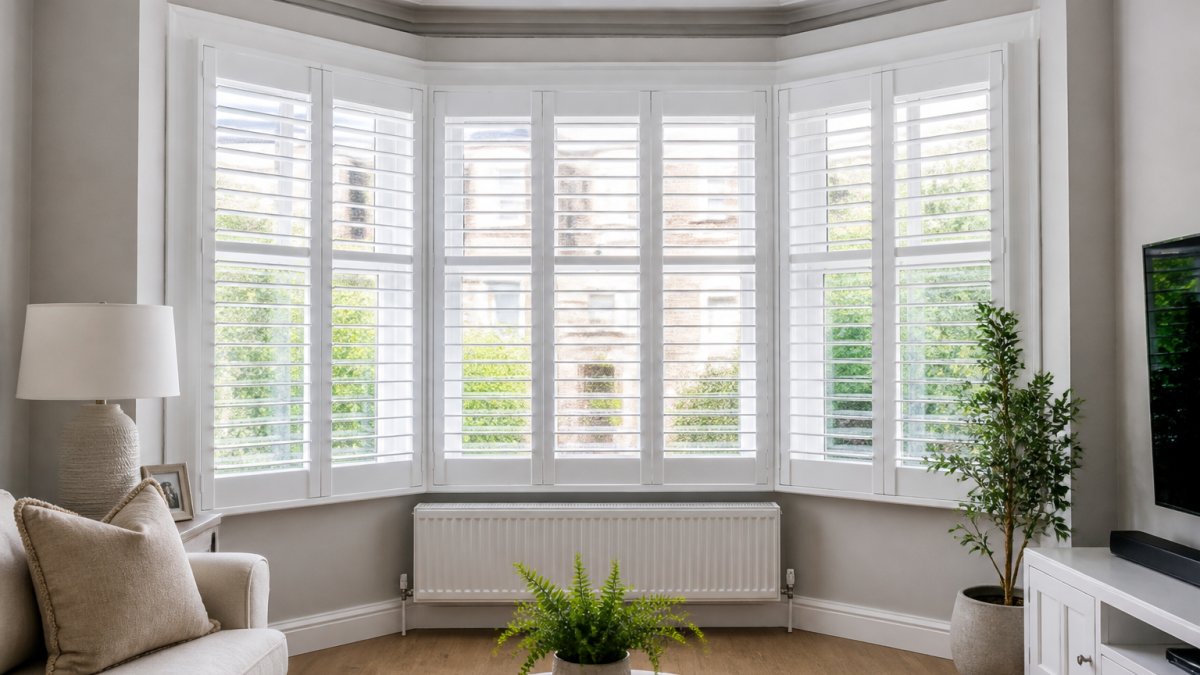
- Plantation shutters in a matte finish, fitted panel by panel
- Roman blinds in a single neutral tone, hung high
- Sheer roller blinds for a soft, minimal look
- No dressing at all on a bay with good glazing and privacy
For most period homes, shutters win. They sit inside the frame, so they follow the bay's shape instead of fighting it. They also give you light control without clutter. Open the slats for daylight, tilt them for privacy, close them for a dark room.
Step 3: How to Measure Bay Windows for Shutters
Measuring a bay for shutters is straightforward if you work panel by panel. Never measure the bay as one unit.
Here is the process:
- Measure the width of each section at the top, middle and bottom
- Record the shortest width for each panel
- Measure the height at the left, centre and right of each section
- Note the depth of the recess from the glass to the front of the frame
- Sketch the bay from above, marking every angle
Take the smallest number in each direction. Frames are rarely perfectly square, and shutters must fit the tightest point.
For angled bays, measure the angle between panels with a protractor or angle finder. Guessing here causes gaps.
British Standards Institution guide to measuring and installation
Step 4: Why Bespoke Plantation Shutters for Bay Windows Beat Off-the-Shelf Options
Off-the-shelf shutters assume a flat, square window. Bays are neither. That mismatch shows up as gaps at the corners, panels that will not close, and slats that bind after a year.
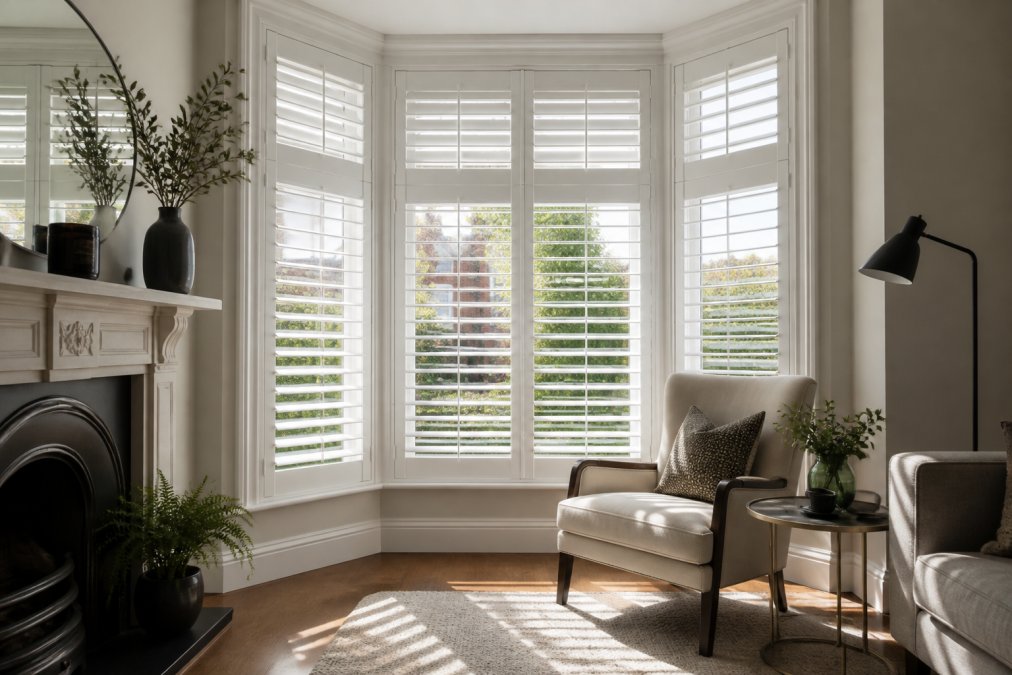
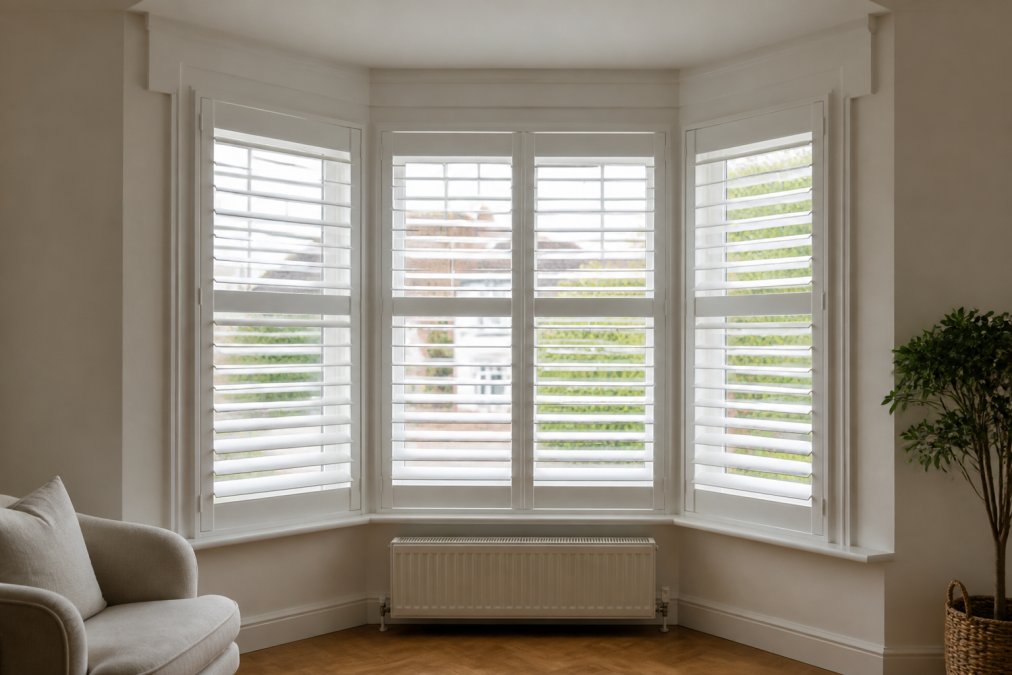
Bespoke plantation shutters for bay windows are made to the exact angles and depths of your frame. Each panel is cut for its own section. That is why they sit flush, close cleanly and last.
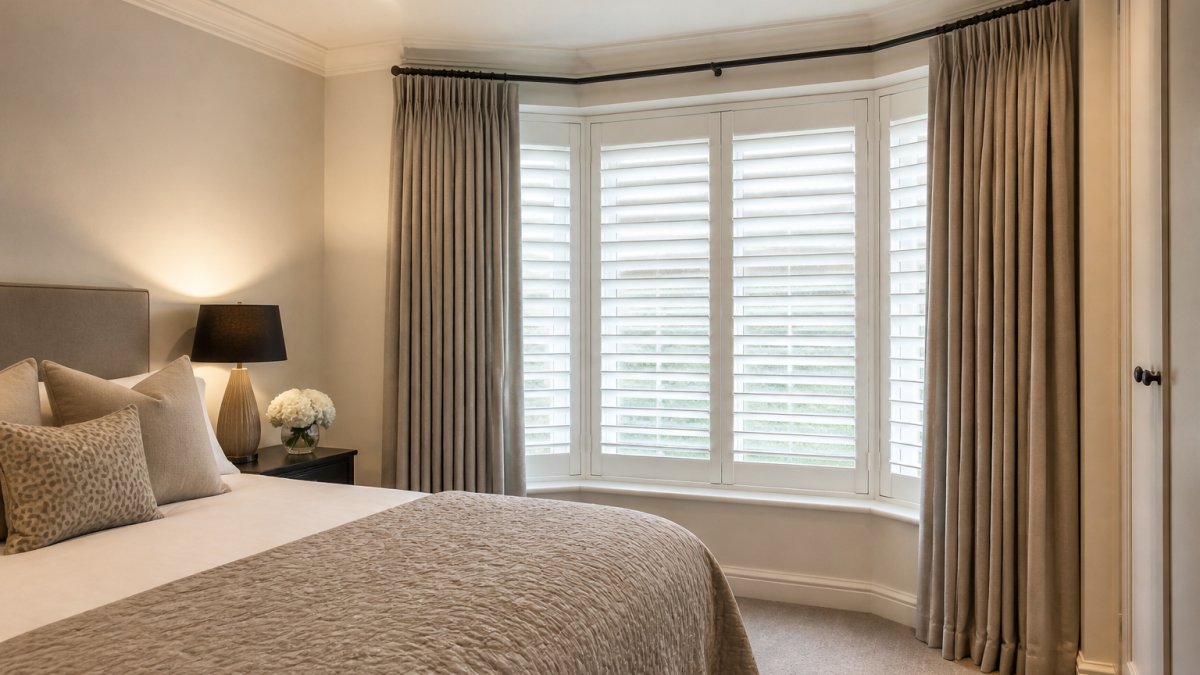
Shutters West London has spent 30 years making every set from scratch, never from a template. For awkward bays and arched frames, that approach is the difference between a clean finish and a compromise. You also get full choice of styles, colours and tilt rods, plus optional blackout for bedrooms.
Step 5: Installation, Finishing Touches, and Common Mistakes to Avoid
Good installation is quiet and precise. Panels are set into the frame, levelled, and checked so every section opens and closes smoothly.
Common mistakes to avoid:
- Measuring once and ordering, instead of checking twice
- Fitting panels tight with no allowance for seasonal movement
- Mixing finishes across sections so the bay looks patched
- Skipping the free home survey and guessing the angles
Shutters West London offers a free home consultation and measurement, so the awkward shapes get measured properly before anything is made. A 10/10 Checkatrade rating across all reviews reflects how that care lands with customers.
Finish with a consistent colour across every panel. Then step back and check the light at different times of day.
Conclusion
Modernising a bay window comes down to respecting its shape. Strip away the heavy fabric, measure each section properly, and fit dressing that follows the angles rather than fighting them.
That is where Shutters West London helps. Every set is 100% made-to-measure, built from scratch by a family-run team with 30 years of experience, with full choice of styles, colours and tilt rods. Book a free home consultation and get a no-pressure quote for shutters that fit your bay exactly.
Frequently Asked Questions
Are plantation shutters suitable for bay windows?
Yes. Bespoke plantation shutters are one of the best options for bay windows because they are made to measure each panel individually, so they follow the angles and curves of the frame exactly. Unlike curtains or blinds, they don't block the window recess or look bulky. They give you precise light control with adjustable slats and add a clean, modern finish that suits both period and contemporary homes.
How do I measure bay windows for shutters?
Start by measuring the width and height of each section of the bay at the point where the shutter frame will sit. Measure the depth of the recess too, as this affects the frame style. For angled bays, measure each face separately and note the angle. It's easy to get wrong, so a professional measuring service is worth it. Most bespoke shutter companies offer a free home consultation and will take exact measurements for you.
What are the best modern bay window dressing ideas?
Plantation shutters in a crisp white or soft grey finish are a popular choice for a contemporary look. Other options include floor-to-ceiling curtains in a simple fabric, Roman blinds in a neutral tone, or a mix of shutters on the lower half and a valance above. The key is to keep lines clean and avoid heavy swags or fussy patterns. Consider how much light and privacy you need in the room before deciding.
Can I add seating to a bay window to modernising it?
Yes. A built-in window seat is a classic way to make a bay window feel intentional and modern. It adds storage if you include drawers underneath and creates a cosy reading nook. Pair it with shutters rather than curtains so the seat area stays clear. The seat should be no higher than the window sill, and you'll need to allow space for the shutter panels to open and close freely.