 how-to
Shutters Wimbledon: How to Choose, Measure and Fit
Table of Contents
- Why Wimbledon Homes Need Bespoke Plantation Shutters
- Choosing the Right Shutters for Bay and Arched Windows
- Full Height vs Tier-on-Tier Shutters: Which Suits Your Room?
- Measuring Windows for Shutters: A Step-by-Step Checklist
- What Bespoke Plantation Shutters Cost and What Affects the Price
- Common Mistakes to Avoid When Fitting Shutters
- Conclusion
- Frequently Asked Questions
Last Updated: 15 September 2026
Why Wimbledon Homes Need Bespoke Plantation Shutters
Wimbledon's period housing stock, from Victorian terraces to Edwardian villas, was built long before standardised window sizing existed, which is why shutters Wimbledon homes need are rarely off the shelf (historicengland.org.uk). That single fact explains why shutters Wimbledon homeowners order off a template so often disappoint. At Shutters West London, we have fitted made-to-measure plantation shutters across the area for three decades, and the same issue comes up in almost every consultation: the window is not square, not level, and not a standard size.
Bespoke plantation shutters are window coverings built to the exact dimensions and angles of one specific window, rather than trimmed down from a factory-standard panel. For bay and arched frames, that distinction decides whether the shutters close flush or sit proud of the reveal with gaps at the edges.
The stakes are practical, not just aesthetic. Poorly fitted shutters let light and draughts through, stick when tilted, and look tired within a couple of years. Properly made ones last decades.
Choosing the Right Shutters for Bay and Arched Windows
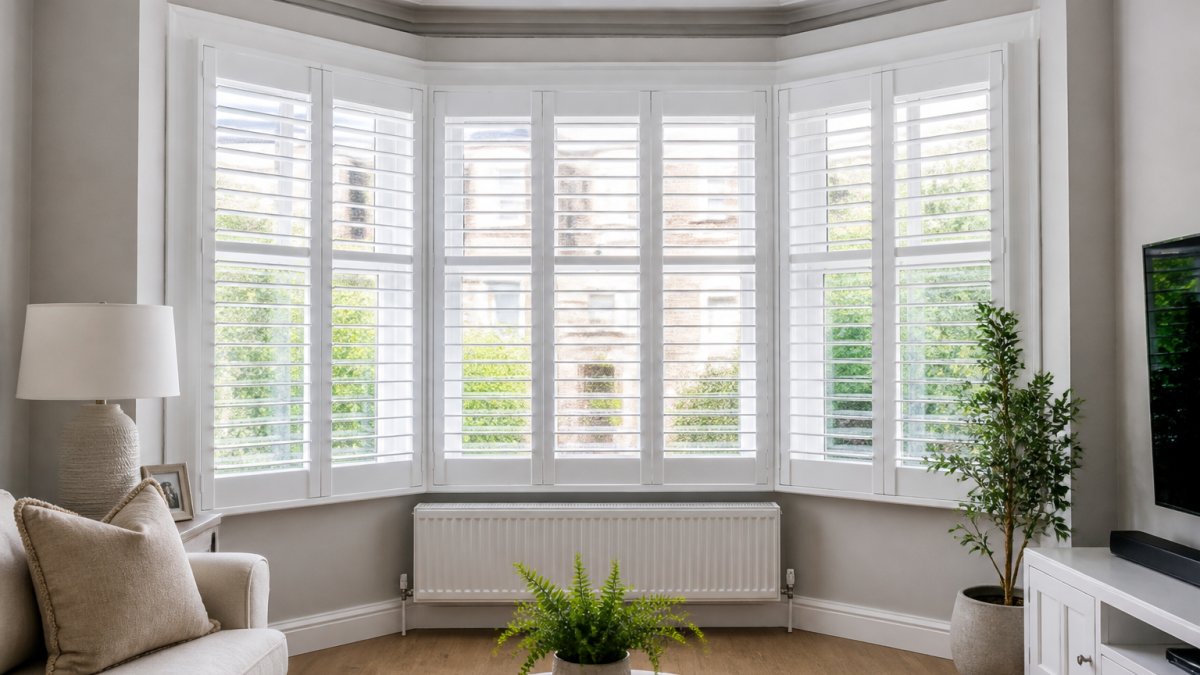
Bay windows are the hardest working windows in a Wimbledon home, and the hardest to dress. A three-sided bay has three separate planes, each meeting at an angle that is rarely a clean 90 or 135 degrees. Arched windows add a curved head that no rectangular panel will ever fill cleanly.
The practical options break down like this:
- Bay windows: café-style shutters for the lower half only, full-height panels across all three faces, or a mix with a solid pelmet across the top
- Arched windows: a shaped top rail cut to follow the curve, paired with standard rectangular panels below
- Awkward reveals: bespoke frames that sit inside the recess rather than over it, hiding uneven plaster
What most guides miss is that the frame matters as much as the panel. A poorly engineered frame on a bay will twist over time, and once it twists, the panels bind. Ask any fitter who has replaced a cheap bay installation: the panels are usually fine, the frame is scrap.
Full Height vs Tier-on-Tier Shutters: Which Suits Your Room?
Full height shutters run as a single panel from the top of the window to the sill. Tier-on-tier shutters split into two independent sections, top and bottom, each with its own tilt rod. The choice comes down to how you use the room, not which looks better on a brochure.
| Feature | Full Height | Tier-on-Tier |
|---|---|---|
| Light control | Single adjustment, whole window | Independent top and bottom |
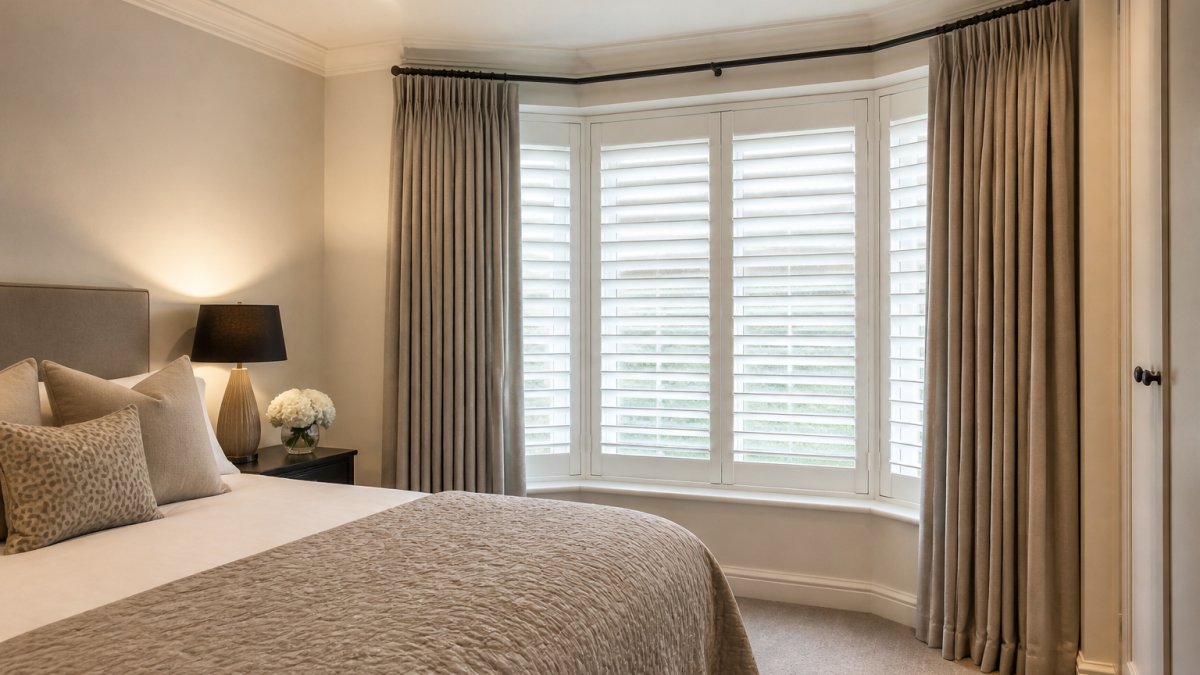
| Best for | Living rooms, uniform facades | Bedrooms, street-facing ground floors |
| Privacy | Good with tilted louvres | Better, open the top, close the bottom |
| Cleaning access | Reaches the full height | Easier to reach upper panes |
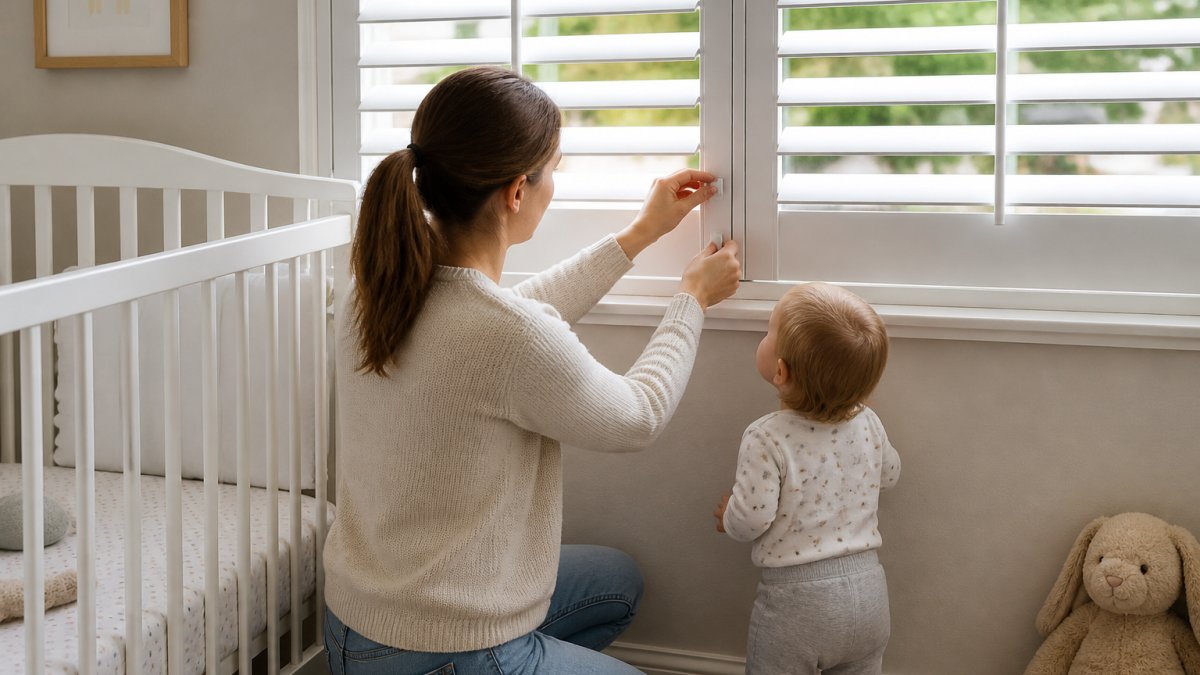
| Typical use | Reception rooms, studies | Bedrooms, bathrooms, nurseries |
For bedrooms, tier-on-tier usually wins. You can open the top section for ventilation while keeping the lower half closed for privacy from the street. For a formal reception room where you want a clean, uninterrupted line, full height reads better.
Measuring Windows for Shutters: A Step-by-Step Checklist
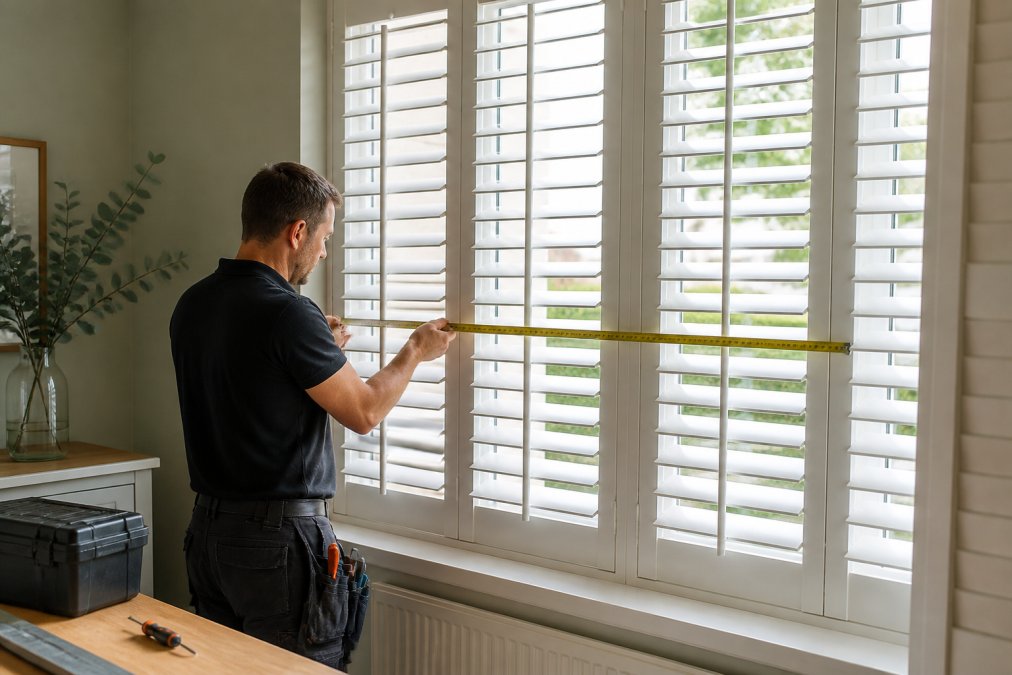
Measuring windows for shutters is the step where most DIY attempts go wrong, because shutters are unforgiving. There is no trimming a panel that is 4mm too narrow. Measure every window individually, even two that look identical.
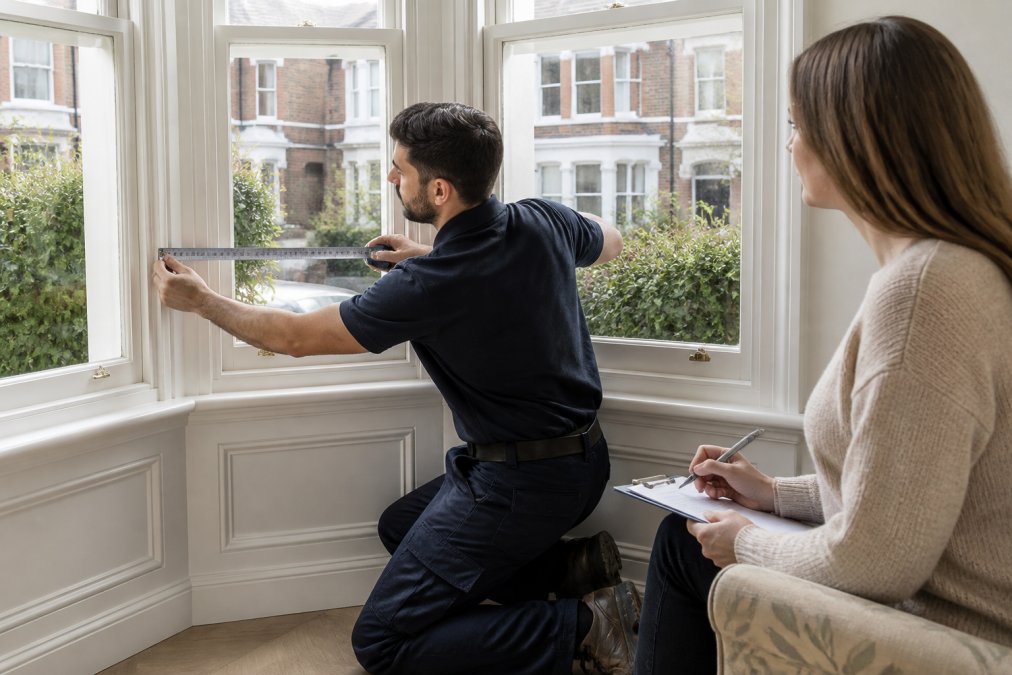
Work through this checklist for each window:
- Measure the width at the top, middle and bottom of the recess. Record the smallest figure.
- Measure the height at the left, centre and right. Record the smallest figure.
- Check the depth of the reveal. You need enough room for the frame plus the panel swing.
- Note any obstructions: window handles, trickle vents, radiator tops, curtain poles.
- Check for square by measuring both diagonals corner to corner. Unequal diagonals mean the frame is out.
- Photograph the window straight on, with a tape measure visible, for reference.
- Measure a second time on a different day before ordering.
The diagonal check is the one people skip. On older properties, a window can look perfectly square and be 15mm out across a metre (Buy Standards: Discover BSI Knowledge). That is the difference between a flush fit and a visible gap.
What Bespoke Plantation Shutters Cost and What Affects the Price
Pricing for bespoke plantation shutters depends on several variables, and any honest quote will reflect them rather than a flat per-window figure. The main drivers are window size, the number of panels, the shape complexity, the material, and the finish you choose.
A straightforward rectangular window with standard panels sits at the simpler end. A three-sided bay with shaped top rails, or an arched window needing a curved head, takes more workshop time and more material, so it costs more. Colour matching, specialist finishes and optional blackout features also move the number.
Because every set is made from scratch to your measurements, there is no meaningful "average price" that applies across different homes. The only figure that matters is the one attached to your specific windows.
Common Mistakes to Avoid When Fitting Shutters
The most expensive mistakes happen before anything is ordered. A common one is measuring the window opening rather than the recess, which produces panels that will not sit flush (Clarkes Windows Limited). Another is ordering based on a showroom sample without checking how the material behaves in a south-facing room, where heat and light are strongest.
A third, and the one that causes the most callbacks, is fitting shutters to a frame that was never checked for square. If the diagonals differ, the frame needs packing or adjusting first. Skip that step and the panels will bind within months.
The thing nobody tells you about cheap shutters is that the hardware fails first. Hinges, tilt rods and magnets are where cost gets cut, and a stiff tilt rod on a heavy panel will wear the mechanism quickly. Good hardware outlasts the panels it holds.
If you are coming from curtains, expect a different relationship with your windows. Shutters change how a room feels in daylight, and the difference is most obvious in the first week.
Conclusion
Getting shutters right comes down to three things: measuring honestly, choosing the right configuration for how you actually use the room, and refusing to compromise on the frame. Wimbledon's period windows reward that discipline, and punish shortcuts.
Shutters West London has spent 30 years making bespoke plantation shutters from scratch for exactly these windows. Every set is 100% made-to-measure, never templated, with a free home consultation and measurement visit, and a 10/10 Checkatrade rating across all reviews. Whether you have a Victorian bay, an arched frame, or a window that has defeated three previous fitters, we will measure it, make it, and fit it properly.
Get started with Shutters West London and a free, no-pressure quote for your windows.
Frequently Asked Questions
Can shutters be fitted to bay windows?
Yes. Bay windows are one of the most common requests for bespoke plantation shutters, and each panel is made to the exact angle and depth of your bay rather than adapted from a standard size. This matters for period terraces where bays are rarely square. A free home consultation and measurement lets the fitter check the frame, reveal and any arch before anything is made, so you know the shutters will sit flush rather than leave gaps at the corners.
How do I choose between full-height and café-style shutters?
Full-height shutters cover the whole window, giving complete light control and privacy from top to bottom, which suits street-facing reception rooms. Café-style shutters cover only the lower half, leaving the top clear for daylight and a view out, which works well in kitchens and dining rooms. Tier-on-tier is a third option: two independent panels that let you open the top while keeping the bottom closed. The right choice depends on how you use the room and how much privacy you need at eye level.
What is the typical lead time for bespoke shutter installation?
Lead times vary with the size of the order and the complexity of the windows, so it is best to ask for a specific date at your consultation. As a guide, a straightforward set for one or two windows is usually quicker than a whole-house order with arched or shaped frames. Because every set is made from scratch rather than pulled from stock, the timeline covers design sign-off, manufacture and a fitting appointment. Your quote should confirm the expected dates in writing.
Do window shutters add value to my property?
Shutters are a fixed improvement rather than a loose furnishing, so they stay with the property when it sells and are often seen as a finished feature rather than something a buyer needs to replace. For period homes in particular, made-to-measure shutters that suit the window shape tend to read as part of the architecture. How much value they add depends on the property, the quality of the fit and the local market, so treat them as a long-term upgrade rather than a quick return.