 how-to
Window Shutters Near Me: How to Find the Right Fit
Table of Contents
- What to Look for When Searching for Window Shutters Near Me
- Bespoke Plantation Shutters Cost: What Affects Your Quote
- Measuring Windows for Shutters: A Guide to Getting It Right
- Choosing the Right Style of Window Shutters for Your Home
- Shutter Installation Timeline: From First Contact to Finished Room
- How to Maintain Wooden Window Shutters So They Last
- Frequently Asked Questions
Last Updated: August 30, 2026
Finding the right window shutters near me is one of those searches that sounds simple but quickly becomes overwhelming. The market ranges from flat-pack off-the-shelf panels to fully bespoke, made-to-measure sets crafted for the exact geometry of your home. At Shutters West London, we've spent 30 years fitting plantation shutters across London properties, and the difference between a shutter that transforms a room and one that never quite sits right almost always comes down to how carefully the process starts. Below, we'll walk through everything from finding a trustworthy fitter to maintaining your shutters for decades.
What to Look for When Searching for Window Shutters Near Me
The first thing to understand about searching for window shutters near me is that not every company offering "bespoke" shutters actually makes them from scratch. Many providers use templated sizing with minor adjustments. That distinction matters enormously if your home has bay windows, arched frames, or any non-standard geometry.
Family-run specialists vs. national chains
Family-run specialists and national chains serve very different needs. A national chain offers convenience and brand recognition. A specialist brings accumulated knowledge of period properties, unusual window shapes, and the kind of problem-solving that comes only from years of hands-on work.
The practical difference shows up at the consultation stage. A specialist will measure every angle, discuss tilt rod placement relative to your room layout, and flag potential fitting complications before you commit. A chain representative is often working from a checklist.
For straightforward rectangular windows in a modern flat, either can work. For Victorian bay windows or Edwardian arched frames, a specialist is the only sensible choice.
Questions to ask before you book a consultation
A good consultation is free and carries no obligation. If a company charges for a site visit before you've agreed anything, that's worth questioning.
Before you book, ask:
- Are the shutters 100% made-to-measure, or are they adapted from standard sizes?
- Can you see examples of work on properties similar to mine?
- What is your lead time from measurement to installation?
- What happens if the fit isn't right after installation?
- Do you have independent reviews I can check, such as Checkatrade?
That last point matters. Independent trade platforms give you verified customer feedback rather than curated testimonials. A 10/10 Checkatrade rating across all reviews, for instance, is a meaningful signal of consistent quality.
Bespoke Plantation Shutters Cost: What Affects Your Quote
Bespoke plantation shutters cost more than off-the-shelf alternatives, and there are good reasons for that gap. Understanding what drives pricing helps you compare quotes fairly rather than simply picking the lowest number.
Why made-to-measure costs more than off-the-shelf
Every made-to-measure shutter is built to the exact dimensions of a specific window. The material is cut, shaped, and assembled for that opening alone. There is no standard panel being trimmed down. This means more skilled labour, more precise machinery time, and no economies of scale from mass production.
The key cost variables are:
| Factor | What Drives the Cost |
|---|---|
| Window size | Larger windows require more material and longer installation time |
| Window shape | Bay, arched, and angled frames require custom framing solutions |
| Louvre size | Wider louvres use more material per panel |
| Finish | Painted finishes and specialist colours cost more than standard white |
| Material | Hardwood costs more than MDF; both have different performance profiles |
| Number of windows | Volume can affect per-unit pricing |
According to Which? guide to window shutters, the complexity of the window shape is one of the most significant cost drivers in bespoke shutter projects. This aligns with what we see in practice: a straightforward rectangular window is always more straightforward to price than a full bay with three or five panels at compound angles.
Getting fair, no-pressure pricing
A reputable fitter provides a detailed written quote after measuring your windows in person. Be cautious of any quote given over the phone or based on rough dimensions you've supplied yourself. Measurements need to be precise, and a professional will not commit to a price without seeing the windows.
No-pressure pricing means you receive the quote, take time to consider it, and are not chased aggressively for a decision. If a company applies high-pressure tactics or insists a price is only valid for 24 hours, that tells you something about how they operate.
Measuring Windows for Shutters: A Guide to Getting It Right
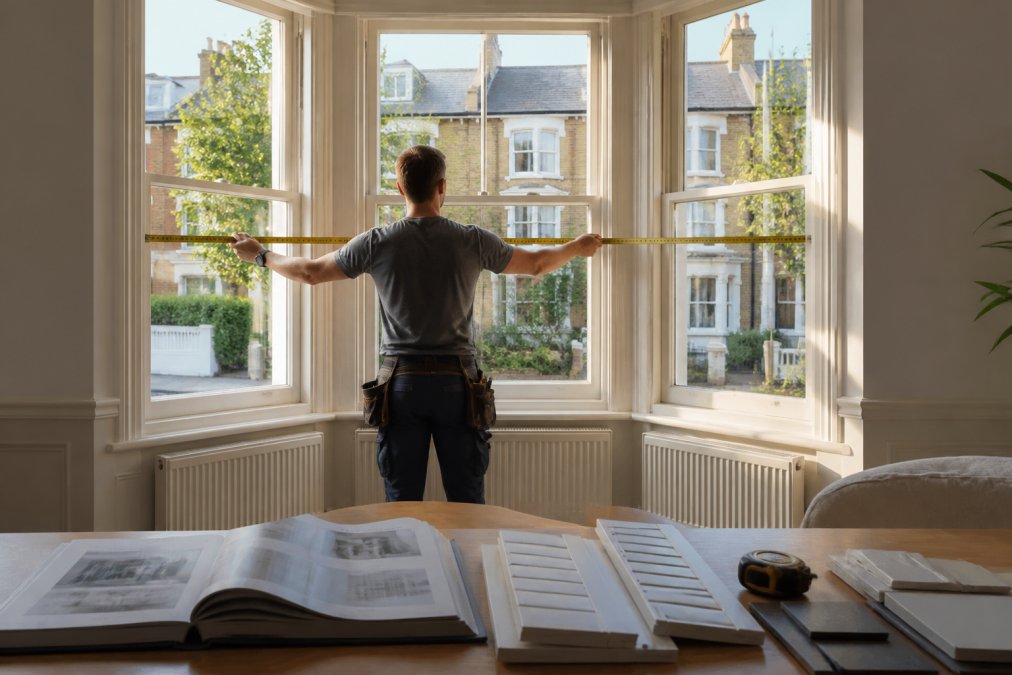
Accurate measurement is the foundation of every successful shutter installation. A millimetre of error at the measuring stage becomes a visible gap or a panel that binds in its frame.
Standard rectangular windows
For a standard rectangular window, you need three measurements of width and three of height, taken at the top, middle, and bottom of the recess. Windows in older properties are rarely perfectly square. Taking the smallest measurement in each direction gives the shutter the best chance of fitting cleanly within the recess.
A professional measurer will also check the depth of the recess to confirm there is sufficient clearance for the frame and panel thickness, and will assess whether hinges should sit inside or outside the frame.
Bay windows, arched frames, and awkward shapes
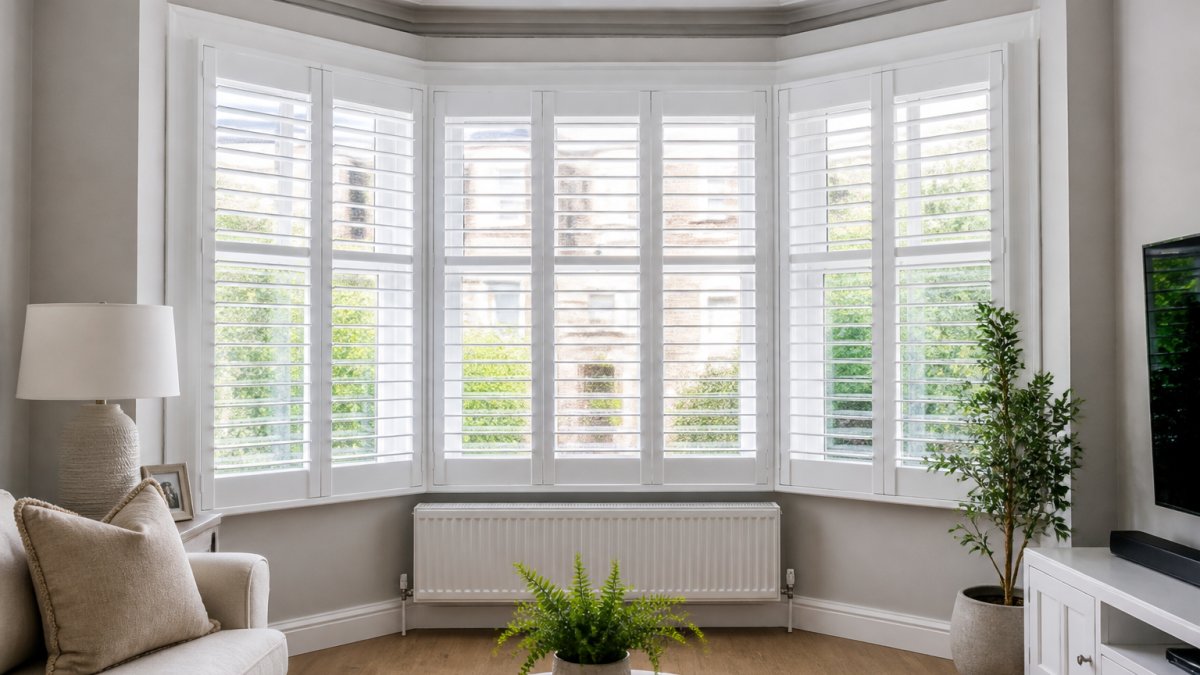
This is where the measuring windows for shutters process becomes genuinely technical. A bay window typically involves three, five, or more panels meeting at angles. Each panel must be measured individually, and the joining angles between panels must be calculated precisely so the frames sit flush without gaps.
Arched windows present a different challenge. The arch is usually unique to that window, so the top rail of the shutter must be shaped to match the curve exactly. This is not something that can be estimated; it requires a template taken directly from the window.
As noted in guidance from Historic England on window repairs in period properties, period properties often feature non-standard window proportions that require careful, bespoke solutions rather than adapted standard products.
A common mistake is assuming that a company experienced with rectangular windows can handle a Victorian bay without specialist knowledge. The two tasks require different skills. Always ask specifically whether the fitter has experience with your window type before booking.
Choosing the Right Style of Window Shutters for Your Home
Window shutters come in a wider range of configurations than most homeowners expect, and the choices you make at the design stage affect both the look and the practical performance of the finished installation.
Louvre size and tilt rod options
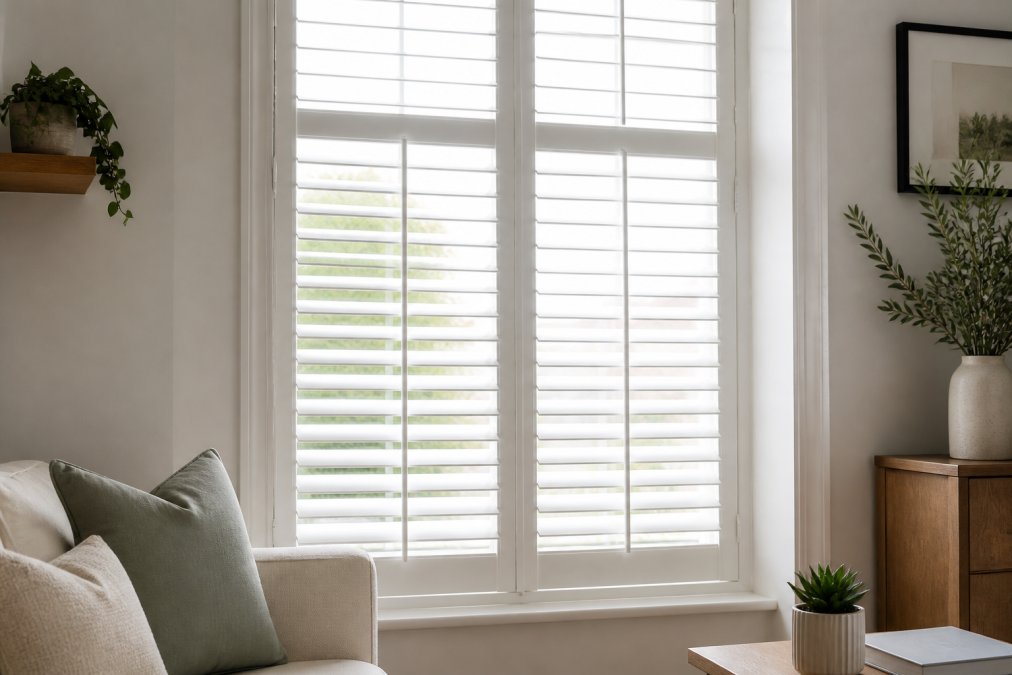
Louvre size is the most visible design decision. Smaller louvres, typically around 47mm, suit cottage-style or more traditional interiors. Larger louvres, at 76mm or 89mm, create a cleaner, more contemporary look and allow more light through when open. They also provide a clearer view out when the panel is open.
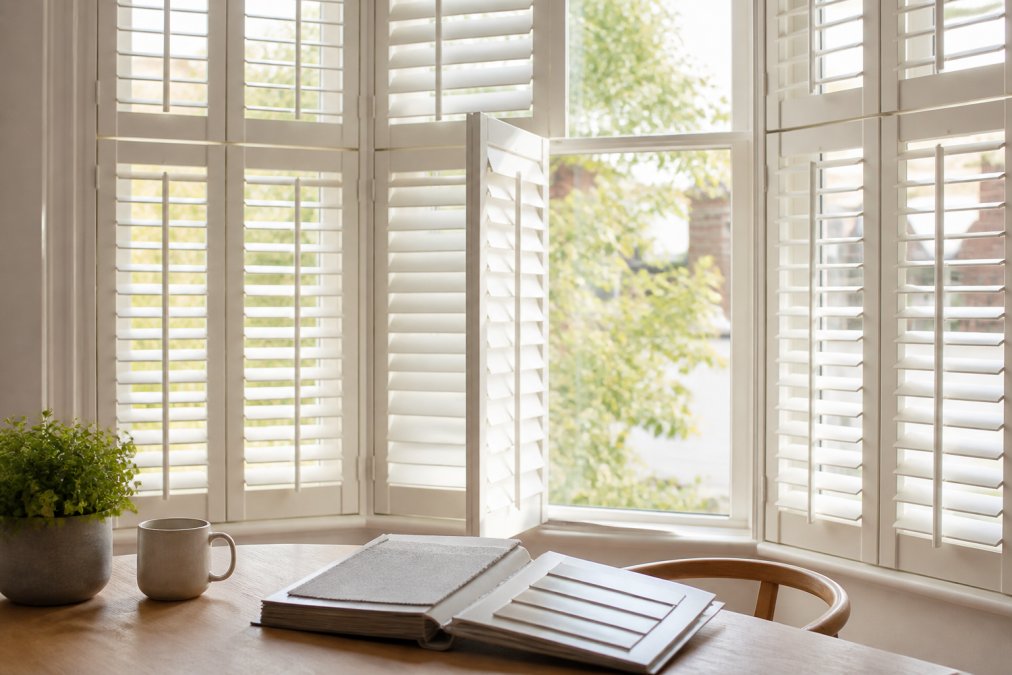
Tilt rod placement is a detail that matters more than it initially appears. A centre tilt rod runs vertically down the middle of the panel and is the traditional choice. A hidden tilt rod, sometimes called a rear tilt, eliminates the central bar entirely, giving an unobstructed view through the louvres. The hidden option tends to suit larger louvres and more modern interiors.
The British Blind and Shutter Association guidance on shutter specifications provides useful background on standard specifications and what to expect from a professionally installed set.
Colours, finishes, and blackout features
Most homeowners start with white or off-white, and for good reason: it suits almost any interior and reflects light effectively. Beyond that, painted finishes in any colour are possible with a made-to-measure set. Stained wood finishes suit more traditional or rustic interiors.
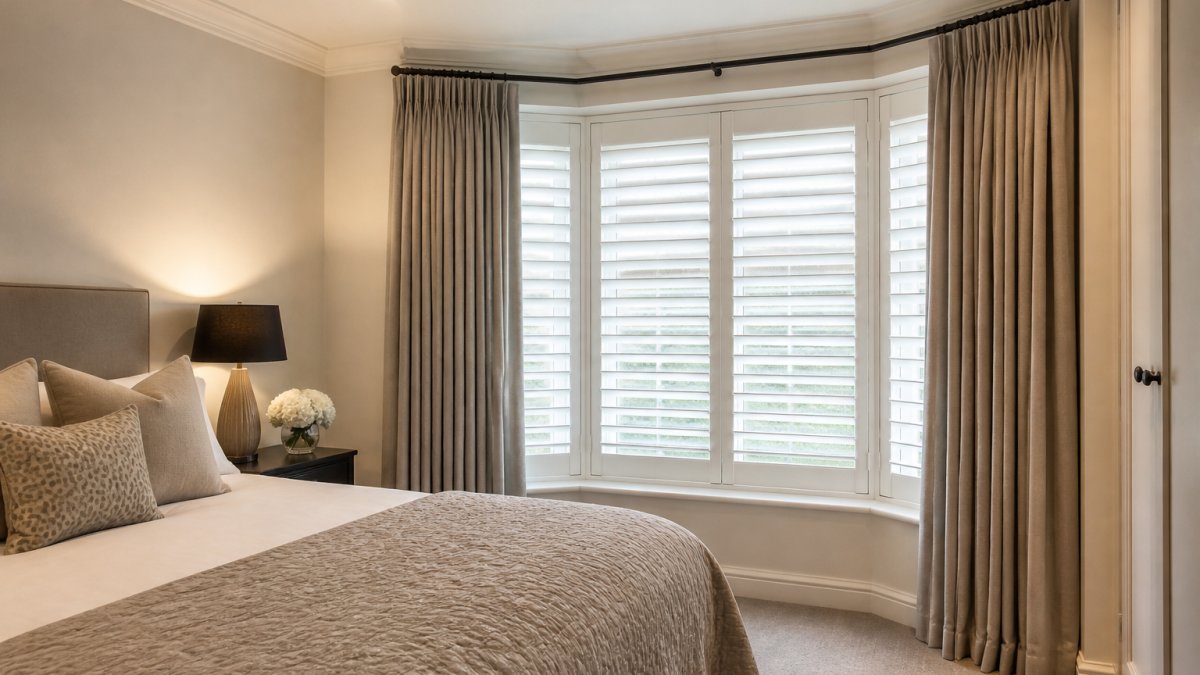
Blackout shutters are a separate category. A standard shutter with louvres closed will block most light but not all; light bleeds around the frame edges and through the louvre gaps. True blackout requires a solid panel, sometimes called a solid or café-style configuration, combined with a tight-fitting frame. This is the right choice for bedrooms where complete darkness matters.
Shutter Installation Timeline: From First Contact to Finished Room
The shutter installation timeline varies depending on the complexity of the project, but a realistic expectation helps you plan.
A typical sequence looks like this:
- Initial enquiry and consultation booking - Usually within a few days of first contact
- Free home consultation and measurement - One visit, typically one to two hours for a multi-room project
- Design confirmation and quote - Presented after the visit; allow time to review without pressure
- Manufacturing - Made-to-measure shutters take several weeks to produce; complex shapes take longer
- Installation - A professional fitter installs in a single visit for most projects; larger homes may require two days
- Snagging and sign-off - Any adjustments are made before the fitter leaves
The thing nobody tells you upfront is that the manufacturing lead time is the longest part of the process, not the installation itself. A well-run company will give you a realistic timeline at the quote stage rather than an optimistic one that slips.
For most standard projects, expect four to eight weeks from consultation to completed installation. Complex bay window or multi-room projects may take longer.
How to Maintain Wooden Window Shutters So They Last
Wooden window shutters are a long-term investment, and with straightforward care they should last for decades without significant deterioration.
The most common cause of shutters sticking, grinding, or warping is moisture. Wood responds to humidity changes, and shutters in kitchens or bathrooms are particularly exposed. The practical response is to ensure adequate ventilation in these rooms and to wipe down shutters that accumulate condensation rather than leaving moisture to sit on the surface.
Routine maintenance involves very little:
- Dust regularly with a dry or slightly damp microfibre cloth, working along the louvres rather than across them
- Check hinges and tilt rods annually for any stiffness; a small amount of appropriate lubricant resolves most minor issues early
- Inspect the frame for any paint cracking or separation, particularly in rooms with temperature variation
- Avoid harsh cleaning products that can strip painted finishes or dry out the wood
A common mistake is using excessive water when cleaning. Wiping down with a wrung-out cloth is fine; soaking the louvres is not.
The real difference between shutters that last 20 years and those that start failing after five almost always comes down to the quality of the original manufacture. Poorly seasoned timber, inadequate paint preparation, or undersized hinges all create problems that no amount of maintenance can fully correct. This is the practical argument for choosing a maker with genuine craft experience over a cheaper option.
As the Timber Research and Development Association guidance on wood maintenance notes, the longevity of any painted timber product is directly linked to the quality of the initial preparation and finish. Maintenance extends the life of a well-made product; it cannot compensate for a poorly made one.
Finding window shutters that genuinely fit your home, especially if you have bay windows, arched frames, or any non-standard geometry, requires a provider with the skills to measure and manufacture from scratch rather than adapt standard panels. Shutters West London has been doing exactly that for 30 years, with every set made to measure from the first consultation through to installation. Our free home consultation covers full measurements, design discussion, and a no-pressure quote. Get in touch with Shutters West London to arrange yours and see what a properly fitted shutter actually looks like.
Frequently Asked Questions
Can shutters be fitted to bay or arched windows?
Yes, bay and arched windows can be fitted with bespoke plantation shutters, but they require custom-crafted frames rather than standard panels. A specialist will measure each section of the bay individually and build shutters to suit the exact angles and curves involved. Off-the-shelf shutters will not work for these shapes. Always confirm that your chosen provider has direct experience with period or complex window frames before committing to a quote.
Are plantation shutters worth the investment for my property?
For most homeowners, bespoke plantation shutters are a long-term investment rather than a short-term purchase. Made-to-measure shutters, built from quality materials and fitted correctly, routinely last 15 to 20 years or more with basic upkeep. They also add a clean, considered finish that suits period and contemporary properties alike. Pricing varies depending on window size, style, and material, so request a free home consultation to understand the full scope before deciding.
How long does the bespoke shutter installation process take?
The full process from initial consultation to installation typically takes several weeks, depending on the complexity of your windows and the provider's current schedule. A home visit to measure and discuss styles usually takes an hour or two. Manufacturing bespoke shutters from scratch takes longer than supplying stock items. Your installer should give you a clear lead time after the consultation. Avoid any provider who cannot give you a realistic timeline in writing.
What are the benefits of internal shutters for privacy and light control?
Internal plantation shutters give you precise control over both privacy and light. Tilting the louvres lets you block direct sightlines from the street while still allowing daylight into the room. Closing the panels fully provides near-total privacy. Optional blackout configurations block light almost entirely, which is useful for bedrooms. Unlike curtains or blinds, shutters do not trap dust in fabric folds, making them easier to keep clean and better suited to allergy-sensitive households.
This article was written using GrandRanker