 how-to
How to Dress a 3 Sided Bay Window Without Blocking Light
Last Updated: 29 October 2026
Quick Summary
To dress a 3 sided bay window without blocking light, fit a jointed bay pole that bends around the returns or made-to-measure plantation shutters built panel by panel. Measure each panel and angle separately first, as standard off-the-shelf dressings rarely fit a bay properly.
- Measure the front panel and each return separately, recording the angle where they meet.
- A jointed pole follows the bay shape; a straight pole across the front kills the sense of space.
- Fit one blind per panel so each can be adjusted on its own.
- Plantation shutters are made panel by panel to match each face and angle.
- The biggest mistake is dressing a bay as if it were flat, leaving corners dark.
Table of Contents
- Why a 3 Sided Bay Window Needs Its Own Dressing Plan
- How to Measure a Bay Window Before You Buy Anything
- Curtains or Blinds for Bay Windows: Weighing Up the Options
- Fitting Bay Window Curtain Poles Around Three Sides
- Plantation Shutters for Bay Windows: The Made-to-Measure Route
- Common Dressing Mistakes That Ruin a Bay Window
- Book a Free Home Measure for Your Bay Window
- Frequently Asked Questions
Why a 3 Sided Bay Window Needs Its Own Dressing Plan
A 3 sided bay window is a window that projects out from the wall in three panels: a wide front face and two angled returns. That shape is why standard off-the-shelf dressings rarely work.
The returns are the two short side panels that angle back to the wall. They catch light from a different direction to the front. They also sit at odd angles, so a straight pole or a flat blind leaves gaps at the corners.
Most guides treat a bay like a flat window with extra panes. That's the mistake. A bay needs a plan that handles three planes, two angles and a curve of daylight. Our step-by-step guide to modernising a bay window helps you set the overall direction.
Below, we'll show you how to measure, choose and fit a dressing that keeps the light and covers the glass properly.
How to Measure a Bay Window Before You Buy Anything
Measure each panel separately, then record the angles between them. Our guide to measuring bay windows for shutters walks through each step. Never measure the bay as one opening.
- Measure the front panel width at the top, middle and bottom of the glass
- Measure each return width the same way
- Record the drop from the top of the recess to the sill on all three panels
- Measure the depth of the recess at each side
- Note the angle where each return meets the front panel
- Check for out-of-square corners with a spirit level
- Photograph the whole bay from two positions
Measuring Each Return, the Front Panel and the Angles
The returns matter most. Measure from the corner where the return meets the wall to the corner where it meets the front panel, at the widest point. Do the same at the narrowest point.
For the angles, place a protractor or angle finder in each corner where the panels meet. A common bay sits at 45 degrees on each return, but plenty don't. Write the figure down rather than guessing.
Curtains or Blinds for Bay Windows: Weighing Up the Options
Curtains soften a bay and suit period rooms. Blinds give a cleaner line and take up less space. Neither wins outright; the right pick depends on your light, privacy and how the room is used.
| Option | Best for | Watch out for |
|---|---|---|
| Curtains on a bay pole | Period rooms, soft look | Can crowd the returns if too full |
| Roman blinds | A tidy finish, layered light | Each panel needs its own blind |
| Vertical blinds | Wide front panels | Can look dated in a period bay |
| Plantation shutters | Light control, privacy, fit | Made-to-measure, so plan ahead |
Curtains work best when the pole follows the bay shape rather than running straight across the opening. For the full fitting process, see our bay window curtain solutions guide. A straight pole across the front kills the sense of space the bay was built to give.
Blinds suit bays where you want the sill clear. Fit one blind per panel so each can be adjusted on its own.
Fitting Bay Window Curtain Poles Around Three Sides
Bay window curtain poles come in two types: a straight pole fixed across the front, or a jointed pole that bends around the returns. The jointed version is the one that actually follows the shape of a 3 sided bay window.
Here's how the fitting works:
- Fix a bracket at each end of the front panel and at each corner
- Add a bracket at the wall end of each return
- Join the pole sections with the angled connectors supplied
- Check the pole clears the ceiling and any cornice
- Hang a test curtain to check the returns draw clear of the glass
The most common mistake is buying a pole before checking the angle of the returns. A pole built for 45-degree corners won't sit right on a bay with a shallower angle. Measure first, order second.
Keep the pole close to the ceiling where you can. It makes the room feel taller and stops the curtains cutting the bay in half.
Plantation Shutters for Bay Windows: The Made-to-Measure Route
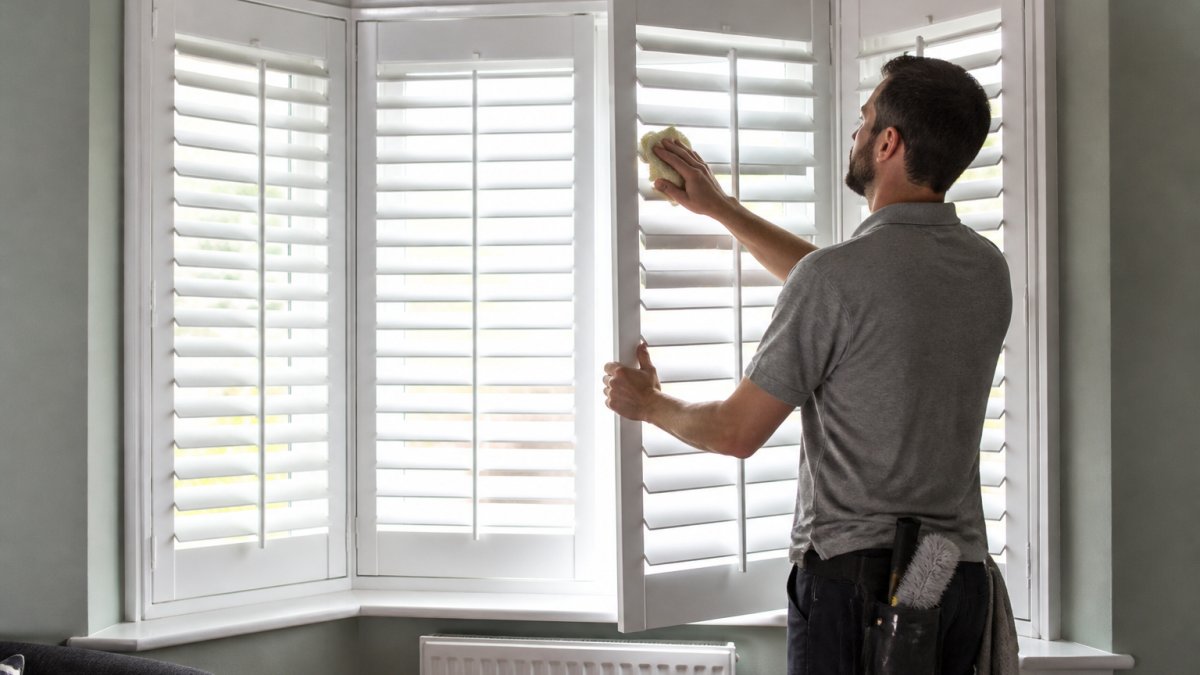
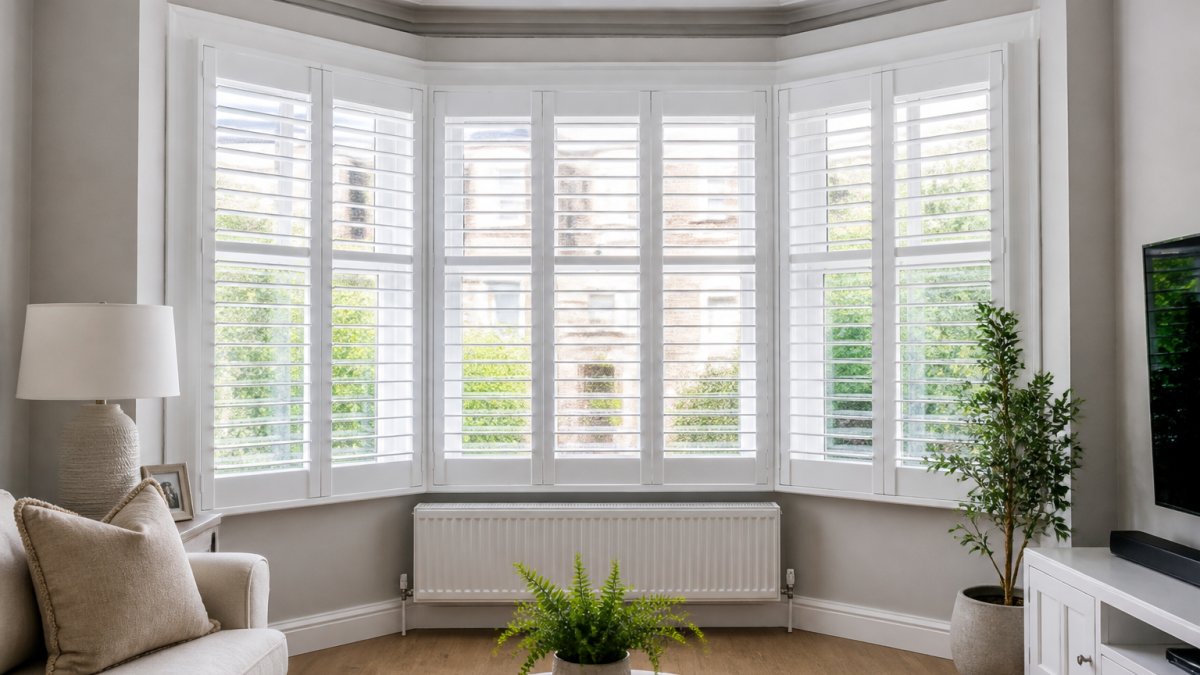
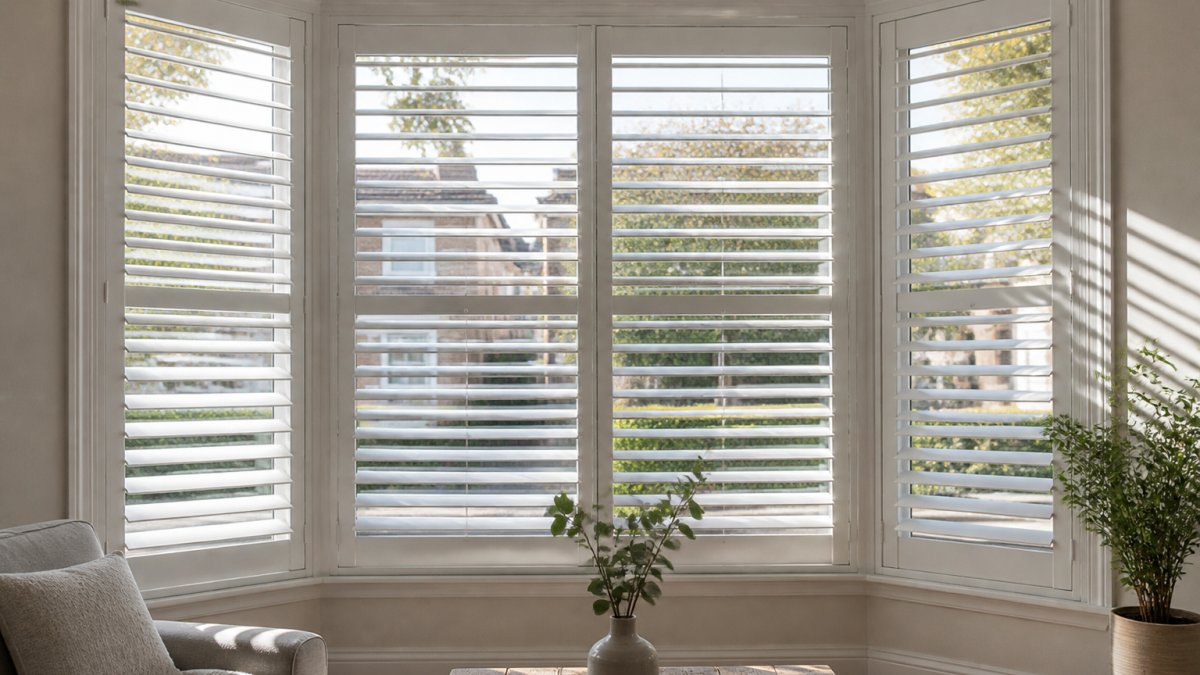
Plantation shutters for bay windows are built panel by panel to match each face and angle. That's the only way to get a clean fit on a 3 sided bay window, because each panel is cut to its own frame and tilt.
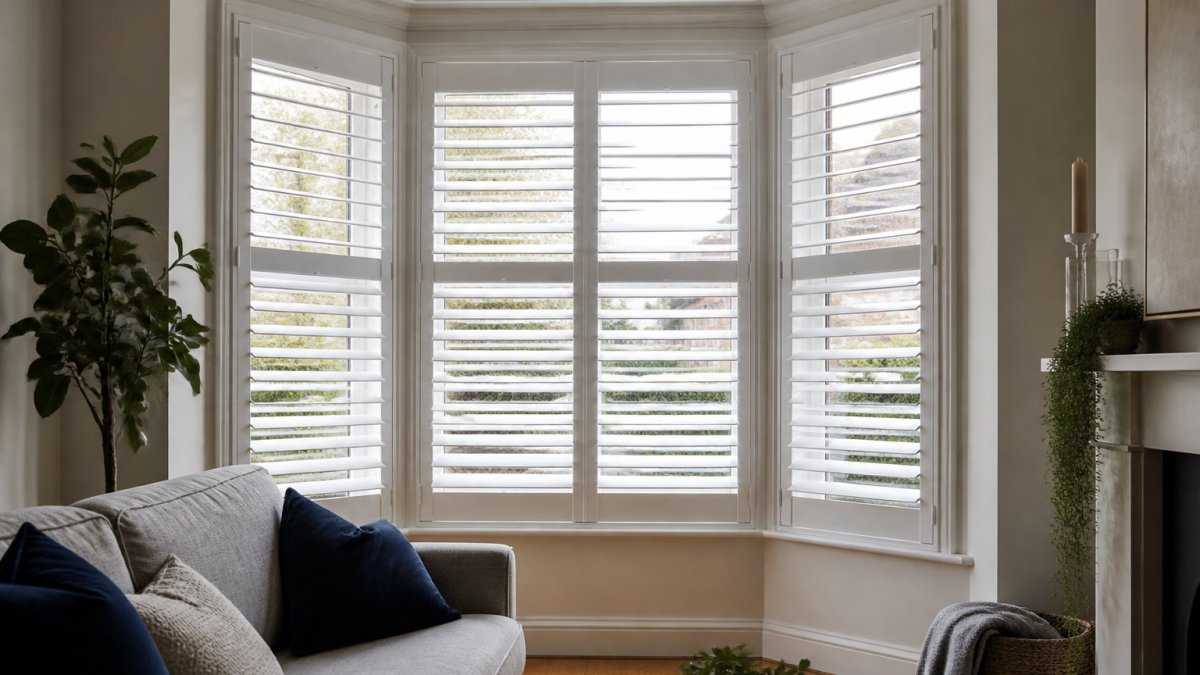
The process runs in a clear order:
- A home visit to measure every panel and angle
- A design stage to choose frame style, colour and tilt rods
- Making each set from scratch to those measurements
- Fitting on site, with adjustment at the frame
At Shutters West London, every set is made from scratch, never from a template.
Common Dressing Mistakes That Ruin a Bay Window
The biggest mistake is dressing a bay as if it were flat. A straight pole or a single wide blind leaves the returns bare and the corners dark. The bay then looks smaller, not bigger.
- Choosing fabric before measuring the returns
- Hanging curtains so full they block the side light
- Fitting blinds that clash with the window's angles
- Ignoring privacy gaps at the corners
- Buying a pole with the wrong corner angle
Book a Free Home Measure for Your Bay Window
Getting a 3 sided bay window right comes down to accurate measurements and a plan built around the angles.
We offer a free home consultation and measurement, and a fair, no-pressure quote.
Our customers rate us 10/10 on Checkatrade across all reviews. We're a family-run business with 30 years of craftsmanship behind every set.
Get started with Shutters West London and book your free home consultation and measurement.
Frequently Asked Questions
Can plantation shutters be fitted to a three-sided bay window?
Yes. Shutters West London specialises in bespoke internal plantation shutters and has expertise in bay and awkward window shapes. Every set is made from scratch rather than templated.
How do you measure a three-sided bay window for blinds or shutters?
Shutters West London offers a free home consultation and measurements for bespoke shutters.
Are blinds or curtains better for a bay window?
It depends on the room. Curtains soften a period bay and add warmth, but they eat into the sill and can look crowded on narrow returns. Blinds sit tight to the glass and suit a bay that needs to stay clear. Shutters West London offers bespoke internal plantation shutters, with personalisation of styles, colours and tilt rods. Shutters can provide privacy and light control.
Can you put one curtain pole around a bay window?
You can, using a made-to-measure bay pole with bends or corner joints that follow the angles of the bay. A single continuous pole looks tidy and lets curtains run right around, but the bends must match your bay's exact geometry or the curtains will snag. Bay window curtain poles are usually supplied in three sections with passing brackets at the corners. Measure the angle carefully and choose a pole diameter that suits the weight of your curtains, or the centre span will sag.