 blog
Window Covering Alternatives for Period Homes: A Guide
Table of Contents
- Why Standard Window Coverings Fail Period Properties
- Interior Shutters for Period Homes: The Made-to-Measure Option
- Shutters for Sash Windows: Solving the Recess Problem
- Curtains for Period Homes: Character, Warmth and Practicality
- Window Coverings for Arched Windows and Awkward Shapes
- Comparing the Alternatives: Cost, Fit and Longevity
- Making the Right Choice for Your Property
- Frequently Asked Questions
Last Updated: 21 October 2026
Why Standard Window Coverings Fail Period Properties
Off-the-shelf blinds and ready-made curtains rarely fit period homes. Bay windows, arched frames and deep recesses are common in older properties, and mass-produced coverings simply cannot accommodate those shapes. The result is gaps, poor light control and a finish that undermines the room.
At Shutters West London, we have spent three decades fitting bespoke window coverings into Victorian terraces and Georgian townhouses, and the same problems come up again and again. Standard roller blinds sit proud of a deep sash recess, leaving a light gap down each side. Tension rods bend under the weight of full-length curtains. Fixed blinds cannot follow the curve of a bay.
The deeper issue is that period properties were built before standardised window sizes existed. Frames are often slightly out of square, reveals vary in depth from room to room, and original joinery has moved over a century or more. A covering designed for a modern rectangular opening will fight the building rather than work with it.
This guide covers the realistic window covering alternatives for period homes, from made-to-measure shutters to curtains and solutions for awkward shapes. Below, we explain what actually works, what it costs in effort and upkeep, and where each option falls short.
Interior Shutters for Period Homes: The Made-to-Measure Option
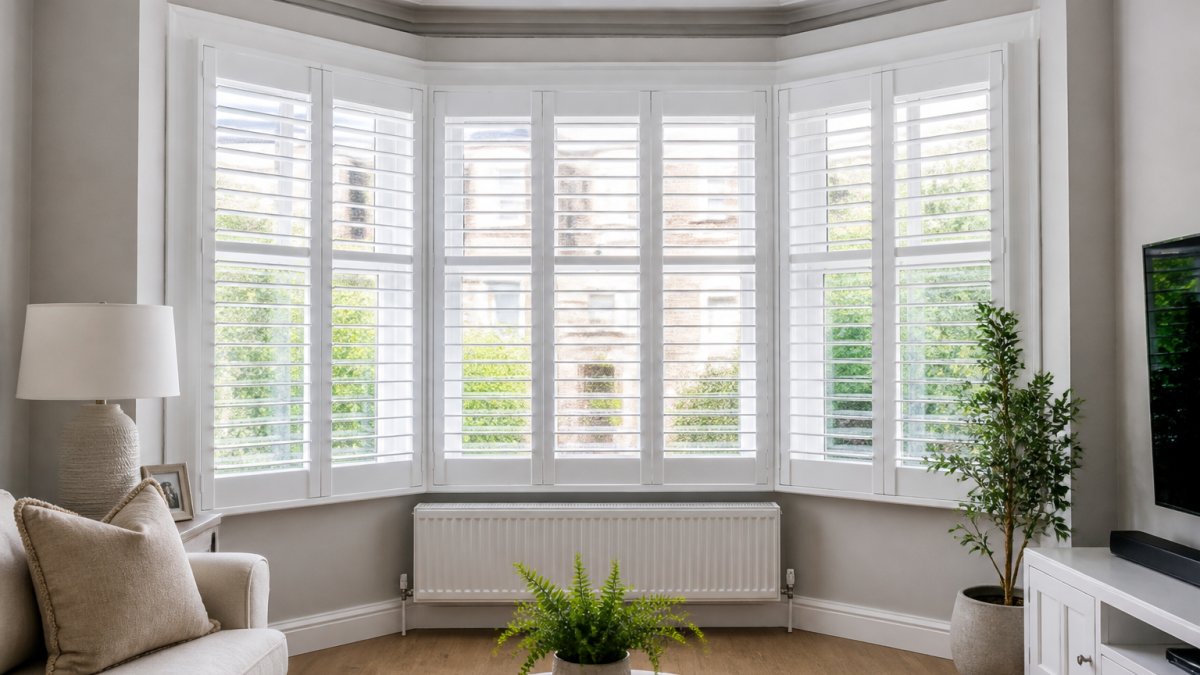
Interior shutters are hard-framed panels fitted directly into or onto the window recess, with adjustable louvres for light and privacy control. For period properties, they are the option that solves the fit problem rather than working around it.
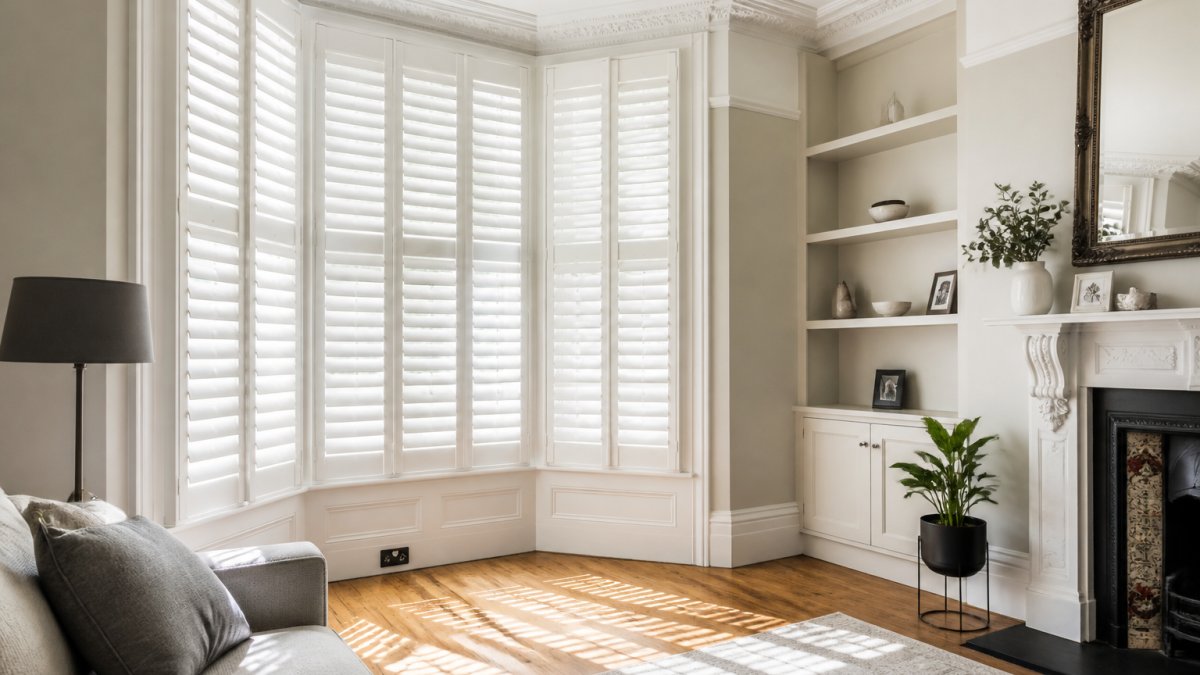
What Makes Bespoke Shutters Different
Bespoke shutters are measured and built for one specific window, not trimmed from a standard size. That distinction matters most in older homes, where no two openings are identical.
- Measured on site: every panel is cut to the actual recess, including out-of-square frames
- Frame options: inside recess, outside recess or face-fixed, depending on the reveal depth
- Tilt rods and louvre sizes: chosen to suit the room and the period of the property
- Optional blackout: a solid panel or integrated blind for bedrooms
The trade-off is lead time and cost. Bespoke work takes longer than buying a ready-made blind, and the price reflects the measurement and build. What you get in return is a covering that stays level, closes properly and does not need replacing when the frame shifts again.
Shutters for Sash Windows: Solving the Recess Problem
Shutters for sash windows work best when the frame is fitted into the recess with a mid-rail that follows the meeting rail of the sashes. This lets both the top and bottom sashes open independently while the shutters stay in place.
The recess is where most sash window coverings fail. Sash boxes project into the room, and the cords and pulleys sit in the reveal. A face-fixed blind covers the box and looks clumsy; a recess blind cannot clear the sash furniture. A made-to-measure shutter frame can be built around the box, with the panels set forward of the sash mechanism so nothing catches.
A common mistake is ordering a shutter with a single tall panel for a sash window. The sashes need to slide past each other, and a full-height panel blocks that movement. A mid-rail at the meeting point keeps the window fully operable.
Curtains for Period Homes: Character, Warmth and Practicality
Curtains for period homes remain the most forgiving option for character and warmth. Full-length drapes soften tall windows, add insulation and suit the proportions of rooms built for heavy fabric.
The practical case is strong. Curtains are quicker to install than bespoke shutters, and a good made-to-measure pair can be fitted to almost any track or pole. They also handle awkward shapes well: an arched window can be dressed with a curved track, and a bay can be followed with a bent pole.
Where curtains fall short is light control and clearance. They cover the window rather than the opening, so light leaks at the edges unless you add a pelmet or overlap. In a bay, full-length curtains eat into floor space and can block radiators. For a period home with original shutters already in the reveal, adding curtains on top can crowd the window.
| Consideration | Curtains | Bespoke Shutters |
|---|---|---|
| Fit to awkward shapes | Good with bent tracks | Excellent, built to the opening |
| Light control | Moderate unless lined and overlapped | Full, with adjustable louvres |
| Upkeep | Regular cleaning, fabric fades | Wipe clean, long lifespan |
| Installation speed | Fast | Longer lead time |
| Best for | Bedrooms, reception rooms, character | Sash windows, bays, privacy |
Window Coverings for Arched Windows and Awkward Shapes
Window coverings for arched windows and other irregular shapes are where standard products give up entirely. An arch cannot take a rectangular blind, and a fixed shutter panel cannot follow a curve without being made for it.
The realistic options are limited but workable:
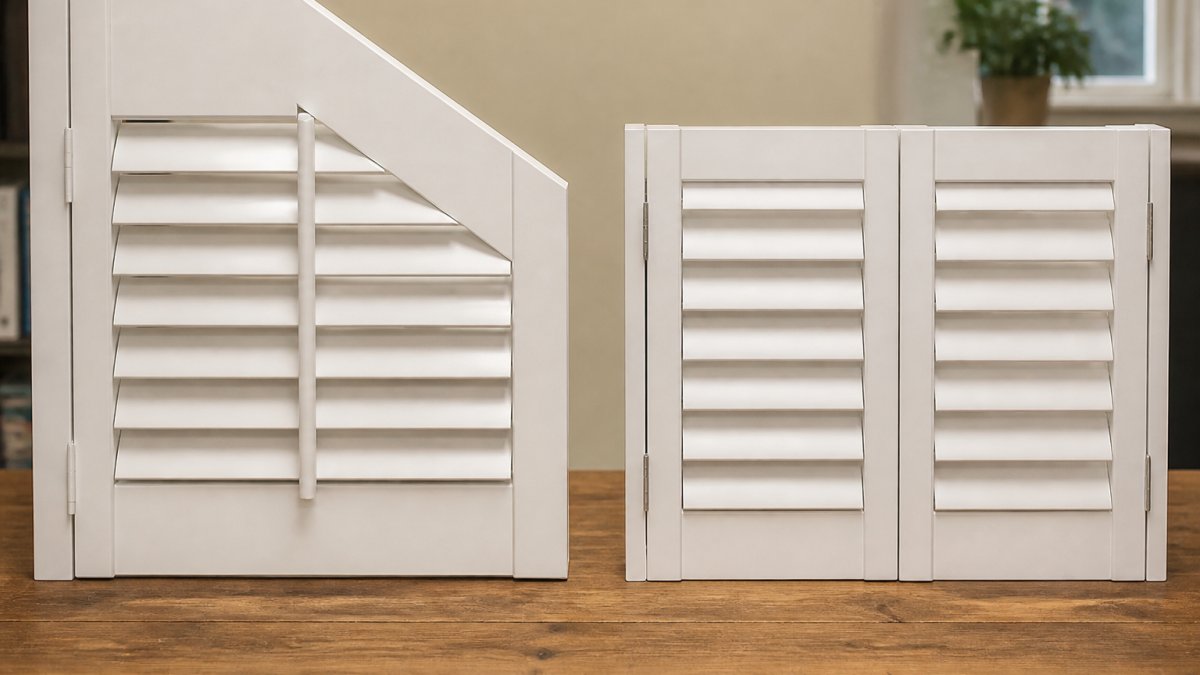
- Made-to-measure shaped shutters: a frame cut to the arch profile, with louvres or a solid panel, built as a one-off
- Curved curtain tracks: a track bent to the arch, carrying a full drop of fabric
- Roman blinds on a shaped headrail: practical for shallow arches, less so for deep curves
- Specialist films or secondary glazing: for light control without fabric, though these change the look of the window
The mistake most homeowners make is buying a rectangular blind and accepting the gaps at the corners of the arch. It looks unfinished and lets in light exactly where you wanted privacy. A shaped frame costs more, but it is the only way to close an arch properly.
Comparing the Alternatives: Cost, Fit and Longevity
Comparing window covering alternatives comes down to three factors: how well each fits the opening, how long it lasts, and what it costs over its life. Bespoke shutters win on fit and longevity; curtains win on speed and character; shaped solutions win on awkward openings.
Pricing for bespoke work depends on the size and shape of each window, the frame and louvre specification, and the number of panels, so we quote each job individually rather than publishing a fixed price list. Ready-made curtains and blinds cost less upfront but are more likely to be replaced within a decade.
| Option | Fit to period windows | Expected lifespan | Upfront cost | Best for |
|---|---|---|---|---|
| Bespoke interior shutters | Excellent | Long, decades with care | Higher | Sash windows, bays, privacy |
| Made-to-measure curtains | Good | Moderate, fabric wear | Moderate | Reception rooms, character |
| Shaped shutters for arches | Excellent | Long | Higher | Arched and irregular windows |
| Ready-made blinds | Poor | Short | Lower | Temporary or low-budget fixes |
Making the Right Choice for Your Property
The right window covering alternatives for period homes depend on the window, the room and how long you plan to stay. For a sash window in a reception room, bespoke shutters give the best fit and the cleanest finish. For a bedroom where you want softness and warmth, lined curtains still make sense. For an arch, a shaped frame is the only option that closes it properly.
At Shutters West London, every set is made from scratch and measured on site, never templated. We offer a free home consultation and measurements, and we are happy to show examples of work on properties like yours before you commit. Our 10/10 Checkatrade rating across all reviews reflects how we work: honest quotes, no pressure, and a finish built to last.
The challenge is that period windows punish compromise. A covering that almost fits will annoy you for years. Get the measurement and the frame right once, and the window stops being a problem.
Frequently Asked Questions
Are shutters suitable for Victorian houses?
Yes, and they often suit them better than off-the-shelf options. Victorian homes typically have bay windows, deep recesses and uneven plasterwork, which is exactly where made-to-measure interior shutters for period homes earn their keep. Each panel is built to the actual opening rather than a standard size, so the frame follows the shape of the bay instead of leaving gaps. The main thing to check is how the shutter is fixed: on sash windows it usually mounts into the recess or onto the frame itself, and a surveyor should confirm which suits your window before anything is ordered.
Are curtains or shutters better for sash windows?
They solve different problems. Shutters for sash windows sit inside the recess, so they do not block the sliding movement of the sashes and give you slat-by-slat light control without fabric hanging over the glass. Curtains soften a room, add warmth and suit formal reception rooms, but heavy drapes can trap heat against the window and need space to stack back. Many period homeowners use shutters in living areas and bedrooms for privacy and light control, then add a dress curtain on a pole for texture. It is not an either-or decision.
Can window coverings be fitted to arched or unusual windows?
They can, but only when the covering is made to the opening rather than cut down from a standard size. Window coverings for arched windows usually take the form of a bespoke shutter with a shaped top rail, a custom-made Roman blind on a curved track, or a fixed panel that follows the arch. The critical step is a proper template or survey, because a millimetre or two out on a curve is visible. Ask any supplier how they measure a curved head and whether the frame is built from a template of your actual window.
How can I improve privacy without losing the character of a period property?
Choose coverings that sit within the window reveal rather than over it. Interior shutters for period homes keep the architrave, cornicing and window joinery visible, so the room still reads as original. Tilting the slats gives daytime privacy while letting light in, and a solid or blackout panel handles bedrooms. Avoid bulky pelmets and heavy swags on principal rooms, which hide the features you bought the house for. If you want fabric, a simple dress curtain on a slim pole adds softness without masking the frame.
If your period property has bay, arched or awkward windows that standard coverings cannot handle, get a free quote from Shutters West London. We will measure on site, talk through frame and louvre options for your specific windows, and give you an honest price with no pressure to commit.