 comparison
Plantation Shutters vs Blinds: Light Control Compared
Last Updated: October 29, 2026
Quick Summary
Plantation shutters give finer light control than many blinds because their wide louvres tilt through a range of angles and hold that position, while blind slats can drift. Shutters also leak less light at the edges when fitted properly, though neither option blocks light completely without a blackout surround.
- Light-filtering blinds diffuse daylight for living rooms, while blackout blinds suit bedrooms and screen use.
- Venetian blinds are the best blind type for glare reduction because horizontal slats cut direct sunlight at an angle.
- Separate shutter panels on a bay let you tilt the sunny face down and leave the shaded face open.
- An inside recess fit always leaks less light than a face fix, all else being equal.
- Ask for a blackout frame or surround rather than a standard recess fit if blackout is the goal.
Table of Contents
- Plantation Shutters vs Blinds: How Light Control Really Differs
- Light-Filtering Blinds vs Blackout Blinds: Choosing the Right Level
- Best Blinds for Glare Reduction on Screens and Worktops
- Plantation Shutters for Privacy: What the Louvres Actually Hide
- Plantation Shutters for Bay Windows: Light Control on Awkward Frames
- Light Leakage, Fitting and What Neither Option Can Fully Block
- Cost, Durability and Value for Money Over the Long Term
- Book a Free Home Consultation and Measure-Up
- Frequently Asked Questions
Plantation Shutters vs Blinds: How Light Control Really Differs
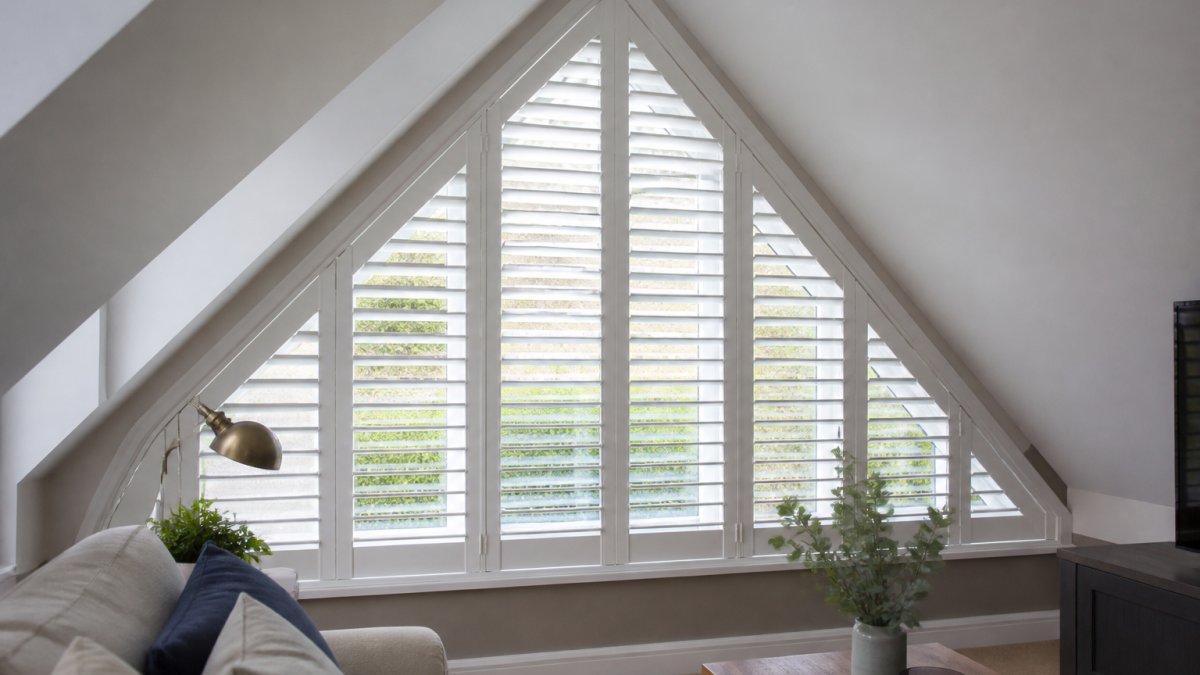
Plantation shutters can give finer light control than many blinds because their wide louvres tilt through a range of angles. At Shutters West London, we fit made-to-measure plantation shutters for period homes, including bay and arched windows. Below, we break down exactly where shutters win on light control, where blinds still make sense, and what neither option can fully block.
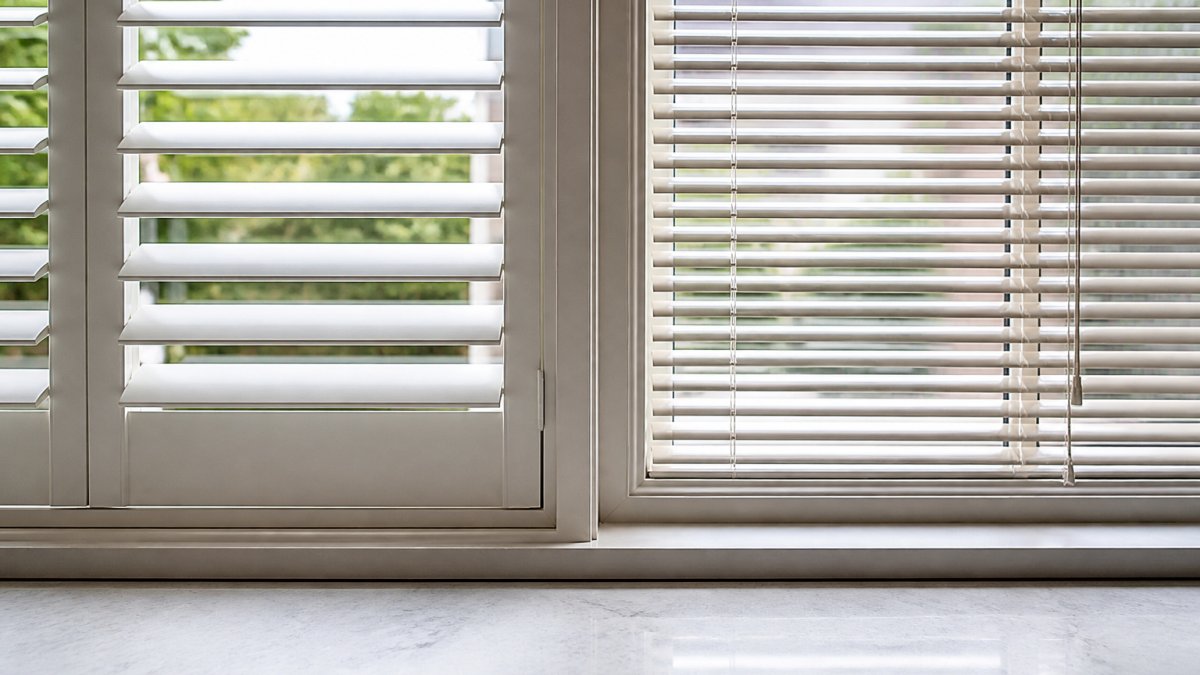
The single biggest difference is how each product handles a partly open window. A shutter louvre tilts to a chosen angle and can be held there.
The comparison at a glance
| Feature | Plantation shutters | Blinds |
|---|---|---|
| Light control precision | Fine louvre tilt, holds position | Slat tilt, can drift |
| Edge light leakage | Low with proper fitting | Common at sides and top |
| Blackout potential | Good with optional blackout | Varies by blind type |
| Glare reduction | Strong, directional | Moderate |
| Durability | Long lifespan | Shorter, slats bend |
| Maintenance | Wipe clean | Cords, dust, restringing |
| Best for | Bay and period windows | Simple, budget fittings |
Light-Filtering Blinds vs Blackout Blinds: Choosing the Right Level
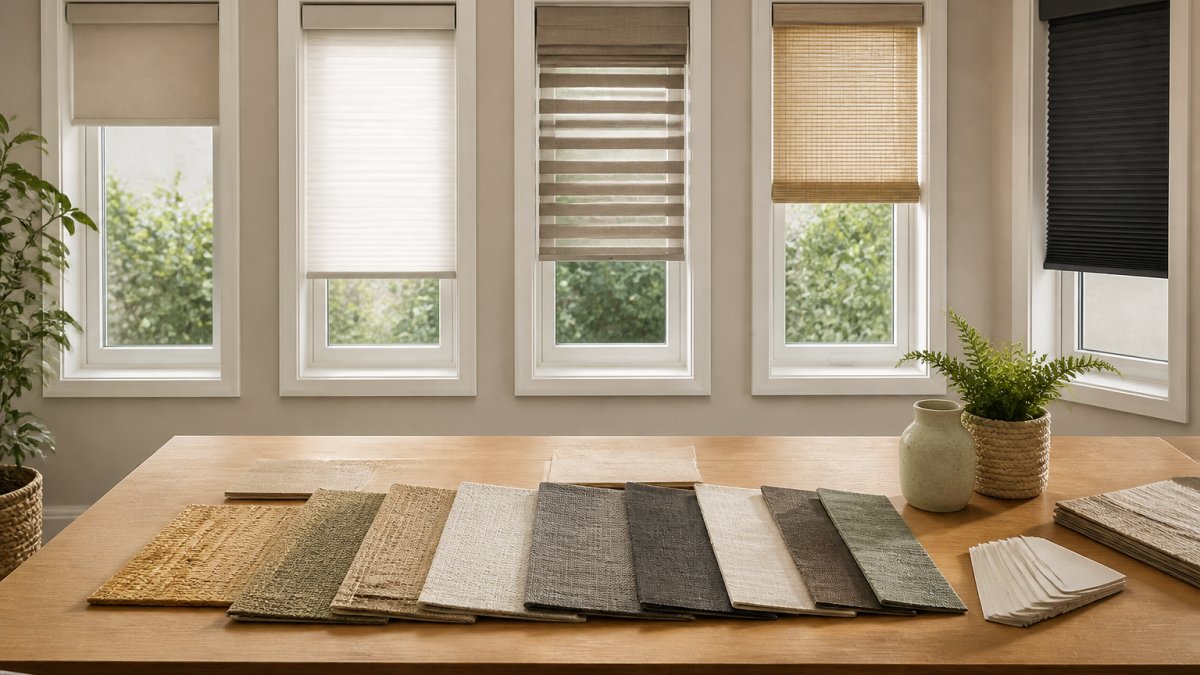
Light-filtering blinds diffuse daylight while keeping a room bright; blackout blinds block most incoming light for sleep and screen use. The choice comes down to the room, not the product. A living room usually wants light filtering, a bedroom wants blackout, and a home office often needs something in between.
A common mistake is buying blackout blinds for a bay window and expecting full darkness. The frame shape leaves gaps that no standard blind closes.
Best Blinds for Glare Reduction on Screens and Worktops
Venetian blinds are the best blind type for glare reduction because their horizontal slats cut direct sunlight at an angle while still letting softer daylight through. For a desk facing a window, tilt the slats upward so light bounces off the ceiling rather than onto your screen.
Glare is about direction, not just brightness. Direct sunlight hitting a monitor washes out the image and strains the eyes. A slat tilted to block the low afternoon sun solves most of it. Roller blinds with a sheer fabric soften glare without darkening the room, which suits kitchens and worktops where you still want daylight.
What most guides miss is that glare changes through the day as the sun moves. A fixed blind setting that works at noon fails by late afternoon. Adjustable slats handle that shift; a roller blind does not.
Plantation Shutters for Privacy: What the Louvres Actually Hide
Closed plantation shutter louvres block the view in from the street almost completely, while tilted louvres let light in without exposing the room. That combination is why shutters suit ground-floor and street-facing windows where privacy and daylight both matter.
The louvre tilt is the key. Fully closed, the slats overlap and hide the interior. Tilted to around 45 degrees, you get daylight and airflow while blocking a direct line of sight from outside. From the pavement, a passer-by sees the slat edges, not the room.
For bay windows, privacy is trickier because the angled panes face several directions at once. You can read more about solving that in our guide on how to make a bay window more private.
Plantation Shutters for Bay Windows: Light Control on Awkward Frames
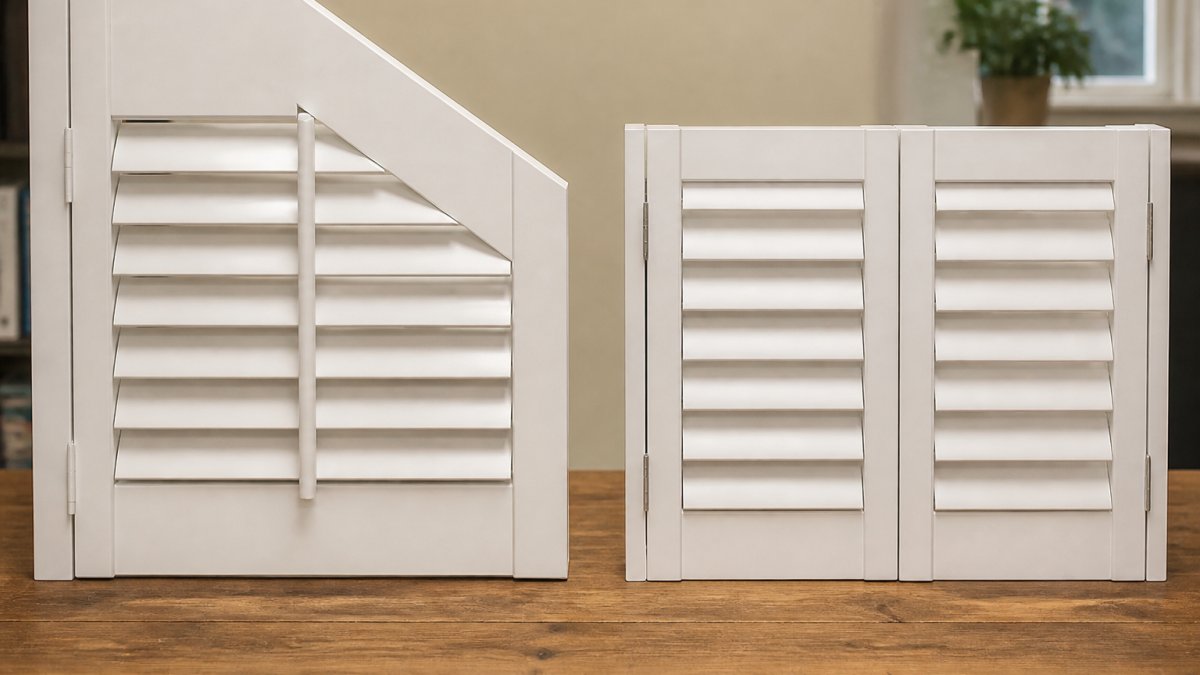
Bay windows suit made-to-measure shutters, as the angled frames can be templated to each pane.
This is the part most comparisons skip. A bay has multiple panes at different angles to the sun, so one blind across the whole opening cannot manage light evenly. Separate shutter panels let you tilt the sunny face down and leave the shaded face open. On a Victorian terrace, that difference is obvious by mid-afternoon.
Measuring a bay accurately is fiddly, so it helps to follow a proper guide to measuring bay windows for shutters before committing. Our free home consultation includes measurements.
Light Leakage, Fitting and What Neither Option Can Fully Block
No window covering blocks light completely unless it is fitted inside a frame with a blackout surround. Both shutters and blinds leak light at the edges, and the amount depends on fitting quality more than the product itself. This is the section most comparisons gloss over, so it is worth being precise about where the light actually escapes.
Light leakage comes from four places: the sides of the recess, the top of the recess, the join between panels or drops, and the gap between the covering and the glass. A made-to-measure shutter fitted tight to the recess can reduce side gaps, and a face-fix fitting typically leaves more visible edge gaps than an inside recess fit.
Recess depth is the variable buyers overlook. A shutter needs enough depth for the frame and louvres to sit clear of the window furniture; a blind needs enough depth for the headrail and the fabric roll. On shallow Victorian reveals, a face-fix is sometimes the only option, and that is exactly where edge leakage is worst. An inside recess fit always leaks less than a face fix, all else being equal.
Overlap matters too. Shutter panels are usually joined with a slight overlap or a closing stile, which cuts the vertical light line between panels. Roller and vertical blinds rely on the fabric or louvre edges meeting, and any gap between drops shows as a bright stripe. Venetian blinds leak between slats when tilted, and at the ends of the headrail where the cords run.
Watch out: buying a blackout blind for a bedroom and assuming it delivers full darkness. Edge gaps and a loose fit undo most of the blackout fabric's benefit. The same applies to shutters with a blackout option: the louvres may block light, but the frame perimeter still needs sealing. If you want to understand how fitting and energy performance interact, our comparison of energy-efficient blinds vs shutters covers it in more depth.
Cost, Durability and Value for Money Over the Long Term
Blinds cost less up front; shutters cost more but tend to last far longer, so the value question is about lifespan, not sticker price. A cheap blind may need replacing or restringing within a few years, while a well-made shutter set is built to stay in place for decades. That is the headline, but the useful comparison is the whole-life cost per window per year.
Take a typical sash window. Pricing depends on window size, style, material, quantity and frame type, so the cost of a made-to-measure set varies. For current prices or a quote, visit the Shutters West London website.
Now spread that over lifespan. A budget blind replaced every three to five years, plus restringing or new slats in between, adds up. The cheaper quote often reflects thinner materials and a templated fit; on awkward bay or arched frames, that shortcut shows up as sticking panels and gaps within a couple of years.
Durability differs by mechanism as much as by material. Blind cords stretch, tilt mechanisms drift and slats bend under cat weight or a slammed door.
For a full breakdown of long-term value, read our comparison of plantation shutters vs cheap blinds. If you are still weighing whether the investment is worth it at all, our guide on whether plantation shutters are worth it sets out the honest case.
Book a Free Home Consultation and Measure-Up
The only way to know how much light control a window can actually deliver is to measure it in place. We offer a free home consultation and measure-up, with no-pressure quotes and every set made from scratch to your window.
Our 30 years of family-run craftsmanship and a 10/10 Checkatrade rating across all reviews are there for you to check. We specialise in bay, arched and awkward frames.
Get started with Shutters West London and book your free home consultation and measure-up, then see exactly how much light control your windows can give you.
Frequently Asked Questions
Do plantation shutters give you better light control than blinds?
For most rooms, yes. Plantation shutters have wide adjustable louvres that tilt through a range of angles, so you can direct daylight up towards the ceiling or down onto the floor.
Can plantation shutters block out all light?
No window covering blocks every trace of light unless it is sealed into a frame. Closed shutters with a blackout option cut light dramatically, but a thin line will still show at the hinges and around the panel edge. If you need a bedroom genuinely dark, ask for blackout slats plus a frame that fits tight to the reveal.
Are light-filtering or blackout blinds better for a living room?
It depends on how you use the room. Light-filtering blinds soften daylight and cut glare on screens while keeping the space bright, which suits living rooms used during the day. Blackout blinds make more sense in bedrooms or where a projector is used.
Which blinds are best for glare reduction?
Venetian blinds with adjustable slats can be angled to bounce direct sunlight upwards, which suits many rooms. Vertical blinds suit wide windows and patio doors, and roller blinds in a light-filtering fabric offer a simple, even reduction.
Are shutters or blinds better for privacy and daylight?
Tilted plantation shutter louvres can let daylight in from above while limiting the view in from street level. For ground-floor and street-facing rooms, made-to-measure shutters can help balance privacy and daylight.